
I have been there, and most of you might have as well.
You wake up one morning, look in the mirror, and there it is: a pimple that seemingly appeared overnight. Sometimes it is a small blemish that disappears within a few days. Other times, it seems determined to stay for weeks, as if it were invited.
Acne is often thought of as a teenage problem, but the reality is that it can affect people of all ages. In fact, many adults continue to experience breakouts well into their 30s, 40s, and beyond.
While occasional pimples may seem harmless, persistent acne can affect self-confidence, emotional well-being, and quality of life. Yet despite how common it is, there are still many misconceptions surrounding acne.
Does chocolate cause acne? Is acne simply a result of poor hygiene? Can scrubbing your face harder get rid of pimples?
Researchers have spent decades studying acne, and what they have learned may surprise you.
Let’s explore the science behind acne and how a simple, consistent skincare routine may help support healthier-looking skin, even with the occasional flare-ups of those unwanted guests – pimples. Let’s discuss!
You can read more about the skin here, as well as learn what your skin type is here.
What Is Acne?
Acne is a common skin condition that occurs when hair follicles become clogged with oil (sebum), dead skin cells, and bacteria.
These clogged pores can develop into whiteheads, blackheads, papules, pustules, nodules and cysts (Vasam M et al. 2023; Ramli et al. 2012).
According to research, acne most commonly affects areas of the body that contain a high concentration of oil-producing glands, including the face, chest, back and shoulders (Vasam M et al. 2023).
According to the American Academy of Dermatology, acne is one of the most common skin conditions worldwide.
In fact, the Global Burden of Disease Study classified acne vulgaris as the eighth most common skin disease worldwide, with a prevalence of 9.38% for all age groups (Heng and Chew, 2020; Vasam M et al., 2023; Shah et al., 2021).
However, its prevalence will vary among different countries and age groups.
Why Do Pimples Form?
Researchers generally identify four main factors involved in the development of acne. These are:
1. Excess Oil Production
Your skin naturally produces an oily substance called sebum.
Sebum helps keep the skin moisturized and protected.
However, when too much sebum is produced, it can contribute to clogged pores.
Research suggests that hormonal fluctuations often play a significant role in increased oil production (Cui et al., 2022).
2. Dead Skin Cell Build-Up
Your skin is constantly renewing itself.
Normally, old skin cells shed naturally.
Sometimes, however, these dead cells accumulate and combine with oil inside hair follicles, creating blockages (Vasam M et al. 2023).
3. Bacterial Growth
According to research, a bacterium known as Cutibacterium acnes naturally lives on the skin (Kraft and Freiman, 2011).
Under certain conditions, these bacteria may multiply within clogged follicles, contributing to inflammation and breakouts.
4. Inflammation
Inflammation is a major contributor to many ill health conditions, and acne is just one of them.
As the body responds to blocked pores and bacterial activity, redness, swelling, and tenderness may develop.
This inflammatory response is what often transforms a simple clogged pore into a noticeable pimple (Mayslich C et al. 2021).
Acne is Not Always About Hygiene
One of the biggest myths about acne is that it results from dirty skin (Academic Alliance in Dermatology; Yorulmaz and Yalcin, 2020). This seems logical, especially when you were a child. However, this idea is simply not supported by research.
In fact, excessive washing or aggressive scrubbing may actually irritate the skin and worsen breakouts. This is because healthy skin is not sterile skin (Yorulmaz and Yalcin, 2020).
Therefore, the goal is gentle cleansing rather than harsh stripping of the skin’s natural protective barrier.
Can Hormones Affect Acne?
Absolutely. This is widely supported by research.
Research contends that hormonal fluctuations are among the most well-established contributors to acne (Cui et al. 2022)
Changes in hormone levels may increase oil production, making pores more likely to become clogged (Li et al. 2024).
Hormonal changes commonly occur during puberty, menstrual cycles, pregnancy, menopause, and periods of your life when you are most stressed.
This is one reason adult acne is more common than many people realize.
What About Diet and Acne?
The relationship between diet and acne continues to be an active area of research.
Scientists no longer believe that greasy foods directly cause acne (Nguyen et al. 2016). This is because acne is a multifactorial challenge, as indicated above.
However, some evidence suggests that certain dietary patterns may influence acne severity in some individuals (Nguyen et al. 2016; Smith et al., 2007).
Researchers have investigated possible links between acne and high-glycemic foods, sugary beverages, highly processed foods, or what are called ‘ultra-processed’ foods and certain dairy products (Smith et al., 2008; Smith et al., 2007).
These foods may influence hormones and inflammation in ways that could contribute to breakouts in susceptible (change the word) individuals.
However, studies such as one by Di Landro and Colleagues refute the argument that high-glycemic foods and other sugary foods such as cakes, sweets and chocolates are associated with a higher risk of acne.
Additionally, studies into dairy consumption and acne have noted some association (Adebamowo et al., 2005; Adebamowo et al., 2006). However, further evaluation of most of these studies showed that skim milk had a more significant association with acne, due largely to its processing and/or the decreased levels of estrogen content when compared to whole milk (Adebamowo et al., 2005).
Nonetheless, responses to these triggers will vary greatly from person to person. As such, more research is recommended.
Stress and Acne: Is There a Connection?
While these foods may support healthier eating patterns, it is important to note that no single food causes weight loss on its own.
Weight management is influenced by many factors, which include one’s overall calorie intake, physical activity, sleep, stress management, hormonal factors, as well as consistency over time.
As such, even healthy foods can contribute to weight gain if consumed excessively or prepared with large amounts of oil, sugar, or processed ingredients.
You can learn more about sleep and stress by listening to these podcast episodes:
Can Lack of Sleep Affect Skin Health?
Emerging research suggests that sleep may play an important role in overall skin health.
Poor sleep has been linked to increased inflammation, elevated stress hormones and impaired skin barrier function (Moafa et al., 2025).
While sufficient and quality sleep is not a cure for acne, prioritizing adequate rest supports overall wellness and may benefit skin health.
You can learn more about sleep and its impact on overall health by listening to these podcast episodes:
- Sleepmaxxing – Optimizing Sleep Like an Hacker
- You’re Sleeping…But Are You Resting?
- Can You Really Catch Up on Sleep Over the Weekend?
A Simple Skincare Routine
Skincare does not need to be complicated. In fact, many dermatologists and researchers recommend keeping routines simple and consistent.
Here is a simple skincare routine to maintain healthy skin, especially if you are acne-prone.
Step 1: Cleanse Gently
Wash your face twice daily using a gentle cleanser.
Avoid harsh scrubs and abrasive cleansing tools.
Gentle cleansing helps remove excess oil, dirt, and environmental debris without damaging the skin barrier.
Step 2: Gentle Exfoliate
There has long been a debate about this step when it comes to skin care routines.
However, gentle exfoliating is turning out to be necessary, as it removes dead skin cells (preventing build-ups) and helps the skin better absorb your moisturizer or other skincare treatments.
Nonetheless, studies usually recommend exfoliating the skin at least two (2) times per week, as over-exfoliation can affect skin barriers and thus create additional issues.
Step 3: Moisturize
Sometimes, many people with acne or those with acne-prone skin skip moisturizer because they believe it will make their skin oilier. Especially, those with oily or combination skin.
However, moisturizing helps support the skin barrier.
Choose a non-comedogenic moisturizer that is less likely to clog pores.
You can learn more about ingredients that can help to enhance skin moisture and overall skin health in these detailed articles as well as related videos.
- 5 Natural Oils to Seriously Consider for Your Skincare Arsenal
- Lactic Acid and the Skin
- Video: Let’s Talk Lactic Acid
Step 4: Use Sunscreen
Daily sun protection is important for all skin types. Gone are the days when persons of darker skin tones relish the thought of having enough melanin and thus saw sunscreen as unnecessary. However, sunscreen is an integral part of any successful skincare regimen.
Notably, some acne treatments can increase sun sensitivity.
Therefore, a broad-spectrum sunscreen with SPF 30 or higher can help protect the skin and reduce the risk of post-inflammatory dark marks becoming more noticeable.
You can learn more about the different types of sunscreens, benefits and how to choose in the detailed article below. You can also learn about the benefits of vitamin D for overall skincare, including acne.
Step 5: Avoid Picking Pimples
This is better ‘said than done’ in most cases. Picking pimples is like a pastime for many of us.
However, picking or squeezing pimples may:
- Increase inflammation
- Delay healing
- Increase scarring risk
- Spread bacteria
Sometimes the best approach is to let the skin heal naturally.
Ingredients Commonly Used for Acne: What Does the Science Say?
While there seem to be countless acne remedies and skincare trends, a handful of ingredients have consistently stood the test of scientific scrutiny.
These ingredients are commonly found in over-the-counter and prescription acne treatments and have been extensively studied for their ability to address some of the key factors involved in acne development, including clogged pores, excess oil production, bacterial growth, and inflammation.
Let’s take a closer look at some of the most well-researched ingredients.
1. Salicylic Acid
Salicylic acid is a beta-hydroxy acid (BHA) that is widely used in acne care products.
One of its primary benefits is its ability to penetrate the pores and help dissolve excess oil and dead skin cells that can contribute to clogged follicles. Because acne often begins with pore blockage, salicylic acid is particularly useful for individuals who experience blackheads and whiteheads.
Research suggests that salicylic acid may help exfoliate dead skin cells, reduce pore congestion, improve skin texture and decrease the formation of new blemishes (Arif, 2015).
Unlike physical scrubs, which can sometimes irritate the skin, salicylic acid provides a more controlled form of chemical exfoliation.
Common concentrations in over-the-counter products typically range from 0.5% to 2%.
You can learn more about salicylic acid by reading this detailed article as well as a video:
2. Benzoyl Peroxide
Benzoyl peroxide has been used in acne treatment for decades and reportedly remains one of the most widely recommended ingredients by dermatologists.
It works primarily by reducing the population of Cutibacterium acnes (formerly Propionibacterium acnes), the bacteria involved in acne development.
Unlike antibiotics, benzoyl peroxide does not appear to contribute significantly to bacterial resistance, making it an important component of many acne treatment plans.
Research indicates that benzoyl peroxide may help reduce acne-causing bacteria, decrease inflammation, improve acne lesions and prevent new breakouts from forming (Czyz et al. 2025).
Benzoyl peroxide is available in various strengths, typically ranging from 2.5% to 10%. Interestingly, studies suggest that lower concentrations may often be nearly as effective as higher concentrations while causing less irritation.
One thing to note is that benzoyl peroxide can bleach fabrics, including towels, pillowcases, and clothing.
You can learn more about salicylic acid by reading this detailed article as well as a video:
3. Retinoids
Retinoids are among the most extensively studied ingredients in dermatology and are considered a cornerstone of acne treatment.
Derived from vitamin A, retinoids help normalize the shedding of skin cells within hair follicles. This can reduce the formation of comedones (clogged pores), which are often the first stage of acne development (Zasada and Budzisz, 2019).
Retinoids may help increase skin cell turnover, prevent clogged pores, improve acne lesions, reduce post-acne marks and support smoother skin texture (Kong et. al., 2016).
Common retinoids include adapalene, tretinoin and tazarotene.
Adapalene is now available over the counter in some countries and is often recommended as a first-line treatment for mild to moderate acne.
It is important to remember that retinoids may initially cause dryness, flaking, or mild irritation as the skin adjusts. Consistent use and gradual introduction can often improve tolerance.
Because retinoids can increase sun sensitivity, daily sunscreen use is particularly important.
You can learn more about retinoids and other skincare ingredients in this detailed article:
4. Azelaic Acid
Azelaic acid is a naturally occurring dicarboxylic acid that has gained increasing attention for its versatility in skincare.
Unlike some acne treatments that focus on only one aspect of acne, azelaic acid appears to offer multiple potential benefits.
Research suggests that azelaic acid may help reduce inflammation, improve mild to moderate acne, support clearer-looking skin, reduce post-inflammatory hyperpigmentation and improve uneven skin tone (Feng et al. 2024).
This makes it especially appealing for individuals who experience both acne and the dark marks that can remain after blemishes heal.
Azelaic acid is often considered relatively gentle compared with some other active ingredients, making it suitable for individuals with sensitive skin.
You can learn about other skincare acids for acne and overall skin health:
- Lactic Acid and the Skin
- Glycolic Acid – The Sting of Beauty
- Mandelic Acid for Acne and Wrinkles
- Hyaluronic Acid – Antiaging Hero of Fad?
- Aging Like A Boss
- Video: Glycolic Acid and the Skin
5. Niacinamide: An Emerging Favourite
Although not traditionally considered a primary acne treatment, niacinamide (a form of vitamin B3) has become increasingly popular in skincare.
Research suggests that niacinamide may help support the skin barrier, reduce redness, improve inflammation, regulate oil production and enhance overall skin appearance (Marques et al. 2024).
Because acne-prone skin can often become irritated from active treatments, niacinamide is frequently included in formulations designed to support skin health while minimizing irritation. Nonetheless, it may not be for everyone, as reports have shown even low concentrations can be irritating to susceptible individuals. So, do a patch test before overall application.
You can learn more about niacinamide by reading this detailed article as well as the related video. You can also learn about other proven ingredients that can help with acne and general skin care – mandelic and Kojic Acid
- Niacinamide – Another Antiaging Powerhouse
- Video: Let’s Talk Niacinamide and the Skin
- Mandelic Acid for Acne and Wrinkles
- Kojic Acid and Hyperpigmentation
- Video: Let’s Talk Kojic Acid
Choosing the Right Ingredients
Not every ingredient works equally well for every person.
Factors such as skin type, severity of acne, sensitivity levels, existing skincare routine and underlying hormonal influences may all affect how the skin responds to treatment.
In some cases, a combination of ingredients may provide better results than relying on a single product.
However, more is not always better. Using too many active ingredients at once may increase irritation and potentially worsen skin barrier function.
For this reason, many studies as well as dermatologists recommend introducing new products gradually and allowing time for the skin to adjust.
You can learn more about ingredients to avoid when it comes to caring for your skin in these detailed articles:
When Should You See a Dermatologist?
While many mild acne cases reportedly respond well to over-the-counter products, persistent, severe, or scarring acne may require professional evaluation.
A dermatologist can help determine the most appropriate treatment strategy based on an individual’s skin type, medical history, and acne severity.
Additionally, early intervention may help reduce the risk of long-term scarring and improve overall treatment outcomes.
A Researcher’s Perspective
From a scientific perspective, acne is a complex condition influenced by multiple factors including hormones, inflammation, genetics, lifestyle, and skin biology.
There is rarely a single cause. However, there can be triggers.
Likewise, there is rarely a single solution.
Researchers increasingly emphasize a balanced approach that includes:
- Gentle skincare
- Consistency
- Healthy lifestyle habits
- Stress management
- Appropriate medical care when necessary
Nonetheless, you are not alone, as acne is incredibly common.
A pimple here and a pimple there does not mean your skin is unhealthy, nor does it mean you are doing something wrong. It is simply just part of being human.
Illustrative Summary
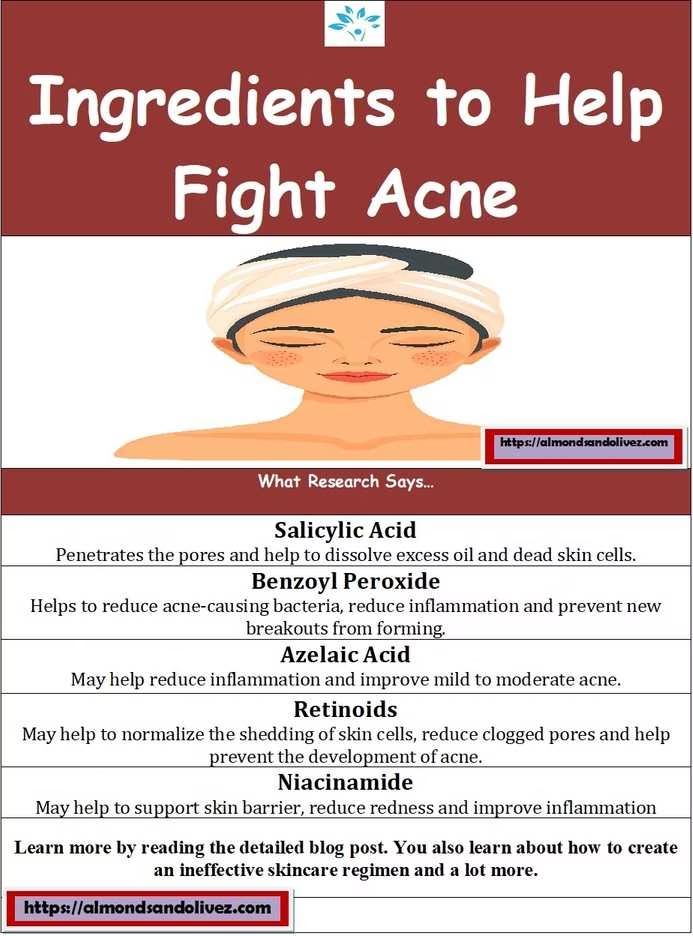
Here is an illustrative summary of Ingredients that can help you FIGHT ACNE
Let’s Sum Up!
Acne may be one of the most common skin conditions in the world, yet it remains widely misunderstood.
While breakouts can be frustrating, understanding the science behind acne can help us make informed decisions about skincare and overall wellness.
Rather than chasing every trending skincare hack, a simple routine built around gentle cleansing, moisturization, sun protection, and healthy lifestyle habits may go a long way toward supporting healthier-looking skin.
And remember, healthy skin is not necessarily one free from breakouts.
So, protect and support your skin from the inside out.
Now that we have explored acne, causing and how to manage it, are you in a better place when it comes to your acne? Do you suffer from irritating breakouts? Have you ever tried any of the ingredients listed in the article? Share it in the comments below.
Here are some other useful articles, as well as a free download to help you on your acne-free and overall skincare journey:
- What’s My Skin Type?
- Oh, No, Not on My Skin
- Vitamin C and the Skin
- Vitamin E and the Skin
- Vitamin D and the Skin
- Free Download: A Skin Type Guide
References and Further Readings
- Adebamowo CA, Spiegelman D, Danby FW, et al. High school dietary dairy intake and teenage acne. J Am Acad Dermatol. 2005;52(2):207–14. doi: 10.1016/j.jaad.2004.08.007. [DOI] [PubMed] [Google Scholar] [Ref list]
- Adebamowo CA, Spiegelman D, Berkey CS, et al. Milk consumption and acne in adolescent girls. Dermatol Online J. 2006;12(4):1. [PubMed] [Google Scholar] [Ref list]
- Arif T. Salicylic acid as a peeling agent: a comprehensive review. Clin Cosmet Investig Dermatol. 2015 Aug 26; 8:455-61. doi: 10.2147/CCID.S84765. PMID: 26347269; PMCID: PMC4554394.
- Bobok N, Taskesen T. Stress-Induced Changes of the Skin: A Narrative Review. Cureus. 2025 Nov 7;17(11): e96285. doi: 10.7759/cureus.96285. PMID: 41362509; PMCID: PMC12681996.
- Cui H., Feng C., Guo C., Duan Z. Development of novel topical anti-acne cream containing postbiotics for mild-to-moderate acne: an observational study to evaluate its efficacy. Indian J. Dermatol. 2022; 67:667–673. doi: 10.4103/ijd.ijd_655_22. [DOI] [PMC free article] [PubMed] [Google Scholar][Ref list]
- Czyz S, Yang K, Jafarian F. Benzoyl peroxide in the treatment of acne: are there potential health concerns? Front Pediatr. 2025 Jul 21; 13:1599491. doi: 10.3389/fped.2025.1599491. PMID: 40761886; PMCID: PMC12318945.
- Di Landro A, Cazzaniga S, Parazzini F, et al. Family history, body mass index, selected dietary factors, menstrual history, and risk of moderate to severe acne in adolescents and young adults. J Am Acad Dermatol. 2012;67(6):1129–35. doi: 10.1016/j.jaad.2012.02.018. [DOI] [PubMed] [Google Scholar] [Ref
- Feng X, Shang J, Gu Z, Gong J, Chen Y, Liu Y. Azelaic Acid: Mechanisms of Action and Clinical Applications. Clin Cosmet Investig Dermatol. 2024 Oct 22; 17:2359-2371. doi: 10.2147/CCID.S485237. PMID: 39464747; PMCID: PMC11512533.
- Heng A.H.S., Chew F.T. Systematic review of the epidemiology of acne vulgaris. Sci. Rep. 2020 doi: 10.1038/s41598-020-62715-3. [DOI] [PMC free article] [PubMed] [Google Scholar] [Ref list].
- Kong R, Cui Y, Fisher, G.J, Wang, X, Chen, Y, Schneider, L.M, Majmudar, G. (2016). A comparative study of the effects of retinol and retinoic acid on histological, molecular, and clinical properties of human skin. J Cosmet Dermatol.15(1):49-57. doi: 10.1111/jocd.12193. Epub 2015 Nov 18.
- Kraft J., Freiman A. Management of acne. CMAJ (Can. Med. Assoc. J.) 2011 doi: 10.1503/cmaj.090374. [DOI] [PMC free article] [PubMed] [Google Scholar][Ref list]
- Li Y, Hu X, Dong G, Wang X, Liu T. Acne treatment: research progress and new perspectives. Front Med (Lausanne). 2024 Jul 10; 11:1425675. doi: 10.3389/fmed.2024.1425675. PMID: 39050538; PMCID: PMC11266290.
- Marques C, Hadjab F, Porcello A, Lourenço K, Scaletta C, Abdel-Sayed P, Hirt-Burri N, Applegate LA, Laurent A. Mechanistic Insights into the Multiple Functions of Niacinamide: Therapeutic Implications and Cosmeceutical Applications in Functional Skincare Products. Antioxidants (Basel). 2024 Mar 30;13(4):425. doi: 10.3390/antiox13040425. PMID: 38671873; PMCID: PMC11047333.
- Mayslich C., Grange P.A., Dupin N. Cutibacterium acnes as an opportunistic pathogen: an update of its virulence-associated factors. Microorganisms. 2021 doi: 10.3390/microorganisms9020303. [DOI] [PMC free article] [PubMed] [Google Scholar][Ref list]
- Moafa TA, Mojiri ME, Alattas KK, Sumayli AM, Alnujaidi EH, Alharbi MO, Manni RM, Hibili NH, Alomir FA, Almutairi FM, Alhusayni SM. The Impact of Sleep Dysfunction on Inflammatory Skin Diseases: A Systematic Review. Cureus. 2025 Dec 19;17(12): e99598. doi: 10.7759/cureus.99598. PMID: 41556018; PMCID: PMC12812233.
- Nguyen QG, Markus R, Katta R. Diet and acne: an exploratory survey study of patient beliefs. Dermatol Pract Concept. 2016 Apr 30;6(2):21-7. doi: 10.5826/dpc.0602a05. PMID: 27222768; PMCID: PMC4866623.
- Ramli R., Malik A.S., Hani A.F.M., Jamil A. Acne analysis, grading and computational assessment methods: an overview. Skin Res. Technol. 2012; 18:1–14. doi: 10.1111/j.1600-0846.2011.00542. x. [DOI] [PubMed] [Google Scholar][Ref list]
- Shah N., Shukla R., Chaudhari P., Patil S., Patil A., Nadkarni N., Goldust M. Prevalence of acne vulgaris and its clinico-epidemiological pattern in adult patients: results of a prospective, observational study. J. Cosmet. Dermatol. 2021; 20:3672–3678. doi: 10.1111/jocd.14040. [DOI] [PubMed] [Google Scholar][Ref list]
- Smith RN, Mann NJ, Braue A, Makelainen H, Varigos GA. The effect of a high-protein, low glycemic-load diet versus a conventional, high glycemic-load diet on biochemical parameters associated with acne vulgaris: a randomized, investigator-masked, controlled trial. J Am Acad Dermatol. 2007; 57:247–56. doi: 10.1016/j.jaad.2007.01.046. [DOI] [PubMed] [Google Scholar] [Ref list]
- Smith RN, Mann NJ, Makelainen H, Roper J, Braue A, Varigos GA. A pilot study to determine the short-term effects of a low glycemic load diet on hormonal markers of acne: a nonrandomized, parallel, controlled feeding trial. Mol Nutr Food Res. 2008; 52:718–26. doi: 10.1002/mnfr.200700307. [DOI] [PubMed] [Google Scholar][Ref list]
- Vasam M, Korutla S, Bohara RA. Acne vulgaris: A review of the pathophysiology, treatment, and recent nanotechnology-based advances. Biochem Biophys Rep. 2023 Nov 23; 36:101578. doi: 10.1016/j.bbrep.2023.101578. PMID: 38076662; PMCID: PMC10709101.
- Yorulmaz A, Yalcin B. Myths, Perceptions and Practices in Acne: A Study on Adolescents and Young Adults. Curr Health Sci J. 2020 Apr-Jun;46(2):111-116. doi: 10.12865/CHSJ.46.02.02. Epub 2020 Jun 30. PMID: 32874681; PMCID: PMC7445635.
- Zasada M, Budzisz E. Retinoids: active molecules influencing skin structure formation in cosmetic and dermatological treatments. Postepy Dermatol Alergol. 2019 Aug;36(4):392-397. doi: 10.5114/ada.2019.87443. Epub 2019 Aug 30. PMID: 31616211; PMCID: PMC6791161.


 5 Jamaican and Caribbean Foods for Weight Loss: Traditional Foods for a Healthier You