
When many people think about weight loss, Jamaican or Caribbean foods may not immediately come to mind. Unfortunately, most of us think of cuisines from other countries and don’t even recognize our own.
However, Jamaican and Caribbean cuisines are often associated with rich flavours, hearty meals, fried dishes, and comforting favourites. Nonetheless, beyond the indulgent side of the cuisine lies a wide variety of traditional foods that are naturally nutrient-dense, high in fiber, rich in antioxidants, and supportive of metabolic health, especially when eaten mindfully, portion-wise.
In fact, many traditional Jamaican ingredients are minimally processed and rooted in plant-based eating patterns that may help support healthy weight management when prepared mindfully.
The thing is, though, weight loss is not usually about eliminating entire cultures or cuisines from the diet. Rather, it is about balance, portion control, nutrient quality, and sustainable eating habits.
Several Jamaican foods naturally contain nutrients that may support satiety (that feeling of fullness), blood sugar balance, digestive health, metabolism and even reduced calorie intake.
This article offers a Jamaican-centred look at traditional foods within the broader Caribbean food culture. Let’s explore the science!
What Do We Mean by Jamaican Foods?
When we talk about Jamaican food, we are not talking about the mere collection of recipes from your mother’s kitchen or grandma’s cabinet. Jamaican cuisine is a reflection of the island’s history, people, agriculture, and the many cultures that have influenced how Jamaicans grow, prepare, season, and enjoy food.
For example, rice and peas, ground provisions, and foods like plantains, callaloo, beans, fish, jerk-seasoned meats, soups, porridges, and a wide variety of fruits and vegetables are all part of Jamaica’s diverse food culture. Some dishes are distinctly Jamaican, while others share ingredients, preparation methods, or culinary traditions with other Caribbean countries.
And this is where the term Caribbean food becomes useful.
The Caribbean is not one uniform food culture. Each island and territory has its own culinary traditions, ingredients, names, and methods of preparation. Yet there are also many similarities because the region shares a tropical climate, agricultural traditions, historical influences, and the movement of people, plants, and culinary practices throughout the Caribbean.
For example, what one island calls callaloo may be known by another name elsewhere, and similar root vegetables, legumes, fruits, seafood, and cooking techniques appear across different Caribbean cuisines.
So, while this article focuses specifically on Jamaican foods, some of the foods discussed may also be familiar to readers from Trinidad and Tobago, Barbados, Guyana, Haiti, the Bahamas, the Dominican Republic, Puerto Rico, and other parts of the Caribbean, although they may be prepared differently or called something entirely different.
Jamaican Food Is More Than a Dish – It’s a Tradition
Traditional Jamaican eating patterns have historically included many foods that are naturally nutrient-dense and minimally processed.
Think about foods such as sweet potatoes, yam (yellow, white, etc.), green bananas, plantains, breadfruit, pumpkin, callaloo and other leafy greens, peas and beans, fresh fruits, fish and seafood, herbs, spices, onions, garlic, scallion (green onions), thyme and peppers.
Many of these foods provide dietary fiber, vitamins, minerals, antioxidants, and other beneficial compounds.
However, there is an important distinction to make.
A traditional food is not automatically a weight-loss food.
How a food is prepared, how much is eaten, and what it is eaten with can substantially change the nutritional profile of a meal.
For example, a boiled or roasted provision may be a very different choice from the same food that has been heavily fried or served with large amounts of added fat. Likewise, a nutritious vegetable can become part of a very energy-dense meal depending on the cooking method and accompanying ingredients.
This is why, when discussing Jamaican foods and weight management, it is more useful to look at the whole meal and eating pattern rather than declaring individual foods as merely ‘good’ or ‘bad’ or what I like to call the ‘in-between.’
Bringing the Caribbean into the Conversation
Although this article is Jamaican-focused, I also want to recognize the wider Caribbean food tradition.
Food has always travelled throughout the region. Ingredients, recipes, cooking methods, and culinary influences have crossed borders and oceans, sometimes taking on new names and new identities along the way.
As a result, you may recognize a food in this article but know it by another name.
That doesn’t make one version more “authentic” than another. It simply reflects the remarkable diversity of Caribbean food culture.
For example, a reader on another Caribbean Island may prepare a similar root vegetable, leafy green, pea, or fruit differently from the Jamaican version. Even within Jamaica, recipes can vary considerably from household to household.
And that’s part of what makes Caribbean food so special.
There is no single Caribbean diet.
There are, however, many common traditional foods that can fit beautifully into a balanced eating pattern.
The goal, therefore, is not to abandon the foods we grew up eating in the name of weight loss. Instead, it is to explore how these familiar foods can be prepared, portioned, and combined in ways that support better nutrition and a healthier relationship with food.
With that in mind, let’s look at five (5) Jamaican foods that can be part of a balanced approach to weight management, and why their nutritional qualities may make them worth keeping on the menu.
You can also grab your copy of the Caribbean Bush Tea Guide here. This guide outlines a few of the traditional ‘bush’ teas consumed both in Jamaica and other parts of the Caribbean. You will also find detailed articles about some of the teas listed in this guide. The guide will be updated periodically.
“There is no single Caribbean diet. However, many common traditional foods can fit beautifully into a balanced eating pattern.”
5 Jamaican Foods That May Support Weight Management
Now that we have looked at what makes Jamaican and Caribbean food traditions so diverse, let us turn our attention to the foods themselves.
These five (5) Jamaican favourites can provide important nutrients, fiber, and satisfying carbohydrates or protein when prepared thoughtfully and enjoyed as part of a balanced eating pattern. They aren’t “magic” weight-loss foods, but they can certainly have a place in a healthy approach to managing your weight.
1. Callaloo
Why Callaloo May Support Weight Loss
Callaloo is one of Jamaica’s most beloved leafy green vegetables and is often enjoyed steamed, sautéed, or paired with dishes such as saltfish or even cabbage.
Some people may also know it as kallaloo or calaloux (Blount, 2014). Others may even know it as amaranth leaves, which is the scientific name of the family callaloo belongs to. In countries such as Trinidad and Tobago and even Grenada, the dish itself is reportedly called callaloo, but it uses taro leaves, which are known by many locals as ‘dasheen bush’, ‘callaloo bush ’, or simply ‘bush’.
This nutrient-rich vegetable is low in calories, high in fiber and rich in vitamins and minerals (myfooddata.com; nutriscan.app).
Fiber is especially important for weight management because it helps promote fullness and may reduce overeating.
Leafy green vegetables are also associated with lower calorie density, meaning you can eat satisfying portions without consuming excessive calories.
Research suggests that diets rich in vegetables and fiber are linked to improved weight management and metabolic health (Slavin, 2005).
Callaloo also contains iron, magnesium, vitamin A and antioxidants, which help to support overall wellness (myfooddata.com; nutriscan.app).
You can enjoy callaloo by steaming it with onions and tomatoes and other herbs and spices, blend it in your smoothies, pair it with eggs and even add it to soups and stews.
Preparing it with less oil may be better to support your weight goals.
You can enjoy callaloo by trying this simple but awesome recipe:
2. Green Banana
Why Green Banana May Support Weight Loss
Green banana is a staple in many Jamaican households and is often boiled and eaten with breakfast. However, these days, green banana is eaten at most meals, including lunch and dinner.
Unlike ripe bananas, green bananas are rich in resistant starch, a type of carbohydrate that resists digestion and behaves similarly to fiber (Munir et al. 2024).
Resistant starch may help to improve fullness, support blood sugar control, feed beneficial gut bacteria and reduce appetite by making you feel fuller for longer (Munir et al. 2024).
Research suggests resistant starch may positively influence satiety and metabolic health (Han et al. 2023).
Green bananas are also naturally filling, minimally processed and nutrient-dense, making them a more wholesome carbohydrate option compared to many ultra-processed foods.
You can enjoy your green bananas boiled for breakfast, lunch or dinner, mashed as a side dish, blended into porridge and sliced into soups.
You can learn more about fiber, resistant starch, ultra-processed foods and gut health by listening to these podcast episodes:
- Fibermaxxing: Smart Health Habit or Just Another Wellness Trend?
- Gut Health: Why it Matters!
- Ultra-Processed Foods: How Much is Too Much!
3. Ackee
Why Ackee May Support Weight Loss
Ackee, Jamaica’s national fruit, is often misunderstood nutritionally because of its creamy texture and fat content.
However, this famous food contains predominantly healthy unsaturated fats (the ‘good’ fat), which may help support satiety when consumed in moderation (Goldson et al. 2014).
Healthy fats can help slow digestion, reduce hunger and improve meal satisfaction.
Research suggests that meals containing healthy fats may help with appetite regulation and adherence to healthier eating patterns (Moris et al. 2022; Erlanson-Albertsson, 2010).
Ackee also contains fiber, vitamin C, potassium, antioxidants and protein (Wray et al. 2020; nutriscan.app).
Despite its rich nutrient profile, ackee is sometimes viewed as just another ‘fatty food.’ However, portion balance matters, especially when paired with saltfish or fried foods.
You can enjoy ackee with saltfish (a favourite of most Jamaicans), sautéed with vegetables, paired with ground provisions or steamed foods, rice or with whatever food you have available.
Here is the recipe for one of Jamaicans’ favourite ways of indulging in this nutrient-rich food: Ackee and Saltfish, which is Jamaica’s national dish. Get the recipe here:
4. Jamaican Yam
Why Jamaican Yam May Support Weight Loss
Jamaican yellow yam is a traditional ground provision rich in complex carbohydrates and fiber (Obidiegwu et al., 2020).
Unlike highly refined carbohydrates, complex carbohydrates digest more slowly and may help stabilize blood sugar and energy levels (Arshad et al., 2025).
Yam is also naturally satisfying, which may help reduce excessive snacking later in the day.
Additionally, yam contains potassium, vitamin C, fiber and resistant starch, especially when cooled after cooking (Mondo et al., 2025).
Research suggests that high-fiber carbohydrate sources are associated with improved satiety and healthier body weight regulation (Howarth et al., 2001; Arshad et al., 2025).
You can enjoy your yam boiled, roasted, added to other ground provisions, soups and even paired with vegetables and lean protein.
It must be noted that frying yam may increase calorie content, so fry with caution.
5. Beans and Peas
Why Beans May Support Weight Loss
Beans and peas are nutritional powerhouses in Jamaican cuisine.
Examples of beans and peas that are commonly consumed in Jamaica include red peas, gungo peas, and kidney beans. These legumes are rich in plant protein, fiber, iron and magnesium, among other nutrients (Polak et al. 2015)
Protein and fiber are two nutrients strongly associated with satiety and appetite control.
Research consistently shows that legume consumption may support weight management due to their filling nature and relatively low-calorie density (Glynn et al. 2022; Burley et al. 1993; Kim et al., 2016).
Beans may also help stabilize blood sugar, support gut health and reduce overeating (Mullins AP, Arjmandi, 2021).
You can enjoy your beans and peas in your soups, rice and peas (which is another favourite of many Jamaicans), stewed, bean salads and as a hearty side dish.
Reports suggest that pairing legumes with vegetables may even further improve meal balance.
Here is an awesome recipe to try with your beans and peas. This is rice and peas, one of Jamaica’s favourite dishes, especially on Sundays. You can also learn more about blood sugar, its impact and management by listening to the podcast episode below:
What Makes Traditional Jamaican Foods Potentially Helpful for Weight Loss?
Many traditional Jamaican foods are naturally rich in fiber, minimally processed, nutrient-dense and plant-based.
Historically, traditional Caribbean diets relied heavily on ground provisions, legumes, fruits, vegetables and herbs, which studies have shown to be nutrient-rich, rather than ultra-processed convenience foods.
This dietary pattern aligns with many principles associated with healthier weight management.
You can learn more about ultra-processed foods and their impact on overall health by listening to this podcast episode:
Weight Loss Is About More Than One Food
While these foods may support healthier eating patterns, it is important to note that no single food causes weight loss on its own.
Weight management is influenced by many factors, which include one’s overall calorie intake, physical activity, sleep, stress management, hormonal factors, as well as consistency over time.
As such, even healthy foods can contribute to weight gain if consumed excessively or prepared with large amounts of oil, sugar, or processed ingredients.
You can learn more about sleep and stress by listening to these podcast episodes:
- Stress is Normal – But What It’s Doing to Your Body Isn’t
- You’re Sleeping… But Are You Resting?
- Sleepmaxxing – Optimizing Sleep Like A Hacker
Healthy Weight Loss Tips
Here are some practical ways to enjoy Jamaican foods while supporting weight goals:
- Eat more boiled and steamed foods
- Reduce sugary drinks
- Increase vegetables and fiber
- Practice portion awareness
- Choose grilled over fried foods more often
- Include more legumes and ground provisions
- Get physically active
- Stay hydrated
Remember, small sustainable changes often work better than extreme dieting.
You can learn more about weight loss and exercising in these articles and podcast episodes:
- Exercise, it’s More Than Weight Loss: 5 Science-Backed Benefits
- So You Wanna Run? Here are Two (2) Major Health Benefits and 5 Ways to Run for Weight Loss
- How to Get Your Fitness Journey Back on Track after Being Sedentary or Inconsistent
- Podcast – How to Get Your ‘Fit On’ in 2025 and Beyond
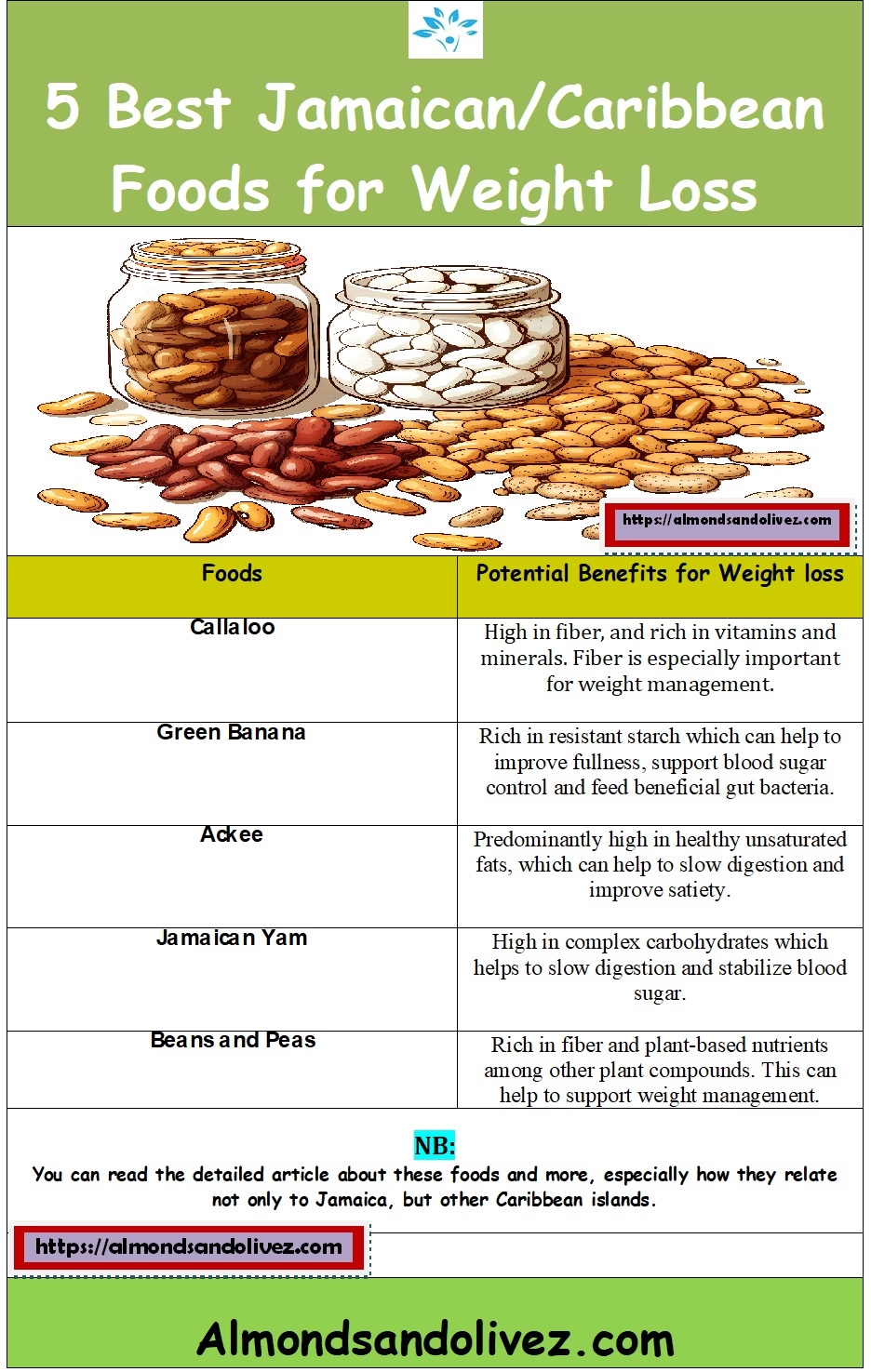
Illustrative Summary
Here is an illustrative summary of 5 Best Jamaican and/or Caribbean Foods For Weight Loss
Let’s Sum Up!
Weight loss does not have to mean abandoning cultural foods or traditions.
In fact, many Jamaican foods naturally contain nutrients that may support satiety, metabolic health, and overall wellness.
Foods such as callaloo, green banana, ackee, yam, and beans can all be part of a balanced approach to healthier eating.
However, it is important to manage your portions. This is critical not only for weight management, but also for overall health and well-being. Also, it is important that we focus on nourishment, balance, and consistency instead of short-term gains.
As you have read, there is no need for Jamaicans or our Caribbean neighbours to import particular foods for ‘weight management or overall health. This is because most of our traditional foods are already nutrient-dense and can support your health journey.
So, now that we have explored some of the best Jamaican foods that can aid in weight management, were you surprised by any? Which of these foods are your favourite/s? Share it nuh! In the comments below.
Here are some other useful articles, videos and free downloads that can help you on your journey to a healthier lifestyle.
- Otaheiti Apple (Jamaican Apple)
- Cerasee Tea: Benefits, Side Effects and How to Use it Safely
- 5 Amazing Soursop Benefits: Beyond Nerve Health
- Guinep (Ackee Plum): Nutrition, Health Benefits, Uses & Risks
- Guinep Leaf Tea: Exploring the Science Behind the ‘Fever Grass’ of the Antilles
- Podcast: Talk Fruit to Me – Otaheiti (Jamaican Apple)
- Podcast: Talk Fruit to Me – Sweetsop
- Video: Let’s Talk Cerasee Tea
- Video: Let’s Talk Guinep (Jamaica’s Treasure)
- Video: Let’s Talk Guinep Leaf Tea
- Free Download – Caribbean Bush Tea Guide
References and Further Readings
- Arshad MT, Maqsood S, Altalhi R, Shamlan G, Mohamed Ahmed IA, Ikram A, Abdullahi MA. Role of Dietary Carbohydrates in Cognitive Function: A Review. Food Sci Nutr. 2025 Jul 1;13(7): e70516. doi: 10.1002/fsn3.70516. PMID: 40599356; PMCID: PMC12209867.
- Blount, Ben G.; Sanches, Mary (10 May 2014). Sociocultural Dimensions of Language Change. Elsevier. ISBN 9781483277653 – via Google Books
- Burley, Victoria & Paul, A.W. & Blundell, John. (1993). Influence of a high-fibre food (myco-protein) on appetite: Effects on satiation (within meals) and satiety (following meals). European journal of clinical nutrition. 47. 409-18.
- Erlanson-Albertsson C. Fat-Rich Food Palatability and Appetite Regulation. In: Montmayeur JP, le Coutre J, editors. Fat Detection: Taste, Texture, and Post Ingestive Effects. Boca Raton (FL): CRC Press/Taylor & Francis; 2010. Chapter 14. Available from: https://www.ncbi.nlm.nih.gov/books/NBK53552/
- Goldson A, Bremmer D, Nelson K, Minott DA. Fat profile of jamaican ackees, oleic Acid content and possible health implications. West Indian Med J. 2014 Jan;63(1):9-12. doi: 10.7727/wimj.2013.052. Epub 2014 Mar 17. PMID: 25303186; PMCID: PMC4655631.
- Glynn EL, Fleming SA, Edwards CG, Wilson MJ, Evans M, Leidy HJ. Consuming a Protein and Fiber-Based Supplement Preload Promotes Weight Loss and Alters Metabolic Markers in Overweight Adults in a 12-Week, Randomized, Double-Blind, Placebo-Controlled Trial. J Nutr. 2022 Jun 9;152(6):1415-1425. doi: 10.1093/jn/nxac038. PMID: 35212740; PMCID: PMC9178960.
- Han, Jun & Wu, Jirong & Liu, Xin & Shi, Jianrong & Xu, Jianhong. (2023). Physiological effects of resistant starch and its applications in food: a review. Food Production, Processing and Nutrition. 5. 10.1186/s43014-023-00156-x.
- Howarth NC, Saltzman E, Roberts SB. Dietary fiber and weight regulation. Nutr Rev. 2001 May;59(5):129-39. doi: 10.1111/j.1753-4887. 2001.tb07001. x. PMID: 11396693.
- Kim SJ, de Souza RJ, Choo VL, Ha V, Cozma AI, Chiavaroli L, Mirrahimi A, Blanco Mejia S, Di Buono M, Bernstein AM, Leiter LA, Kris-Etherton PM, Vuksan V, Beyene J, Kendall CW, Jenkins DJ, Sievenpiper JL. Effects of dietary pulse consumption on body weight: a systematic review and meta-analysis of randomized controlled trials. Am J Clin Nutr. 2016 May;103(5):1213-23. doi: 10.3945/ajcn.115.124677. Epub 2016 Mar 30. PMID: 27030531.
- Mondo JM, Balezi AZ, Ishara J, Mwanga JIM, Matendo ER, Bagaya DN, Chuma GB, Agre PA, Adebola P, Asfaw A. Nutritional and health benefits of wild and cultivated yam (Dioscorea spp.) species consumed in eastern Democratic Republic of Congo. Sci Rep. 2025 Nov 26;15(1):42131. doi: 10.1038/s41598-025-26046-5. PMID: 41298666; PMCID: PMC12658234.
- Moris, J. M., Heinold, C., Blades, A., & Koh, Y. (2022). Nutrient-based appetite regulation. Journal of Obesity & Metabolic Syndrome, 31(2), 161.
- Mullins, A. P., & Arjmandi, B. H. Health Benefits of Plant-Based Nutrition: Focus on Beans in Cardiometabolic Diseases. Nutrients. 2021 Feb 5;13(2):519. doi: 10.3390/nu13020519. PMID: 33562498; PMCID: PMC7915747.
- Munir H, Alam H, Nadeem MT, Almalki RS, Arshad MS, Suleria HAR. Green banana resistant starch: A promising potential as functional ingredient against certain maladies. Food Sci Nutr. 2024 May 6;12(6):3787-3805. doi: 10.1002/fsn3.4063. PMID: 38873476; PMCID: PMC11167165.
- Obidiegwu JE, Lyons JB, Chilaka CA. The Dioscorea Genus (Yam)-An Appraisal of Nutritional and Therapeutic Potentials. Foods. 2020 Sep 16;9(9):1304. doi: 10.3390/foods9091304. PMID: 32947880; PMCID: PMC7555206.
- Polak R, Phillips EM, Campbell A. Legumes: Health Benefits and Culinary Approaches to Increase Intake. Clin Diabetes. 2015 Oct;33(4):198-205. doi: 10.2337/diaclin.33.4.198. PMID: 26487796; PMCID: PMC4608274.
- Slavin JL. Dietary fiber and body weight. Nutrition. 2005 Mar;21(3):411-8. doi: 10.1016/j.nut.2004.08.018. PMID: 15797686
- Wray, Debbian & Barnaby, Andrea & Bailey, Dennis. (2020). Ackee (Blighia Sapida KD Koenig) – A Review of Its Economic Importance, Bioactive Components, Associated Health Benefits and Commercial Applications. International Journal of Fruit Science. 20. 1-15. 10.1080/15538362.2020.1772941.


 Foods High in Oxalates: What Researchers Say About Oxalate Overload, Kidney Stones and Dietary Balance