

Few infectious diseases have captured global attention quite like Ebola, and the last few months of 2026 were a resounding one.
The mere mention of the word often evokes images of deadly outbreaks, healthcare workers in protective suits, and emergency public health responses. While Ebola is indeed a serious disease, it is also one that is frequently misunderstood.
For many people, the fear surrounding Ebola stems from its high fatality rate and the dramatic nature of some outbreaks. However, understanding the science behind the disease can help separate fact from fiction.
Researchers have spent decades studying Ebola, how it spreads, how it affects the body, and how outbreaks can be controlled. Today, we know much more than we did when the virus was first identified in 1976 due to simultaneous outbreaks of two (2) different strains (Centers for Disease Control; Breman et al. 2016).
So, what exactly is Ebola? How does it spread? What are the symptoms? Is Jamaica at risk? And perhaps most importantly, what should individuals and communities do if an outbreak occurs? Let’s explore the science!
What is Ebola?
Ebola disease, formerly known as Ebola virus disease (EVD), is a rare but severe illness caused by viruses belonging to the Orthoebolavirus genus. It is often a serious disease and can be fatal if not identified and managed promptly (Etymologia, 2015; World Health Organisation; Centres for Disease Control and Prevention).
The disease was first recognized in 1976 during outbreaks in what are now the Democratic Republic of the Congo (previously Zaire) and South Sudan. One of the outbreaks occurred near the Ebola River, which gave the disease its name (Etymologia, 2015).
As mentioned, Ebola is not a single disease or virus, but rather a family of related viruses. These viruses cause a collection of related illnesses called – Ebola diseases or what was previously known as Ebola virus disease (Centers for Disease Control and Prevention).
According to the Centers for Disease Control and Harvard School of Public Health, there are reportedly six (6) different species, but only four (4) have been known to cause diseases in humans. The four (4) viruses that have been responsible for some of the major outbreaks are:
Ebola virus (Zaire ebolavirus – EBOV) – This causes the Ebola virus disease and is the deadliest. It has also reportedly caused the largest outbreaks (Feldmann et al 2020; Hollingshead et al. 2026; World Health Organization).
Sudan virus (Sudan ebolavirus – SUDV) – This virus was responsible for a significant outbreak in East Africa (Hollingshead et al. 2026; Centers for Disease Control and Prevention).
Bundibugyo virus (Bundibugyo ebolavirus – BDBV) – This virus was recently discovered in 2007, to be exact, and is responsible for the outbreaks reported in Central and East Africa. In fact, this species is reportedly the main one that is causing the current and most recent outbreak of 2026 (Hollingshead et al. 2026; Broadhurst et al 2016; Centers for Disease Control and Prevention).
Taï Forest virus (Taï Forest ebolavirus) – This is the rarest species, with very few reported human deaths. In fact, only one human death has been reportedly caused by this virus (Letafati et al 2023; Broadhurst et al 2016; Centers for Disease Control and Prevention).
As such, reports state that only three (3) of the viruses or species have been responsible for major outbreaks. These are Ebola (Zaire), the Sudan and Bundibugyo. Bundibugyo is the virus that is responsible for the current and ongoing outbreak of 2026 (Centers for Disease Control and Prevention; Delayo et al 2026).
The average case fatality rate is estimated to be around 32% to 34%, which is reportedly lower than the historical 50% average rate, although rates have varied significantly across outbreaks depending on the virus strain, healthcare access, and the speed of response (European Center for Disease Control and Prevention, 2026).
Ebola is not a single disease or virus, but rather a family of related viruses. These viruses cause a collection of related illnesses called – Ebola diseases.
Where Does Ebola Come From?
Scientists believe that the virus appears episodically in animal populations in countries closest to the African equator (Hollingshead et al. 2024) and is reportedly highly transmissible between humans and certain wild animals such as apes and (Letafati et al. 2023).
As such, the virus may enter human populations through close contact with infected animals, including fruit bats, monkeys, chimpanzees, gorillas, forest antelope and porcupines (Centers for Disease Control; Murphy and Peters, 1998; Letafati et al 2023).
However, the fruit bats have been cited by many studies as the primary host of the virus (Centers for Disease Control; World Health Organization; Murphy and Peters, 1998)
This type of transmission is known as a zoonotic spillover event, where a disease moves from animals to humans (Harvard School of Public Health; Centers for Disease Control).
How Does Ebola Spread?
One of the most important facts to understand is that Ebola does not spread as easily as respiratory viruses such as influenza or COVID-19.
Reports indicate that transmission occurs through direct contact with blood, vomit, faeces, urine, saliva, sweat, semen and other bodily fluids of an individual infected with the virus (Centers for Disease Control; World Health Organization).
The transmission of the virus from animals to humans is reportedly very rare. However, when it does, it is known as a zoonotic spillover event (Baudel et al. 2019; Harvard School of Public Health; Centers for Disease Control).
People can also become infected through contact with contaminated surfaces, clothing, bedding, or medical equipment (Centers for Disease Control; World Health Organization).
Importantly, an individual cannot spread Ebola before symptoms develop. Research has shown that an individual will only start experiencing symptoms between 2 and 21 days of being infected.
Additionally, individuals only become contagious after symptoms appear (Centers for Disease Control; World Health Organization; Beeching et al. 2014). As such, you cannot get infected by simply being in public spaces, as the virus does not spread through the air.
What Happens in the Body?
Once the virus enters the body, it begins infecting various cells and tissues.
The virus can trigger widespread inflammation and damage blood vessels, organs, and the immune system (Centers for Disease Control; Feldmann and Geisbert, 2011; Ramanan et al., 2011)
Researchers have found that Ebola can affect the liver, kidneys, immune cells, blood clotting systems and the gastrointestinal tract (Feldmann and Geisbert, 201; Ramanan et al., 2011).
This widespread involvement helps explain why severe illness can develop rapidly in some patients.
Symptoms of Ebola
The incubation period, which is the time between infection and symptom onset, can range from 2 to 21 days.
Early symptoms often resemble other illnesses, which can make diagnosis difficult.
However, common early symptoms include fever, fatigue, headache, muscle aches, sore throat and general weakness (Hollingshead et al. 2024; Centers for Disease Control and Prevention).
Nonetheless, as the disease progresses, symptoms may include vomiting, diarrhea, abdominal pain, rash, liver and kidney dysfunction (Hollingshead et al. 2024; Letafati et al. 2023; Baseler et al. 2017).
Although Ebola is often associated with bleeding, significant bleeding is less common than many people realize and may occur later in severe cases (Zawilińska and Kosz-Vnenchak, 2014; Mwamba et al. 2026).
Why Early Diagnosis Matters
One of the biggest challenges with Ebola is that early symptoms can resemble so many other diseases, such as malaria, typhoid fever, influenza, meningitis and other types of viral infections (Centers for Disease Control and Prevention; Kadanali and Karagoz, 2015).
This type of overlap can delay diagnosis and increase the risk of transmission.
Self-diagnosis is not recommended, as Ebola can be fatal. As such, laboratory testing is required to confirm infection. Diagnostic methods include PCR testing and specialized laboratory analyses (World Health Organization; European Center for Disease Control and Prevention).
How is Ebola Treated?
There is no simple cure for Ebola. However, early supportive care dramatically improves survival.
Treatment may include oral or intravenous fluids, electrolyte replacement, oxygen support, treatment of related infections (co-infections) and nutritional support (West TE and von Saint André-von Arnim, 2014; Kiiza et al. 2020).
However, for the Ebola virus disease caused by the Ebola virus species, the World Health Organization (WHO) recommends specific monoclonal antibody treatments, including ansuvimab (mAb114) and REGN-EB3 (Inmazeb).
These therapies have improved outcomes in some outbreaks (World Health Organization; Taki et al. 2023).
Are There Any Vaccines for Ebola?
Yes. Ervebo is currently the only approved vaccine, but only for the Ebola virus disease caused by the Ebola virus species (Zaire Ebolavirus species). Other vaccines such as Zabdeno and Mvabea were withdrawn globally (World Health Organization; Kuehn et al. 2024).
Vaccination has become a critical tool for outbreak control and the protection of frontline healthcare workers.
However, approved vaccines are not yet available for every Ebola-related virus species.
Nonetheless, researchers continue to develop vaccines for Sudan virus and Bundibugyo virus disease, which currently have no licenced or approved vaccines (World Health Organization; Sullivan, 2026; University of California, Riverside).
What Should You Do During An Ebola Outbreak?
For most people, especially those outside outbreak regions, the risk of Ebola remains extremely low. However, public health recommendations according to the World Health Organization and Centers for Disease Control generally include:
Avoid Direct Contact with Infected Individuals
Avoid contact with blood or bodily fluids from anyone suspected or confirmed to have Ebola.
Follow Public Health Guidance
Pay attention to updates from health authorities and follow recommended precautions.
Practice Good Hand Hygiene
Regular handwashing remains one of the simplest and most effective infection prevention measures.
Seek Medical Care Promptly
If you have symptoms and may have been exposed to Ebola, seek medical attention immediately and inform healthcare providers of potential exposure.
Avoid Handling Bodies During Outbreaks
Reports content that traditional burial practices involving direct contact with the deceased have contributed to transmission during some outbreaks. Safe burial procedures are important during outbreak response efforts (Sikakulya et al. 2021).
Lessons From Past Ebola Outbreaks
Researchers have learned several important lessons from previous outbreaks.
Successful outbreak control often depends on early detection, rapid testing, contact tracing, community education, isolation of cases, the provision of protective equipment for healthcare workers and vaccination in cases where it is appropriate or available.
Community trust and engagement are also critical. Public health experts consistently emphasize that effective communication and local participation play major roles in controlling outbreaks.
Is Jamaica At Risk for an Ebola Outbreak?
This is a question many Jamaicans may be asking, especially when news reports emerge about Ebola outbreaks in other parts of the world.
The short answer is that Jamaica’s risk of an Ebola outbreak remains low, but not zero, as with many other countries.
Like many countries, Jamaica is connected to the rest of the world through international travel, tourism, business, and trade. This means that while Ebola is not present in Jamaica based on reports, there is always the possibility that an infected traveller could enter the country, particularly during an active outbreak elsewhere.
However, public health experts emphasize that an imported case is not the same thing as a widespread outbreak.
Unlike highly contagious respiratory illnesses such as COVID-19, Ebola does not spread through the air. Research has consistently (including those referenced in this article) shown that the virus is transmitted through direct contact with the blood, bodily fluids, or contaminated materials of a person who is actively ill.
This makes Ebola much more difficult to spread casually within communities.
Jamaica’s Preparedness Efforts
Based on what I have researched and observed, Jamaica’s Ministry of Health and Wellness has strengthened its preparedness measures in line with recommendations from the World Health Organization (WHO).
This came after the initial reported situation in parts of Africa where the outbreak occurred. To this extent, Health officials have indicated that Jamaica remains Ebola-free, with no confirmed or suspected cases on the island.
Why Public Health Experts Focus on Preparedness?
Public health officials often say that preparedness is the best defense against infectious diseases.
The Pan American Health Organization (PAHO) has noted that while the overall risk of Ebola in the Americas remains low, countries should maintain strong surveillance systems so that any imported case can be identified quickly and managed appropriately (paho.org).
Rapid detection, isolation, contact tracing, and infection-control measures are key strategies for preventing local transmission.
A Researcher’s Perspective
From a scientific perspective, Ebola is both a public health challenge and, once again, like COVID-19, a reminder of how interconnected human, animal, and environmental health can be.
The disease highlights the importance of many key elements in the management of public health. These include proper and ongoing disease surveillance, strong healthcare systems, continuous scientific research, global cooperation and public health preparedness and responsiveness.
While Ebola remains a serious illness, advances in diagnostics, supportive care, vaccines, and outbreak response have improved our ability to respond compared with earlier decades.
Knowledge, preparedness, and evidence-based public health measures remain some of the most powerful tools available.
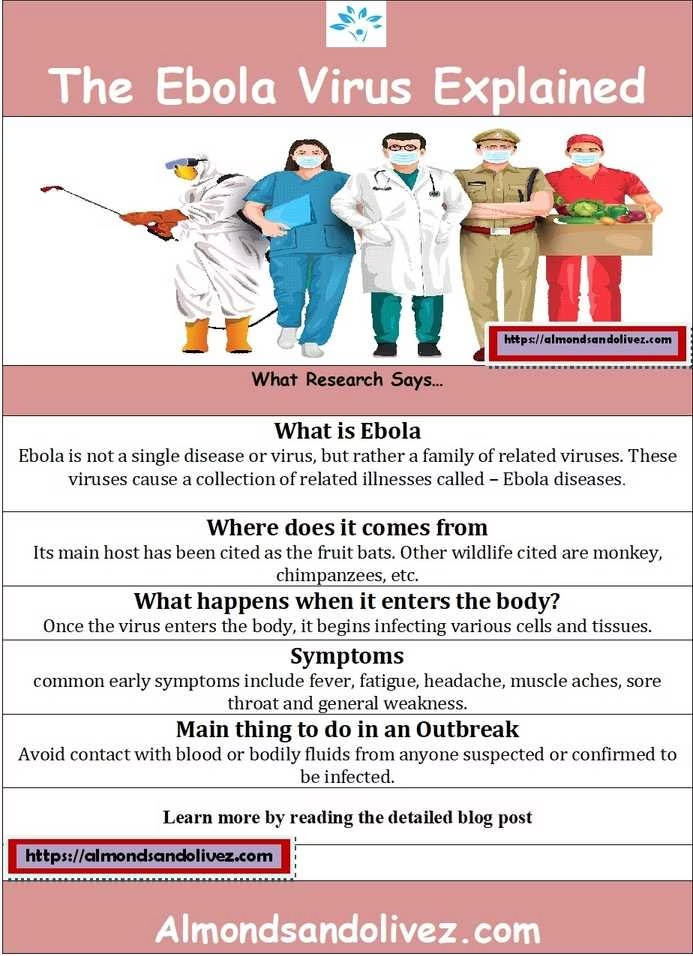
Illustrative Summary
Here is an illustrative summary of EBOLA- Your Questions Answered
Let’s Sum Up!
Ebola is a severe viral disease, but it is also one of the most intensively studied infectious diseases in the world.
Researchers continue to learn more about how the virus spreads, how it affects the body, and how outbreaks can be prevented and controlled.
For the average person, understanding the science behind Ebola can help replace a sense of fear with informed awareness. This will help in making informed decisions, should an outbreak occur in your area.
As with many public health challenges, the goal is not to panic, even though this is easier said than done in most cases, but to be prepared, provide the necessary public health education and take evidence-based action.
Because when it comes to infectious diseases, knowledge is often one of our strongest defenses.
Here are some useful articles and videos to help you maintain overall good health:
- Quercetin: A Powerful Flavonoid and Immune System Defender
- 5 Powerful Benefits of Elderberry (And Why Everyone is Talking ABout It)
- Cranberries – The Little Red Berries with some ‘Huge’ Health Benefits
- Burdock Root Benefits: 6 Reasons This Herb Is a Gift of Nature
- Video: Let’s Talk Quercetin
- Video: Let’s Talk Cranberries
- Video: Let’s Talk Turmeric
References and Further Readings
- Baseler L, Chertow DS, Johnson KM, Feldmann H, Morens DM. The Pathogenesis of Ebola Virus Disease. Annu Rev Pathol. 2017 Jan 24; 12:387-418.
- Baudel H, De Nys H, Mpoudi Ngole E, Peeters M, Desclaux A. Understanding Ebola virus and other zoonotic transmission risks through human-bat contacts: Exploratory study on knowledge, attitudes and practices in Southern Cameroon. Zoonoses Public Health. 2019 May;66(3):288-295.
- Beeching NJ, Fenech M, Houlihan CF. Ebola virus disease. BMJ. 2014 Dec 10;349: g7348. doi: 10.1136/bmj. g7348. PMID: 25497512; PMCID: PMC4707720.
- Breman JG, Heymann DL, Lloyd G, McCormick JB, Miatudila M, Murphy FA, Muyembé-Tamfun JJ, Piot P, Ruppol JF, Sureau P, van der Groen G, Johnson KM. Discovery and Description of Ebola Zaire Virus in 1976 and Relevance to the West African Epidemic During 2013-2016. J Infect Dis. 2016 Oct 15;214(suppl 3): S93-S101. doi: 10.1093/infdis/jiw207. Epub 2016 Jun 29. PMID: 27357339; PMCID: PMC5050466.
- Broadhurst MJ, Brooks TJ, Pollock NR. Diagnosis of Ebola Virus Disease: Past, Present, and Future. Clin Microbiol Rev. 2016 Oct;29(4):773-93.
- Delayo L. Zomahoun, MD1,2; Mary Adetinuke Boyd, MD1,3,4; Margaret A. Honein, PhD1; Joel M. Montgomery, PhD1,4; Emily Zielinski-Gutierrez, DrPH1; Elissa Meites, MD1,4; Athalia Christie, DrPH1; Satish K. Pillai, MD1,4; CDC 2026 Ebola Response
- Etymologia. Ebola. Emerg Infect Dis. 2015 Nov;21(11):1905. doi: 10.3201/eid2111.et2111. PMID: 26785507; PMCID: PMC4622270.
- Feldmann H, Sprecher A, Geisbert TW. Ebola. N Engl J Med. 2020 May 07;382(19):1832-1842.
- Feldmann H, Geisbert TW. Ebola haemorrhagic fever. Lancet 2011; 377:849-62.
- Hollingshead CM, Swinkels HM, Shah Su. Ebola Virus Disease. [Updated 2024 Mar 1]. In: StatPearls [Internet]. Treasure Island (FL): StatPearls Publishing; 2026 Jan-. Available from: https://www.ncbi.nlm.nih.gov/books/NBK560579/
- Kadanali A, Karagoz G. An overview of Ebola virus disease. North Clin Istanb. 2015 Apr 24;2(1):81-86. doi: 10.14744/nci.2015.97269. PMID: 28058346; PMCID: PMC5175058.
- Kiiza P, Mullin S, Teo K, Adhikari NKJ, Fowler RA. Treatment of Ebola-related critical illness. Intensive Care Med. 2020 Feb;46(2):285-297. doi: 10.1007/s00134-020-05949-z. Epub 2020 Feb 13. PMID: 32055888; PMCID: PMC7223059.
- Kuehn R, Ryan H, Okwaraeke KC, Gould S, Chaplin M, Riley M, Turtle L, Jacob ST, Fletcher T. Vaccines for preventing Ebola virus disease. Cochrane Database Syst Rev. 2024 Nov 19;11(11): CD015828. doi: 10.1002/14651858.CD015828. PMID: 39560047; PMCID: PMC11574942.
- Letafati A, Salahi Ardekani O, Karami H, Soleimani M. Ebola virus disease: A narrative review. Microb Pathog. 2023 Aug; 181:106213. [PubMed]
- Murphy FA, Peters CJ. 13 Ebola virus: where does it come from and where is it going? Biomedical Research Reports. 1998; 1:375–410. doi: 10.1016/S1874-5326(07)80037-8. Epub 2007 Sep 28. PMCID: PMC7172957.
- Mwamba D, Akilimali P, Mboussou F, et al. Bundibugyo virus disease outbreak in Ituri, Democratic Republic of the Congo. Lancet. In press. 2026. https://doi.org/10.1016/S0140-6736(26)01072-X PMID:42214396
- Ramanan P, Shabman RS, Brown CS, Amarasinghe GK, Basler CF, Leung DW. Filoviral immune evasion mechanisms. Viruses 2011; 3:1634-49.
- Sikakulya FK, Ilumbulumbu MK, Djuma SF, Bunduki GK, Sivulyamwenge AK, Jones MK. Safe and dignified burial of a deceased from a highly contagious infectious disease, ebolavirus: Socio-cultural and anthropological implications in the Eastern DR Congo. One Health. 2021 Aug 13; 13:100309. doi: 10.1016/j.onehlt.2021.100309. PMID: 34458545; PMCID: PMC8379334.
- Sullivan NJ. Bundibugyo Virus Disease in 2026 – Clinical and Public Health Responses. N Engl J Med. 2026 Jul 16;395(3):278-289. doi: 10.1056/NEJMra2607216. Epub 2026 Jun 24. PMID: 42341299.
- Taki E, Ghanavati R, Navidifar T, Dashtbin S, Heidary M, Moghadamnia M. Ebanga™: The most recent FDA-approved drug for treating Ebola. Front Pharmacol. 2023 Mar 8; 14:1083429. doi: 10.3389/fphar.2023.1083429. PMID: 36969842; PMCID: PMC10032372.
- West TE, von Saint André-von Arnim A. Clinical presentation and management of severe Ebola virus disease. Ann Am Thorac Soc. 2014 Nov;11(9):1341-50. doi: 10.1513/AnnalsATS.201410-481PS. PMID: 25369317.
- Zawilińska B, Kosz-Vnenchak M. General introduction into the Ebola virus biology and disease. Folia Med Cracov. 2014;54(3):57-65.


 Pancake Cake Slices: An Easy Family Breakfast or Snack