
Over the past few years, oxalates have become a growing topic of discussion in nutrition and wellness spaces.
Some people view oxalates as harmful compounds that should be avoided entirely. In contrast, others argue that concerns about oxalates are often exaggerated and may unnecessarily discourage the consumption of otherwise nutritious foods.
Oxalates are naturally occurring compounds found in many plant foods, including several foods often considered healthy such as spinach, beets, and almonds. In most healthy individuals, oxalates are processed and excreted through the urine without major problems.
However, in susceptible individuals, excessive oxalate accumulation may contribute to calcium oxalate kidney stone formation and other metabolic complications.
So, what exactly are oxalates, and should we really be concerned about ‘oxalate overload’? What does the evidence say about foods high in oxalates? What can an ‘overload’ do to the body? Let’s explore the science!
You can learn more about calcium oxalate kidney stones in this article as well as a video:
What are Oxalates?
Oxalates, also called oxalic acid salts, are naturally occurring compounds produced both by plants and the human body.
In plants, oxalates may serve protective and structural roles.
In humans, oxalate is considered a metabolic end-product (waste product), meaning the body cannot further break it down and must excrete it primarily through urine (Baltazar et al. 2023).
Oxalates can come from dietary intake and endogenous production inside the body. Once inside the digestive tract, oxalates may either bind with calcium in the intestines and leave through stool or become absorbed into the bloodstream and later excreted by the kidneys (Rosenstock et al. 2022; Baltazar et al. 2023).
The concern arises when oxalate combines with calcium in urine, potentially forming calcium oxalate crystals and kidney stones.
According to nephrology research, calcium oxalate stones account for the majority of kidney stones globally (Khan et al., 2016).
Oxalates, also called oxalic acid salts, are naturally occurring compounds produced both by plants and the human body
What Is Oxalate Overload?
“Oxalate overload” is not always a formally defined medical diagnosis, but the term is commonly used to describe situations where oxalate accumulation may exceed the body’s ability to process and eliminate it efficiently.
This may occur due to extremely high oxalate intake, impaired kidney function, the consumption of excessive vitamin C supplementation, if you have a gut disorder which can affect absorption, low calcium intake and dehydration (Baltazar et al. 2023; Shastri et al. 2023; Fontana et al. 2020).
In some cases, elevated urinary oxalate levels may increase the likelihood of kidney stone formation.
According to research, rarely, severe oxalate accumulation may contribute to oxalate nephropathy, kidney injury or tissue crystal deposition. This usually happens when high levels of oxalate form hard crystals in the body (Bargagli et al. 2020; Cleveland Clinic, 2023; Bao et al. 2023).
Nonetheless, researchers emphasize that oxalate-related complications are usually multifactorial rather than caused by one food alone.
You can learn more about oxalate overload or toxicity in both the article and video below:
Foods Naturally High in Oxalates
Several nutrient-rich foods contain relatively high levels of oxalates.
However, this does not automatically make them “bad,” but individuals prone to kidney stones or hyperoxaluria may need to monitor portions more carefully. Hyperoxaluria is a situation where your urine has high levels of oxalates, which can over time harm the kidneys and lead to serious kidney damage (Qian et al. 2022; Baltazar et al. 2023).
1. Spinach
Spinach is often considered one of the highest oxalate-containing foods.
While highly nutritious and rich in nutrients such as folate, iron, antioxidants and vitamin K, spinach can reportedly contribute substantial oxalate intake, particularly when consumed frequently in large amounts such as in green smoothies.
Research consistently identifies spinach as a major dietary source of oxalate (Joshi et al. 202; Savage et al. 2000).
However, research suggests that cooking spinach in boiling water and draining the water will help to remove a large portion of the soluble oxalate (Wanasundera and Ravindran 1994). Notably, as most research has purported, you can pair your spinach with calcium-rich foods to help bind the oxalates in the gut rather than in the kidneys, as well as keeping hydrated, which can help to flush oxalates from the body.
2. Beet Greens and Beets
Beet greens (leaves) are especially high in oxalates, while beets (root) themselves contain moderate to high amounts.
As such, despite their antioxidant benefits, eating large amounts can contribute to the development of kidney stones, particularly in people at risk (Simpson et al. 2009).
As with spinach, you can reduce the amount of oxalate when you consume beet greens or beet roots by boiling them in water and discarding the water, instead of steaming or roasting, which reportedly removes far less of the oxalates. This is because oxalates are water-soluble; therefore, they will dissolve into cooking water (Savage et al. 2000).
You can also pair it with calcium-rich foods.
3. Almonds and Their Nut Products
Almonds and almond flour are widely used in low-carbohydrate diets, gluten-free baking and wellness foods. However, almonds contain relatively high oxalate concentrations.
Large quantities of almond-based products consumed regularly may significantly increase oxalate intake (Chai W, Liebman M, 2004).
In the research with Chai and Liebman, which was conducted with both the consumption of almonds, which are high in oxalate and black beans, which are moderately high in oxalate but not as much as almonds, it was found that higher oxalate was absorbed from the almonds, rather than the beans.
This suggests that the relative amount of soluble and insoluble oxalate in a particular food will play an important role in the amount of oxalate absorbed.
You can reduce oxalate levels in almonds by soaking, blanching or boiling them. However, it is more difficult to reduce oxalates in almond flour, because the processing of the flour already alters the flour texture and nutrients. As such, it would be best to reduce its consumption or, as indicated throughout this article, pair oxalate-containing foods with calcium-rich foods to reduce their absorption in the kidneys.
4. Sweet Potatoes
Sweet potatoes are a nutrient-dense starchy root vegetable. As such, they provide fiber, beta-carotene, potassium, manganese and many other nutrients that can contribute to one’s overall health. Nonetheless, despite them being very nutrient-rich, they also provide moderate levels of oxalates (Gouveia et al. 2020).
For most healthy individuals, moderate intake is unlikely to cause problems.
You can reduce the levels of oxalates in sweet potatoes by removing the skin before cooking, as well as boiling them and discarding the water.
On the other hand, reports suggest that one should avoid baking, roasting or steaming sweet potatoes does not reduce the level of oxalates as with boiling and removing the skins. This is because those methods trap or fail to wash away the oxalates (Chai and Liebman, 2005).
5. Rhubarb
Rhubarb, a popular culinary ingredient, is among the highest known dietary oxalate sources (Vosoughi et al., 2026).
Historically, rhubarb leaves are considered toxic and should not be eaten, partly because of their high oxalate content, which is reportedly more concentrated in their leaves. The stalks also contain high amounts of oxalates, but are reportedly safer to consume (MedlinePlus, 2020).
Further, its consumption may reportedly not only cause damage to the kidneys, but also the liver, with research purporting even the development of cancers (Li et al. 2017; Xiang et al. 2020).
While boiling the rhubarb can reportedly lower its soluble oxalate content slightly, the levels remain high compared to other foods (Savage, 2011).
To reduce the levels of oxalates in the stalk of the rhubarb, which is the part that reportedly may be eaten, research suggests boiling it in water and cooking it with milk. This method significantly lowers the bioavailability of the soluble oxalates and helps with calcium binding (Nguyen et al. 2020).
Fermenting rhubarb or rhubarb-based products with particular strains of lactic acid bacteria will also reduce its oxalate levels (Vosoughi et al. 2026).
6. Cocoa and Dark Chocolate
Cocoa products also contain oxalates. Therefore, products like dark chocolate, cacao powder, and your favourite chocolate-based smoothies may contribute to oxalate intake, especially when consumed excessively (Lagemann et al. 1985; Witt et al. 2016).
Research suggests that the method of farming significantly influences the content of oxalates in cocoa. As such, cocoa from conventional farming was found to have higher levels of oxalates than those from organic methods (Witt et al. 2016).
To reduce the levels of oxalates when using cocoa or cocoa-related products, research recommends that you use it with high-calcium milk or calcium-rich foods (ScienceDirect.com). Additionally, methods such as fermentation or drying, such as sun, oven or freeze-drying, only marginally alter the total oxalate levels (ScienceDirect.com; Huynh et al. 2020). As such, the traditional method of processing the cocoa beans does not significantly lower oxalate levels.
7. Tea
Certain teas, particularly black tea, contain oxalates. Black tea reportedly has higher levels of oxalates than green, white, oolong and other herbal teas (Charrier et al. 2002).
Heavy tea consumption has occasionally been linked to increased oxalate burden in case reports involving excessive intake. As such, people with hyperoxaluria or prone to kidney stones should either avoid these teas or limit consumption to 1 or 2 cups per day, which is often recommended (Brzezicha-Cirock et al. 2016).
However, to reduce the oxalate levels in tea, especially black teas, research suggests drinking it with milk (Charrier et al. 2002). This will help to bind oxalates in the gut before it is absorbed into the body, especially the kidneys.
8. Soy Products
Soybeans and soy-based foods such as tofu may contain moderate oxalate levels.
Research has shown that commercial tofu contains generally low levels (usually less than 10 mcg per serving) of oxalates, while other whole soybean products like edamame, tempeh and soy flour contain moderate levels of oxalates (Al-Wahsh et al. 2005).
To reduce the level of oxalates in soybeans and soy-based products, research suggests extended soaking and thorough boiling, then discarding the water….
Boiling also helps to reduce the levels of oxalates; however, discard the water after boiling instead of using it for further cooking, example, stews, soups, etc.
Additionally, fermentation may also lower the levels of oxalates, as well as pairing them with calcium-rich foods.
Nonetheless, moderation and overall dietary balance are important to reduce build-up or toxicity.
Are High-Oxalate Foods Unhealthy?
This is where the discussion becomes a bit more complex.
Many high-oxalate foods are also highly nutritious. For example, spinach contains antioxidants and folate, almonds provide healthy fats and vitamin E, and sweet potatoes offer fiber and carotenoids.
Therefore, eliminating these foods without medical necessity may reduce overall dietary diversity and nutrient intake.
Researchers increasingly emphasize that nutritional context matters. Thus, one overall dietary pattern is an important consideration of overall health.
Who May Need to Be More Careful?
Certain individuals may be more sensitive to high oxalate intake.
These include people with recurrent calcium oxalate kidney stones, chronic kidney disease, hyperoxaluria, inflammatory bowel disease, fat malabsorption disorders, having an history of bariatric surgery and those with gut health issues (Karr et al. 2024; Mustapha, 2024; Shah et al. 2026).
Certain gut bacteria, such as Oxalobacter formigenes, may help degrade oxalate inside the intestines, potentially reducing absorption (Fargue et al. 2025).
The Calcium Connection: An Important Protective Factor
Interestingly, dietary calcium may help reduce oxalate absorption.
When calcium and oxalate bind together in the digestive tract, less oxalate may enter the bloodstream.
This is why severely restricting calcium may actually worsen oxalate absorption in some cases.
Researchers now generally recommend adequate calcium intake rather than aggressive calcium restriction.
Can Cooking Reduce Oxalates?
Yes, but only to some extent, which will be dependent on the particular food.
As indicated by research throughout this article, boiling certain vegetables may reduce oxalate content because some oxalates leach into the cooking water.
Studies also suggest boiling spinach can significantly reduce soluble oxalate levels compared with raw preparations.
However, reductions vary depending on the cooking method, food type and the cooking duration.
What About Green Smoothies?
Green smoothies have become extremely popular in wellness culture.
However, researchers and clinicians have occasionally raised concerns about repeated large intakes of raw spinach smoothies due to cumulative oxalate exposure.
For example, spinach, almond milk and cacao powder, combined daily, may create a relatively high oxalate load, even with the milk, which may add some levels of calcium which can help to bind oxalates. However, consuming several oxalate-high foods in one sitting, especially raw, may increase oxalate load and may lead to toxicity if done excessively.
Nonetheless, this does not mean green smoothies are inherently dangerous, but dietary variety remains important.
Hydration: One of the Most Important Protective Factors
Adequate hydration helps dilute urine and reduce crystal formation risk (Bao et al. 2020).
Dehydration may significantly increase the likelihood of stone formation even when oxalate intake is moderate.
To this extent, many researchers and nephrology experts emphasize that hydration is critical in the reduction of oxalates in our diet (Gamage et al. 2020).
Does Vitamin C Supplementation Increase Oxalates Too?
Yes, potentially.
Research suggests that the supplementation of high doses of ascorbic acid may metabolize into oxalate within the body (Knight et al. 2016).
This means that excessive vitamin C supplementation combined with high dietary oxalate intake may further increase urinary oxalate burden in susceptible individuals.
As such, one should be mindful of their vitamin C intake, when it comes to supplementation.
A Researcher’s Perspective: What Can We Reasonably Conclude?
From a scientific perspective, several conclusions appear reasonable:
- Oxalates are naturally present in many nutritious foods.
- Most healthy individuals tolerate normal dietary oxalate intake without major issues.
- Excessive intake may increase kidney stone risk in susceptible individuals.
- Hydration, calcium intake, kidney function, and gut health strongly influence risk.
- Eliminating plant foods due to fear is not always scientifically justified.
- Dietary balance and individualization are key.
In short, the evidence supports awareness and moderation rather than unnecessary panic.
Practical Ways to Reduce Excess Oxalate Burden
Individuals concerned about oxalate overload may consider:
- staying hydrated
- avoiding excessive megadose of vitamin C
- varying vegetable choices
- pairing oxalate foods with calcium-containing foods
- moderating extremely high-oxalate foods
- avoiding repetitive excessive smoothie habits
- supporting gut health
For individuals with recurrent kidney stones, medical evaluation and individualized dietary guidance may be especially important.
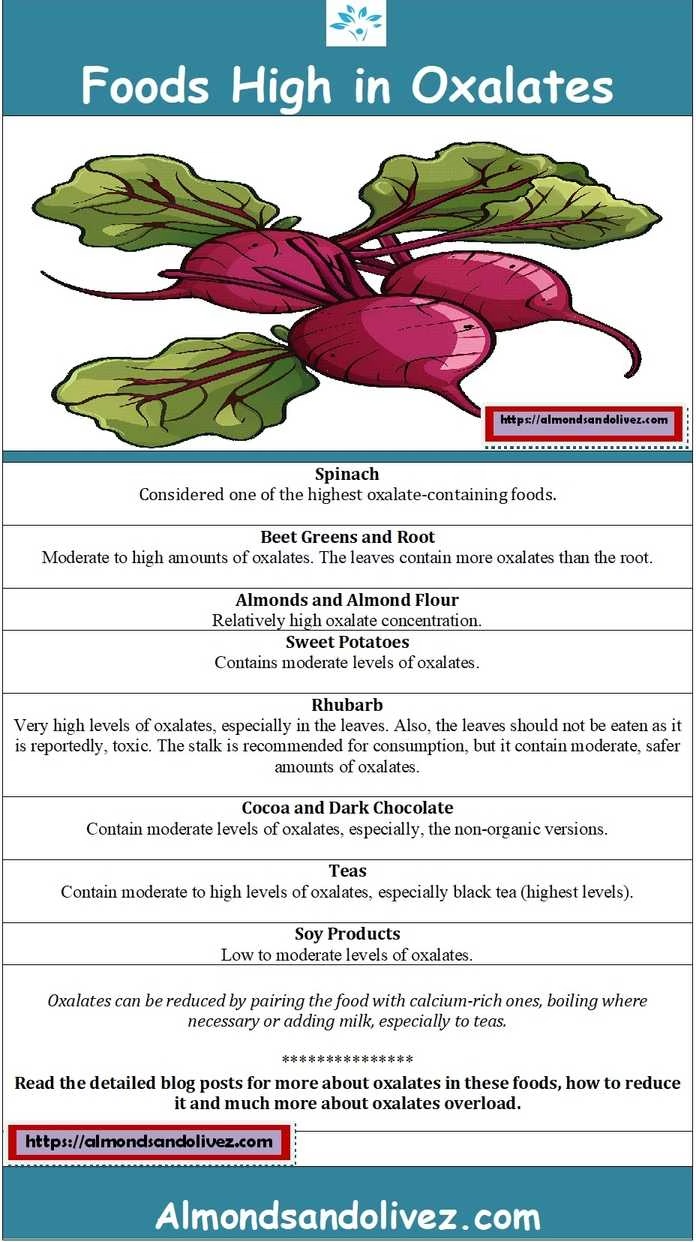
Illustrative Summary
Here is an illustrative summary of Foods that are HIGH in OXALATES
Let’s Sum Up!
Oxalates are a natural part of many healthy foods and human metabolism.
While excessive oxalate accumulation may contribute to kidney stone formation and related complications in susceptible individuals, the broader scientific evidence does not support demonizing all oxalate-containing foods.
From a researcher’s perspective, the issue is less about isolated foods and more about total dietary patterns, hydration, individual susceptibility, supplementation practices and overall metabolic health and dietary pattern.
As nutrition science often reminds us, balance usually matters more than extremes.
So, now that we have explored oxalates and some of the foods that contain the highest or moderate amounts, do you now have a better understanding of these foods and oxalates? Do you consume these foods? If so, which, and how do you consume it/them? Share it nuh! In the comments below.
Here are some other useful articles about oxalates and others about overall health, and a free download about calcium-rich foods. I have also included useful podcast episodes that can help you to understand the gut and overall well-being.
- Chia Seeds and Oxalates: Can Too Much Make You Sick?
- Video – Chia seeds and oxalates
- It’s Tea time – Here are 4 ‘To-Know’ of Teas, Including Weight Loss
- Podcast – Gut Health: Why It Matters!
- Free Download – Calcium-Rich Foods
References and Further Readings
- Al-Wahsh IA, Horner HT, Palmer RG, Reddy MB, Massey LK. Oxalate and phytate of soy foods. J Agric Food Chem. 2005 Jul 13;53(14):5670-4. doi: 10.1021/jf0506378. PMID: 15998131.
- Bao D, Wang Y, Zhao MH. Oxalate Nephropathy and the Mechanism of Oxalate-Induced Kidney Injury. Kidney Dis (Basel). 2023 Jul 27;9(6):459-468. doi: 10.1159/000533295. PMID: 38089442; PMCID: PMC10712969.
- Bao Y, Tu X, Wei Q. Water for preventing urinary stones. Cochrane Database Syst Rev. 2020 Feb 11;2(2): CD004292. doi: 10.1002/14651858.CD004292.pub4. PMID: 32045491; PMCID: PMC7012319.
- Baltazar P, de Melo Junior AF, Fonseca NM, Lança MB, Faria A, Sequeira CO, Teixeira-Santos L, Monteiro EC, Campos Pinheiro L, Calado J, Sousa C, Morello J, Pereira SA. Oxalate (dys)Metabolism: Person-to-Person Variability, Kidney and Cardiometabolic Toxicity. Genes (Basel). 2023 Aug 29;14(9):1719. doi: 10.3390/genes14091719. PMID: 37761859; PMCID: PMC10530622.
- Bargagli M, Tio MC, Waikar SS, Ferraro PM. Dietary Oxalate Intake and Kidney Outcomes. Nutrients. 2020 Sep 2;12(9):2673. doi: 10.3390/nu12092673. PMID: 32887293; PMCID: PMC7551439.
- Brzezicha-Cirocka, J., Grembecka, M. & Szefer, P. Oxalate, magnesium and calcium content in selected kinds of tea: impact on human health. Eur Food Res Technol 242, 383–389 (2016). https://doi.org/10.1007/s00217-015-2548-1
- Chai W, Liebman M. Assessment of oxalate absorption from almonds and black beans with and without the use of an extrinsic label. J Urol. 2004 Sep;172(3):953-7. doi: 10.1097/01.ju.0000135918.00761.8a. PMID: 15311007.
- Chai W, Liebman M. Effect of different cooking methods on vegetable oxalate content. J Agric Food Chem. 2005 Apr 20;53(8):3027-30. doi: 10.1021/jf048128d. PMID: 15826055.
- Charrier MJ, Savage GP, Vanhanen L. Oxalate content and calcium binding capacity of tea and herbal teas. Asia Pac J Clin Nutr. 2002;11(4):298-301. doi: 10.1046/j.1440-6047.2002.00294.x. PMID: 12495262.
- Fargue S, Suryavanshi M, Wood KD, Crivelli JJ, Oster RA, Assimos DG, Miller A, Knight J. Inducing Oxalobacter formigenes Colonization Reduces Urinary Oxalate in Healthy Adults. Kidney Int Rep. 2025 Feb 13;10(5):1518-1528. doi: 10.1016/j.ekir.2025.02.004. PMID: 40485679; PMCID: PMC12142626.
- Fontana F, Cazzato S, Giovanella S, Ballestri M, Leonelli M, Mori G, Alfano G, Ligabue G, Magistroni R, Cenacchi G, Antoniotti R, Bonucchi D, Cappelli G. Oxalate Nephropathy Caused by Excessive Vitamin C Administration in 2 Patients With COVID-19. Kidney Int Rep. 2020 Oct;5(10):1815-1822. doi: 10.1016/j.ekir.2020.07.008. Epub 2020 Jul 16. PMID: 32838081; PMCID: PMC7363608.
- Gamage KN, Jamnadass E, Sulaiman SK, Pietropaolo A, Aboumarzouk O, Somani BK. The role of fluid intake in the prevention of kidney stone disease: A systematic review over the last two decades. Turk J Urol. 2020 Nov;46(Supp. 1): S92-S103. doi: 10.5152/tud.2020.20155. Epub 2020 Jun 5. PMID: 32525478; PMCID: PMC7731957.
- Gouveia CS, Ganança JF, Lebot V, Pinheiro de Carvalho MÂ. Changes in oxalate composition and other nutritive traits in root tubers and shoots of sweet potato (Ipomoea batatas L. [Lam.]) under water stress. J Sci Food Agric. 2020 Mar 15;100(4):1702-1710. doi: 10.1002/jsfa.10185. Epub 2019 Dec 24. PMID: 31803935.
- Huynh, Nha & Duyên, Nguyễn & Nguyen, Ha. (2020). Reduction of soluble oxalate in cocoa powder by the addition of calcium and ultrasonication. Journal of Food Composition and Analysis. 93. 103593. 10.1016/j.jfca.2020.103593.
- “Hyperoxaluria: Causes, Symptoms, Diagnosis & Treatment”. Cleveland Clinic. 2023-09-08. Accessed: 2026-07-23.
- Joshi V, Penalosa A, Joshi M, Rodriguez S. Regulation of Oxalate Metabolism in Spinach Revealed by RNA-Seq-Based Transcriptomic Analysis. Int J Mol Sci. 2021 May 18;22(10):5294. doi: 10.3390/ijms22105294. PMID: 34069886; PMCID: PMC8157348.
- Karr T, Guptha LS, Bell K, Thenell J. Oxalates: Dietary Oxalates and Kidney Inflammation: A Literature Review. Integr Med (Encinitas). 2024 May;23(2):36-44. PMID: 38911445; PMCID: PMC11193404.
- Khan SR, Pearle MS, Robertson WG, Gambaro G, Canales BK, Doizi S, Traxer O, Tiselius HG. Kidney stones. Nat Rev Dis Primers. 2016 Feb 25;2:16008. doi: 10.1038/nrdp.2016.8. PMID: 27188687; PMCID: PMC5685519.
- Knight J, Madduma-Liyanage K, Mobley JA, Assimos DG, Holmes RP. Ascorbic acid intake and oxalate synthesis. Urolithiasis. 2016 Aug;44(4):289-97. doi: 10.1007/s00240-016-0868-7. Epub 2016 Mar 22. PMID: 27002809; PMCID: PMC4946963.
- Lagemann M, Anders D, Graef V, Bödeker RH. Einfluss von Kakao auf die Ausscheidung von Oxalat, Citrat, Magnesium und Calcium im Urin bei Kindern [Effect of cocoa on excretion of oxalate, citrate, magnesium and calcium in the urine of children]. Monatsschr Kinderheilkd. 1985 Oct;133(10):754-9. German. PMID: 4069117.
- Li YX, Gong XH, Liu MC, Peng C, Li P, Wang YT. Investigation of liver injury of Polygonum multiflorum Thunb. in rats by metabolomics and traditional approaches. Front Pharmacol. 2017;8:791–801. doi: 10.3389/fphar.2017.00791. [DOI] [PMC free article] [PubMed] [Google Scholar][Ref list]
- MedlinePlus [Internet]. Bethesda (MD): National Library of Medicine (US); [updated Jun 24; cited 2020 Jul 1]. Available from: https://medlineplus.gov/.
- Mustapha, Abdul Rahim. (2024). HEALTH IMPLICATIONS OF OXALATE CONSUMPTION: A LITERATURE REVIEW.
- Nguyen, Ha & Savage, Geoffrey. (2020). Oxalate bioaccessibility in raw and cooked rhubarb (Rheum Rhabarbarum L.) during in vitro digestion. Journal of Food Composition and Analysis. 94. 103648. 10.1016/j.jfca.2020.103648.
- Qian, X.; Wu, W.; Hu, H.; Yu, X.; Wang, S.; Zhu, J.; Zhang, J. The Role of Reactive Oxygen Species Derived from Different NADPH Oxidase Isoforms and Mitochondria in Oxalate-Induced Oxidative Stress and Cell Injury. Urolithiasis 2022, 50, 149–158. [CrossRef]
- Rosenstock J.L., Joab T.M.J., DeVita M.V., Yang Y., Sharma P.D., Bijol V. Oxalate Nephropathy: A Review. Clin. Kidney J. 2022;15:194–204. doi: 10.1093/ckj/sfab145. [Google Scholar]
- Savage, Geoffrey & Vanhanen, Leo & Mason, Sue & Ross, Alastair. (2000). Effect of Cooking on the Soluble and Insoluble Oxalate Content of Some New Zealand Foods. Journal of Food Composition and Analysis, 13. 201-206. 10.1006/jfca.2000.0879.
- Savage, Geoffrey. (2011). Oxalate availability in raw and cooked rhubarb. Proceedings of the Nutrition Society of New Zealand.
- Shah A, Leslie SW, Ramakrishnan S. Hyperoxaluria. [Updated 2024 Mar 4]. In: StatPearls [Internet]. Treasure Island (FL): StatPearls Publishing; 2026 Jan-. Available from: https://www.ncbi.nlm.nih.gov/books/NBK558987/
- Shastri S, Patel J, Sambandam KK, Lederer ED. Kidney Stone Pathophysiology, Evaluation and Management: Core Curriculum 2023. Am J Kidney Dis. 2023 Nov;82(5):617-634. doi: 10.1053/j.ajkd.2023.03.017. Epub 2023 Aug 9. PMID: 37565942; PMCID: PMC11370273.
- Simpson TS, Savage GP, Sherlock R, Vanhanen LP. Oxalate content of silver beet leaves (Beta vulgaris var. cicla) at different stages of maturation and the effect of cooking with different milk sources. J Agric Food Chem. 2009 Nov 25;57(22):10804-8. doi: 10.1021/jf902124w. PMID: 19877639.
- Vosoughi P, Habibi Najafi MB, Khosravi-Darani K, Rahnama-Vosough P. Identifying Potent Oxalate-Degrading LAB Strains for the Development of Low Oxalate Rhubarb-Based Juice Products. J Basic Microbiol. 2026 May;66(5):e70171. doi: 10.1002/jobm.70171. PMID: 42080253.
- Wanasundera, J. P. D., and Ravindran, G. (1994). Nutritional assessment of yam (Dioscorea alata) tubers. Plant Foods Human Nutr. 46, 33}39.
- Witt, Paulina & Śmiechowska, Maria & Kłobukowski, Filip. (2016). THE PRESENCE OF OXALATES IN THE COCOA POWDER FROM ORGANIC AND CONVENTIONAL PLANTATIONS. Journal of Research and Applications in Agricultural Engineering. 61. 218-222.
- Xiang H, Zuo J, Guo F, Dong D. What we already know about rhubarb: a comprehensive review. Chin Med. 2020 Aug 26;15:88. doi: 10.1186/s13020-020-00370-6. PMID: 32863857; PMCID: PMC7448319.


 Potassium Bromate in Bread: Why Scientists Are Concerned About This Dough Additive