

Bread has been a staple food in many households for thousands of years. As a matter of fact, it has been a favourite of mine, especially as a child, for quick breakfasts and snacking fixes. One of the reasons it has been so popular around the world is due to its ease and flexibility.
You can have it toasted for breakfast, use it to make sandwiches for breakfast, lunch, and dinner, or enjoy it alongside soups, stews, and meats, or on its own. As such, bread and other baked goods are part of everyday life for millions of people around the world.
Yet, while many of us pay attention to ingredients such as whole grains, fiber, sugar, or sodium, fewer people stop to consider the additives that may be used during the baking process.
One such ingredient is potassium bromate.
Although relatively unfamiliar to many consumers, potassium bromate has been used by some commercial bakeries for decades as a flour improver and dough conditioner. It helps dough rise higher, improves texture, and contributes to a more consistent loaf of bread.
However, over the years, this baking additive has become the subject of scientific research and regulatory debate. Studies in laboratory animals have raised concerns about its potential health effects, leading several countries to ban or restrict its use in food. At the same time, some countries continue to allow potassium bromate under specific manufacturing conditions, arguing that it should be converted into harmless bromide during proper baking.
However, these differing approaches have left many consumers asking important questions such as: What exactly is potassium bromate? Why was it added to bread in the first place? Why have some countries banned it while others still permit its use? And should consumers be concerned? Let’s explore the science!
What is Potassium Bromate?
Potassium bromate (chemical formula KBrO₃) is a white, odourless crystalline compound that has been used in commercial baking since the early twentieth century (Islam et al. 2024; www.britannica.com).
Rather than serving as a preservative or flavouring, potassium bromate functions primarily as a flour treatment agent and dough conditioner.
Its main role is to strengthen the gluten network within bread dough. Gluten, the protein found in wheat, acts like a flexible web that traps carbon dioxide produced by yeast during fermentation. The stronger this gluten network becomes, the better the dough can retain gas, resulting in bread that rises higher and develops a lighter, more uniform texture.
For commercial bakeries producing thousands of loaves each day, consistency is important. Potassium bromate helped bakers achieve predictable results, particularly when working with lower-protein flours or large-scale production systems.
Because of these functional properties, potassium bromate became widely used in the production of white sandwich bread, bread rolls, hamburger and hot dog buns, pizza dough, some pastries and certain commercial baked products (Islam et al. 2024; ScienceDirect.com).
It is important to note, however, that not all breads contain potassium bromate. Many manufacturers now produce bromate-free bread, and numerous bakeries have switched to alternative dough conditioners.
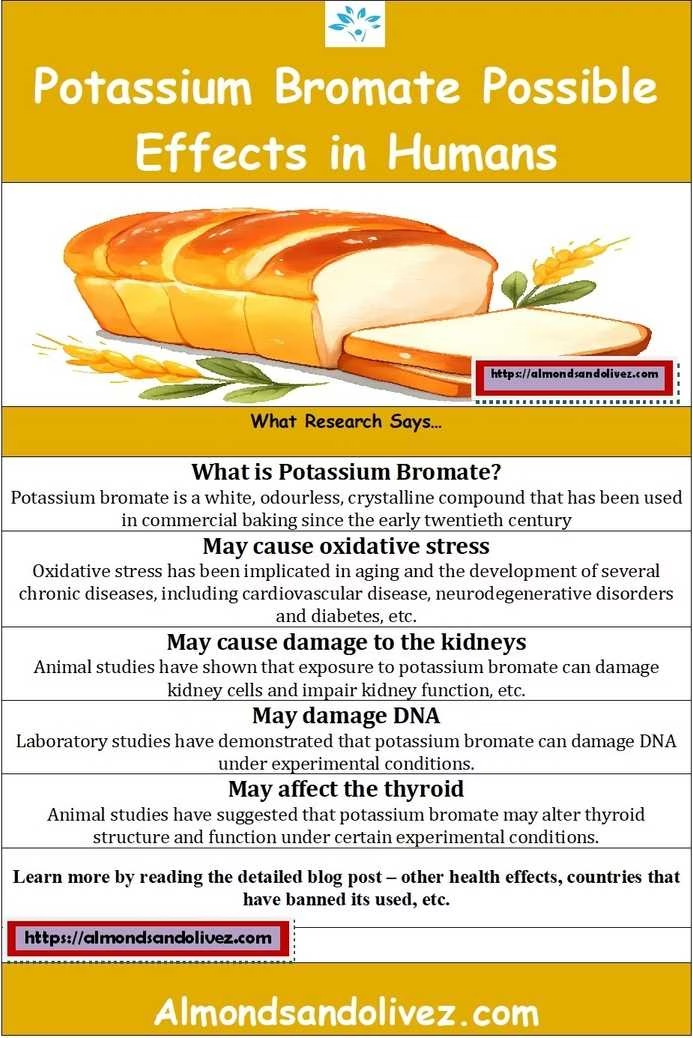
Potassium bromate is a white, odourless, crystalline compound that has been used in commercial baking since the early twentieth century.
Why is Potassium Bromate Added to Bread and Pastries?
To understand why potassium bromate became popular, it helps to appreciate the challenges involved in commercial bread making.
Producing high-quality bread consistently is not always easy. Factors such as flour quality, humidity, mixing time, fermentation, and baking conditions can all influence the final product.
Potassium bromate was valued because it helped improve several aspects of dough performance. These include:
1. It Strengthens Dough
One of potassium bromate’s primary functions is strengthening gluten proteins.
A stronger gluten structure allows dough to better trap carbon dioxide produced during fermentation, helping bread maintain its shape as it rises.
2. It Improves Bread Volume
Consumers often associate a tall, soft loaf with freshness and quality.
By improving gas retention, potassium bromate helps create bread with greater volume and a lighter texture (A.M. Magomya et al. 2020).
3. It Produces a More Uniform Texture
Commercial bakeries strive for consistency.
Potassium bromate helps produce bread with a finer crumb structure, meaning the small air pockets inside the bread are distributed more evenly.
This creates the soft texture many consumers expect.
4. It Increases Dough Stability
Large commercial bakeries often process thousands of loaves over extended production periods.
Potassium bromate helps dough remain stable during mixing, fermentation, and baking, reducing variability between batches.
For bakers, this translates into greater efficiency and fewer production losses.
How Does Potassium Bromate Work During Baking?
Although the chemistry behind bread making can seem complicated, the basic principle is surprisingly simple.
When flour is mixed with water, proteins called glutenin and gliadin combine to form gluten (Urade et al. 2018; Institute of Food Science and Technology).
As yeast ferments sugars within the dough, carbon dioxide gas is produced.
The gluten network traps these tiny gas bubbles, allowing the dough to expand much like a balloon.
Potassium bromate acts as an oxidizing agent (Kurokawa et al. 1990; ScienceDirect.com).
During dough development, it strengthens chemical bonds within the gluten network, making the dough more elastic and better able to hold the gas produced by yeast.
The result is bread that often rises higher and has a more consistent texture.
What Happens During Baking?
Under ideal baking conditions, potassium bromate is expected to be converted into potassium bromide, a different chemical compound that does not possess the same oxidizing properties (Ncheuveu et al. 2023; Sciencedirect.com).
This conversion is central to the ongoing regulatory debate.
Some food safety authorities maintain that when bread is mixed, proofed, and baked correctly, little or no potassium bromate should remain in the finished product.
However, researchers have reported that residual potassium bromate may remain if the conversion is incomplete, particularly if excessive amounts are used, or baking conditions are inadequate (Ncheuveu et al. 2023).
This possibility has contributed to scientific concerns and prompted further research into its potential health effects.
As evidence accumulated over several decades, researchers began to become even more curious by asking an important question: could long-term exposure to residual potassium bromate pose a risk to human health?
That question would eventually influence food safety regulations around the world.
Why Has Potassium Bromate Raised Health Concerns?
For many years, potassium bromate was considered an effective dough improver that helped commercial bakeries produce consistent, high-quality bread. However, as toxicologists and cancer researchers began studying the compound more closely, concerns about its safety started to emerge.
Unlike some food additives that have been linked primarily to allergies or digestive discomfort, the concerns surrounding potassium bromate stem largely from laboratory and animal studies investigating its potential to damage cells and genetic material (Kurokawa et al. 1990; Alabi et al. 2024).
While scientists continue to study what these findings mean for human health, the research has been significant enough to influence food safety policies in many parts of the world. Here are some pointed reasons for researchers’ concerns:
1. Oxidative Stress
One of the primary concerns surrounding potassium bromate is its ability to promote oxidative stress (Yalcin and Cavusoglu, 2022).
According to research, oxidative stress occurs when the body produces more unstable molecules, known as free radicals or reactive oxygen species (ROS), than it can effectively neutralize with its natural antioxidant defences (Shanmugavel V et al., 2019; Yalcin and Cavusoglu, 2022; Zhang Y et al., 2011).
These highly reactive molecules can damage important cellular components, including proteins, lipids, and DNA.
Researchers have shown that potassium bromate can generate reactive oxygen species within cells, contributing to oxidative damage in laboratory experiments and animal studies (Yalcin and Cavusoglu, 2022).
Because oxidative stress has been implicated in aging and the development of several chronic diseases, including cardiovascular disease, neurodegenerative disorders, diabetes, and certain cancers, scientists have paid close attention to compounds capable of increasing oxidative damage.
It is important to remember, however, that oxidative stress alone does not automatically cause disease. Rather, it is considered one of many biological processes that researchers continue to investigate.
2. Possible DNA Damage
Another major concern is the potential for DNA (deoxyribonucleic acid) damage, also known as genotoxicity (Ballmaier D, Epe B., 2006; Yalcin and Cavusoglu, 2022; Helena et al. 2018).
According to research, DNA contains the genetic instructions that allow cells to grow, repair themselves, and function normally (Helena et al. 2018).
When DNA becomes damaged, cells often repair the injury. However, if repair mechanisms fail, genetic mutations may occur (Helena et al. 2018).
Numerous laboratory studies have demonstrated that potassium bromate can damage DNA under experimental conditions (Ballmaier D, Epe B., 2006; Yalcin and Cavusoglu, 2022; Kawanishi and Murata, 2006).
Scientists believe much of this damage occurs through oxidative mechanisms, where reactive oxygen species attack the DNA molecule itself.
This finding has been especially important because DNA damage is one of the biological changes that may contribute to the development of cancer over time (Moon et al., 2023; Alhmoud et al., 2020).
Again, much of this evidence comes from laboratory research rather than direct studies in humans, but it has played an important role in regulatory decision-making.
3. Kidney Toxicity
Research contends that the kidneys are among the organs most consistently affected in experimental studies.
The kidneys act as the body’s natural filtration system, removing waste products while maintaining fluid and electrolyte balance (National Institutes of Health; Ogobuiro and Tuma, 2023).
Animal studies have shown that exposure to potassium bromate can damage kidney cells, impair kidney function, and increase oxidative stress within kidney tissues (Ali et al., 2018).
Researchers have observed structural changes in kidney tissue following high-dose exposure in laboratory animals, making the kidneys one of the primary organs of concern (Ali et al., 2018).
Because of these findings, kidney toxicity remains one of the most frequently discussed health effects associated with potassium bromate in scientific literature.
4. Thyroid Effects
Some research has also explored potassium bromate’s potential effects on the thyroid gland.
The thyroid plays a critical role in regulating metabolism, growth, and energy production through the release of thyroid hormones.
Animal studies have suggested that potassium bromate may alter thyroid structure and function under certain experimental conditions (Kurokawa et al. 1990).
Although more research is needed to determine whether similar effects occur in humans at typical dietary exposure levels, these findings have contributed to ongoing discussions about the compound’s safety.
5. Cancer Research
Perhaps the greatest concern surrounding potassium bromate relates to its potential carcinogenicity.
Over several decades, scientists have conducted numerous animal studies to evaluate whether long-term exposure increases the risk of cancer.
Some of these studies found increased incidences of tumours, particularly involving the kidneys, thyroid gland, and other organs, in laboratory animals exposed to potassium bromate over extended periods (IARC Working Group, 1999; Kurokawa et al., 1990).
Based largely on this body of evidence, the International Agency for Research on Cancer (IARC)has classified potassium bromate as Group 2B: Possibly carcinogenic to humans.
This classification is important to understand.
It does not mean that potassium bromate has been proven to cause cancer in people who consume bread.
Rather, it indicates that there is sufficient evidence of carcinogenicity in experimental animals, and that there is inadequate evidence in humans.
In other words, scientists have observed cancer-causing effects in animal studies, but available human studies have not been sufficient to establish a clear cause-and-effect relationship.
This distinction is one reason why different countries have adopted different regulatory approaches.
What Does the Research Say?
One of the challenges in discussing potassium bromate is balancing scientific caution with scientific certainty.
To date, most of the strongest evidence comes from toxicological studies conducted in laboratory animals and cell cultures (World Health Organization).
Researchers have consistently reported findings such as increased oxidative stress, DNA damage, kidney toxicity, cellular injury and tumour development following long-term experimental exposure (Garcia et al., 2020; Pizzino et al., 2017).
These findings have been reproduced in multiple studies over several decades.
However, studying potassium bromate in humans presents ethical and practical challenges.
Scientists cannot intentionally expose people to potentially harmful chemicals simply to observe whether disease develops years later.
As a result, human evidence remains relatively limited compared with laboratory evidence.
This is why many food safety agencies rely on the totality of evidence, which is a comprehensive examination combining toxicology, animal research, mechanistic studies, exposure assessments, and available human data when evaluating food additives (Cohen et al. 2018).
The precautionary approach adopted by several countries reflects this broader evaluation rather than reliance on any single study.
Why is Potassium Bromate Banned in Some Countries but Allowed in Others?
One of the most fascinating aspects of potassium bromate is that its regulatory status differs considerably around the world.
Several countries, including members of the European Union, the United Kingdom, Canada, Brazil, Nigeria, China, and others, have prohibited or severely restricted its use in food (Environmental Working Group, July 2026; Health Canada, 1994; Son and Kwon, 2023).
These decisions were largely influenced by toxicological evidence and concerns regarding its carcinogenic potential.
Many regulators concluded that safer alternatives were available, making continued use unnecessary.
Why Is It Still Permitted in Some Countries?
Other countries, including the United States, have historically allowed potassium bromate under regulated conditions. As such, in the United States at the federal level, it is not banned, but individual states have placed restrictions on its use, while some have banned it, such as California, while others are still conducting more research into its effects on humans (Environmental Working Group, July 2026). However, New York, a state in the United States, recently passed legislation to ban its use as an ingredient for flour products.
Some of the rationale for its continued use in some countries is based largely on the expectation that potassium bromate should be almost completely converted into potassium bromide during proper baking.
According to this view, if manufacturers follow good manufacturing practices and appropriate baking conditions, little or no detectable potassium bromate should remain in the finished bread.
However, concerns remain because research has shown that residual potassium bromate can sometimes be detected if baking conditions are inadequate or excessive amounts are used (Ncheuveu et al. 2023; Shanmugavel et al. 2020).
For this reason, many commercial bakeries have voluntarily moved away from potassium bromate and now use alternative dough conditioners, even in countries where its use remains legally permitted.
As scientific knowledge evolves, regulatory agencies continue to review emerging evidence to determine whether existing policies remain appropriate.
What about Jamaica?
The Ministry of Industry, Investment & Commerce has advanced draft technical regulations for pre-packaged food labelling that would call for manufacturers to declare the use of additives, including potassium bromate (www.miic.gov.jm).
However, some local manufacturers have been finding alternatives for their baking products, with some going as far as promoting their baked goods as free from potassium bromate and other chemical additives.
Nonetheless, the regulatory status remains open, as it is still not officially banned. As such, while it is heavily restricted internationally, local advocacy groups continue to urge consumers to read ingredient labels carefully to avoid bromated flour and other bromated products in general.
How Can Consumers Reduce Their Exposure?
Although the scientific debate surrounding potassium bromate continues, many consumers may still prefer to limit their exposure, particularly because safer alternatives are widely available.
The good news is that reducing potential exposure does not require eliminating bread or baked goods. Instead, it involves becoming a more informed shopper and making thoughtful choices.
Here are a few practical steps to consider.
1. Read the Ingredient List
One of the simplest ways to determine whether a product contains potassium bromate is to read the ingredient label.
If potassium bromate is used, it should generally appear in the ingredient list. Many manufacturers also proudly advertise that their products are “bromate-free” or made with unbromated flour.
Taking a few extra seconds to check the label can help you make a more informed purchasing decision.
2. Choose Bread Made with Simpler Ingredients
Many artisan bakeries and commercial manufacturers now produce bread using simpler ingredient lists that rely on flour, water, yeast, salt, and natural dough conditioners instead of potassium bromate.
This trend reflects growing consumer demand for foods with fewer additives and more recognizable ingredients.
3. Consider Homemade Bread
If you enjoy baking, making bread at home allows you to control every ingredient that goes into your loaf.
Homemade bread can be prepared using whole-grain flours, nut flours, seeds, herbs, and other nutritious ingredients without the need for potassium bromate.
While not everyone has the time to bake regularly, homemade bread can be a rewarding option for those who do.
4. Focus on Your Overall Dietary Pattern
Perhaps the most important point is this:
Health is influenced by your overall eating pattern, not by a single food or ingredient.
One slice of bread does not determine your future health.
Instead, researchers consistently emphasize the importance of dietary patterns rich in vegetables, fruits, legumes, whole grains, nuts, seeds, and other minimally processed foods.
This is one reason why eating patterns such as the Mediterranean diet continue to receive strong scientific support.
When your overall diet is balanced and nutrient-rich, occasional processed foods are less likely to define your long-term health than the choices you make consistently over time.
You can learn more about the Mediterranean diet as well as other eating patterns in the detailed articles below:
- The Mediterranean Diet: Benefits, Foods and How to Follow It
- Longevity habits from the World’s Blue Zones: What Can we Learn?
A Researcher’s Perspective
One of the things I enjoy most about reading scientific literature is seeing how our understanding of food continues to evolve.
Ingredients that were once considered completely acceptable are sometimes re-evaluated as new evidence emerges. Likewise, ingredients once viewed with suspicion may later prove to be less concerning than originally believed.
That is the nature of science: it asks questions, it tests hypotheses, and it revises conclusions as new evidence becomes available.
Potassium bromate is an excellent example of this process.
For decades, it served as a common dough improver in commercial baking.
Then toxicologists began asking important questions about its safety.
As laboratory studies accumulated, several countries decided that the potential risks outweighed the benefits, particularly because alternative dough conditioners were readily available.
Other countries have continued to allow its use under carefully regulated conditions, relying on evidence suggesting that proper baking converts potassium bromate into potassium bromide.
These differing regulatory approaches remind us that science is not always black and white.
Sometimes the same body of evidence leads to different policy decisions based on how regulators evaluate risk, exposure, and the precautionary principle.
As a researcher and health educator, I find that fascinating.
Rather than creating a degree of fear, it reminds me why critical thinking is so important.
Nutrition and food science are constantly evolving, and informed consumers benefit from understanding not only what researchers have found but also how they reached those conclusions. To this extent, knowledge empowers better decisions.
Frequently Asked Questions (FAQs)
Here are a few frequently asked questions about potassium bromate, why it is added to our bread and pastries and its effects in humans:
Is potassium bromate banned?
Yes. Potassium bromate has been banned or restricted in many countries, including members of the European Union, the United Kingdom, Canada, Brazil, China, and Nigeria. However, some countries still permit its use under regulated conditions.
Why is potassium bromate added to bread?
It strengthens dough, improves loaf volume, and creates a softer, more uniform texture, making it useful in commercial baking.
Does all bread contain potassium bromate?
No. Many manufacturers now produce bromate-free bread, and many artisan bakeries do not use potassium bromate at all. Always check the ingredient list if you are unsure.
Is potassium bromate harmful?
Research in laboratory animals has shown that potassium bromate can cause oxidative stress, DNA damage, kidney toxicity, and cancer under experimental conditions. Human evidence is less conclusive, which is why regulatory agencies have adopted different policies.
How can I avoid potassium bromate?
Read ingredient labels, look for products labelled “bromate-free” or made with “unbromated flour,” and consider purchasing bread from bakeries that use simpler ingredient lists.
Illustrative Summary
Here is an illustrative summary of POTASSIUM BROMATE and its Possible Health Effects
Let’s Sum Up!
Bread has nourished civilizations for thousands of years and remains one of the world’s most widely consumed foods.
Yet, as this article illustrates, even familiar foods can contain ingredients that many of us know very little about. Potassium bromate is one such ingredient.
While laboratory studies have demonstrated concerns regarding oxidative stress, DNA damage, kidney toxicity, and carcinogenic potential in experimental animals, evidence in humans remains less certain.
Nevertheless, the findings have been significant enough for many countries to prohibit or restrict its use, while others continue to regulate its use under specific manufacturing conditions.
For consumers, this discussion offers an important reminder.
Healthy eating is about more than simply counting calories or avoiding sugar.
It also involves understanding what goes into our food and asking thoughtful questions about the ingredients we consume.
Fortunately, today’s shoppers have more choices than ever before.
Many manufacturers now produce bromate-free bread, and ingredient labels make it easier to identify products that align with your preferences.
Perhaps the greatest lesson from the potassium bromate story is not about one particular food additive.
Rather, it is about becoming a more informed consumer, reading ingredient labels, understanding the science, recognizing that research continues to evolve and appreciating that good health is rarely built upon a single decision, but rather through countless small choices made over time.
At Almonds and Olivez, my goal is not to tell you what to eat or what to avoid.
Instead, it is to help you understand the science so that you can make informed decisions for yourself and your family.
Because when knowledge and curiosity come together, healthier choices often follow, and perhaps that is one of the most powerful ingredients of all.
Here are some other useful articles, including videos and podcasts, to help you understand some of the ingredients in our foods as well as maintaining overall good health:
- The Mediterranean Diet: Benefits, Foods and How to Follow It
- Longevity habits from the World’s Blue Zones: What Can we Learn?
- Video – Let’s Talk Super Greens
- Video- Let’s Talk Guinep
- Podcast – Top Functional Foods of 2026 & Beyond
- Free Download – Healthy Grocery Shopping List Guide
References and Further Readings
- Alabi, O. & Afelumo, Onaolapo & Oladipupo, Flora & Adesina, Oluwabusola & Obodoechina, Onyeka & Ayeni, Funmilayo & Afolabi, Amos & Olumurewa, John. (2024). Safety assessment of three common food additives: the reproductive, oxidative and enzymatic perspective. Discover Toxicology. 1. 10.1007/s44339-024-00007-5.
- Alhmoud JF, Woolley JF, Al Moustafa AE, Malki MI. DNA Damage/Repair Management in Cancers. Cancers (Basel). 2020 Apr 23;12(4):1050. doi: 10.3390/cancers12041050. PMID: 32340362; PMCID: PMC7226105.
- Ali BH, Za’abi MA, Karaca T, Suleimani YA, Balushi KAA, Manoj P, Ashique M, Nemmar A. Potassium bromate-induced kidney damage in rats and the effect of gum acacia thereon. Am J Transl Res. 2018 Jan 15;10(1):126-137. PMID: 29422999; PMCID: PMC5801352.
- A.M. Magomya, G.G. Yebpella, U.C. Okpaegbe, P.C. Nwunuji, Analysis of potassium bromate in bread and flour samples sold in Jalingo metropolis, northern Nigeria, IOSR J. Environ. Sci. Toxicol. Food Technol. 13 (2) (2020) 1–5.
- Ballmaier D, Epe B. DNA damage by bromate: mechanism and consequences. Toxicology. 2006;221(2–3):166–171. doi: 10.1016/j.tox.2006.01.009.
- Cohen, H.P., Lamanna, W.C., Schiestl, M. (2018). Totality of Evidence and the Role of Clinical Studies in Establishing Biosimilarity. In: Gutka, H., Yang, H., Kakar, S. (eds.) Biosimilars. AAPS Advances in the Pharmaceutical Sciences Series, vol. 34. Springer, Cham. https://doi.org/10.1007/978-3-319-99680-6_22.
- Helena JM, Joubert AM, Grobbelaar S, Nolte EM, Nel M, Pepper MS, Coetzee M, Mercier AE. Deoxyribonucleic Acid Damage and Repair: Capitalizing on Our Understanding of the Mechanisms of Maintaining Genomic Integrity for Therapeutic Purposes. Int J Mol Sci. 2018 Apr 11;19(4):1148. doi: 10.3390/ijms19041148. PMID: 29641431; PMCID: PMC5979424.
- Islam MM, Besra SX, Nishat SA, Sultana A. A Comprehensive Analysis of Potassium Bromate, a Possible Carcinogen, in Popular Baked Foodstuffs of Bangladesh. Food Sci Nutr. 2024 Oct 24;12(11):9799-9809. doi: 10.1002/fsn3.4546. PMID: 39619963; PMCID: PMC11606807.
- IARC Working Group on the Evaluation of Carcinogenic Risks to Humans. Some Chemicals that Cause Tumours of the Kidney or Urinary Bladder in Rodents and Some Other Substances. Lyon (FR): International Agency for Research on Cancer; 1999. (IARC Monographs on the Evaluation of Carcinogenic Risks to Humans, No. 73.) Potassium bromate.
- Garcia D, Carr JF, Chan F, Peterson AL, Ellis KA, Scaffa A, Ghio AJ, Yao H, Dennery PA. Short exposure to hyperoxia causes cultured lung epithelial cell mitochondrial dysregulation and alveolar simplification in mice. Pediatr Res. 2021 Jul;90(1):58-65. doi: 10.1038/s41390-020-01224-5. Epub 2020 Nov 3. PMID: 33144707; PMCID: PMC8089115.
- Kurokawa Y, Maekawa A, Takahashi M, Hayashi Y. Toxicity and carcinogenicity of potassium bromate–a new renal carcinogen. Environ Health Perspect. 1990 Jul;87:309-35. doi: 10.1289/ehp.9087309. PMID: 2269236; PMCID: PMC1567851.
- Kawanishi S, Murata M. Mechanism of DNA damage induced by bromate differs from general types of oxidative stress. Toxicology. 2006;221(2–3):172–178. doi: 10.1016/j.tox.2006.01.002. [Google Scholar]
- Moon J, Kitty I, Renata K, Qin S, Zhao F, Kim W. DNA Damage and Its Role in Cancer Therapeutics. Int J Mol Sci. 2023 Mar 1;24(5):4741. doi: 10.3390/ijms24054741. PMID: 36902170; PMCID: PMC10003233.
- Ncheuveu Nkwatoh T, Fon TP, Navti LK. Potassium bromate in bread, health risks to bread consumers and toxicity symptoms amongst bakers in Bamenda, North West Region of Cameroon. Heliyon. 2023 Jan 21;9(2):e13146. doi: 10.1016/j.heliyon.2023.e13146. PMID: 36747561; PMCID: PMC9898660.
- Ogobuiro I, Tuma F. Physiology, Renal. [Updated 2023 Jul 24]. In: StatPearls [Internet]. Treasure Island (FL): StatPearls Publishing; 2026 Jan-. Available from: https://www.ncbi.nlm.nih.gov/books/NBK538339/
- Pizzino G, Irrera N, Cucinotta M, Pallio G, Mannino F, Arcoraci V, Squadrito F, Altavilla D, Bitto A. Oxidative Stress: Harms and Benefits for Human Health. Oxid Med Cell Longev. 2017; 2017:8416763. doi: 10.1155/2017/8416763. Epub 2017 Jul 27. PMID: 28819546; PMCID: PMC5551541.
- Shanmugavel V, et al. Potassium bromate: Effects on bread components, health, environment and method of analysis: A review. Food Chem. 2020; 311:125964. doi: 10.1016/j.foodchem.2019.125964. [DOI] [PubMed] [Google Scholar] [Ref list]
- Son, E., & Kwon, K.
European Ban on Potassium Bromate in Bread: Composition and Health Impact. European Food and Feed Law Review Volume 18, Issue 6 (2023) pp. 358 – 364. - Urade R, Sato N, Sugiyama M. Gliadins from wheat grain: an overview, from primary structure to nanostructures of aggregates. Biophys Rev. 2018 Apr;10(2):435-443. doi: 10.1007/s12551-017-0367-2. Epub 2017 Dec 4. PMID: 29204878; PMCID: PMC5899726.
- Yalçin E, Çavuşoğlu K. Toxicity assessment of potassium bromate and the remedial role of grape seed extract. Sci Rep. 2022 Nov 28;12(1):20529. doi: 10.1038/s41598-022-25084-7. PMID: 36443372; PMCID: PMC9705420.
- Zhang Y, et al. Possible involvement of oxidative stress in potassium bromate-induced genotoxicity in human HepG2 cells. Chem. Biol. Interact. 2011;189(3):186–191. doi: 10.1016/j.cbi.2010.12.011. [DOI] [PubMed] [Google Scholar][Ref list]


 How to Make the Perfect Bowl of Oatmeal: A Budget-Friendly Breakfast