
Life happens. And that is just the simple fact.
Sometimes we begin a fitness journey feeling motivated and energized, only to become inconsistent weeks or months later. Other times, long work hours, stress, health issues, caregiving responsibilities, burnout, feeling demotivated or simply the demands of daily life can gradually lead us into a more sedentary lifestyle.
Before we know it, exercise becomes occasional… then rare… then something we keep telling ourselves we will “start again next Monday.”
The truth is, becoming inconsistent with fitness is incredibly common.
In fact, research suggests that physical inactivity has become one of the major contributors to chronic disease globally, increasing the risk of conditions such as obesity, cardiovascular disease, type 2 diabetes, and poor metabolic health (Anderson and Durstine, 2019).
However, one of the biggest misconceptions about fitness is the idea that getting back on track requires extreme motivation, intense workouts, perfection or punishment for “falling off.”
From a health and behavioural science perspective, sustainable fitness is usually less about intensity and more about consistency, habit rebuilding, and realistic progress.
The encouraging news is that the body responds remarkably well to movement, even after periods of inactivity. While you are going to feel the effect a few days after (oh yeah!), it is still a sign that the body is now responding to the movement it is now receiving. So, that is a good thing, right?
But how can you realistically and safely rebuild momentum after being inconsistent or sedentary? Let’s discuss!
You can learn more about the benefits of exercising as well as how to create a fitness routine in the articles below:
First: Stop Viewing Yourself as a Failure
One of the biggest barriers to restarting fitness is psychological. Yes, it’s in our mind. As such, many people become trapped in guilt, shame or develop the ‘all-or-nothing mentality/thinking.’
They may feel they have “ruined” their progress or failed completely.
However, behavioural researchers emphasize that lapses are a normal part of long-term habit formation. Therefore, consistency is rarely linear but rather filled with dips, plateaus, and a few detours.
In fact, studies on exercise adherence show that self-compassion and realistic goal-setting are often associated with better long-term outcomes than harsh self-criticism (Semenchuk et al. 2018; Homan and Sirois, 2017).
Sometimes the healthiest thing you can do is stop trying to “make up” for lost time and simply begin again.
Here is a detailed article that can help you to simple, begin again:
Understand What Sedentary Living Does to the Body
Periods of prolonged inactivity can affect several systems in the body.
Research suggests sedentary behaviour may contribute to reduced cardiovascular fitness, muscle loss, decreased insulin sensitivity, stiffness and joint discomfort, lower energy levels and poorer mental health (World Health Organization, 2010; Park et al., 2020).
Even relatively short periods of inactivity may begin affecting muscle conditioning and metabolic function.
However, the opposite is also true – the body can adapt positively when movement resumes.
Here are some ways in which you can start again, with just simple movements:
Start Smaller Than You Think You Need To
This is one of the most important principles.
Many people try to restart fitness by jumping immediately into intense workouts, long gym sessions and unrealistic schedules. This often leads to soreness, burnout, discouragement and inconsistency again.
Behavioural science suggests that smaller, achievable goals are often more sustainable because they reduce psychological resistance and build confidence gradually (Akash et al. 2025).
Instead of aiming for perfection, focus on rebuilding the habit of movement.
Here are some ways in which you can start again, with just simple movements:
Examples of Small But Powerful Starts
- a 10-minute walk
- stretching in the morning
- bodyweight exercises twice weekly
- dancing for 15 minutes
- taking the stairs
- light cycling
- beginner yoga
Small actions repeated consistently often create more lasting change than extreme bursts of motivation.
Focus on Movement Before Weight Loss
One of the biggest mistakes some people make when restarting fitness is focusing only on the scale.
However, exercise supports far more than body weight. Regular movement may help improve energy, sleep quality, insulin sensitivity, mood, cardiovascular health, mobility and stress management (Pinckard et al. 2019).
Research consistently shows that physical activity benefits health even independent of major weight loss (Warburton et al. 2006).
This shift in mindset can make fitness feel less punishing and more supportive.
You can learn more about exercising and its benefits by reading these detailed articles:
- Exercise and Mental Health: Is There a Positive Link?
- Exercise, it is more than just for weight loss!
Walking is Underrated
Walking is often overlooked because it seems “too simple,” but research strongly supports its health benefits.
Walking may help improve cardiovascular fitness, support metabolic health, reduce stress, improve circulation and support weight management Erickson, et al., 2010; Consumerreports.org)
For sedentary individuals, walking is often one of the safest and most accessible ways to rebuild activity levels. Even short walking sessions accumulated throughout the day can be beneficial.
You can learn more about walking, its benefits and even how to do it for weight loss by reading this detailed article:
Strength Training Matters – Especially As We Age
As we age, muscle mass naturally declines, particularly during prolonged inactivity.
This process, known as sarcopenia, may affect strength, metabolism, balance and mobility (Larsson et al. 2019).
Resistance training helps stimulate muscle maintenance and growth (Roma et al. 2013). This does not necessarily require a gym. Simple resistance exercises may include:
- squats
- wall push-ups
- resistance bands
- chair exercises
- light dumbbells
Research shows that resistance training supports healthy aging, metabolic health, and functional movement (Roma et al. 2013).
You can learn more about sarcopenia and what happens to the body as we age by listening to the podcast episode below. You can also learn more about weight training and building muscles by reading these detailed blog posts:
- Creating that ‘hiit’ fitness program
- Podcast: What Aging Really Looks Like – And it is Not Antiaging
- What is High Interval Training (HIIT)?
Expect Some Discomfort – But Know The Difference Between Discomfort and Harm
When restarting fitness, mild soreness and fatigue can be normal.
However, there is an important difference between adaptation discomfort and pain or injury.
Warning signs that require caution may include:
- sharp pain
- dizziness
- chest pain
- severe joint pain
- unusual shortness of breath
Progress should feel challenging but manageable. So, if you start to feel any of the signs above, it’s best to either take it slow and reduce the intensity. If certain discomfort persists, then it is best to stop and consult with your healthcare provider.
Remember, your safety takes priority, always.
Your Environment Matters More Than Motivation
Motivation naturally fluctuates. One moment you feel energize to start again, and the next, demotivated or simply not enthusiastic about that very activity you were only a few minutes away from commencing.
This is why researchers often emphasize environment and habit systems rather than relying solely on willpower.
Here are some helpful strategies that may help you on your fitness journey:
- laying out workout clothes beforehand
- scheduling movement into the day
- finding a walking partner
- exercising at the same time daily
- reducing barriers to movement
- Change it up to reduce monotony
The easier the habit becomes, the more likely consistency improves.
Sleep and Recovery Matters Too
Exercise recovery is often overlooked. But it plays a major role in overall health.
Poor sleep may affect energy, recovery after exercising, appetite regulation, your motivation and exercise performance (Murano et al. 2026).
Research increasingly links sleep quality with exercise adherence and metabolic health.
Rest is not laziness (Alnawwar et al. 2023). It is simply part of the wellness process.
You can learn more about the important distinction between sleep and rest as well as how sleep is critical to your overall health by listening to this podcast episode:
Nutrition Can Support Your Comeback
Food plays an important role in rebuilding energy and supporting physical activity.
Rather than extreme dieting, focus on nourishment.
Here are some helpful nutrition habits you can include as you commence or re-commence your fitness journey:
- eating enough protein
- staying hydrated
- consuming more whole foods
- including fruits and vegetables
- reducing highly processed foods
Foods rich in protein, fiber and healthy fats may help support satiety and muscle recovery.
You can learn more about macronutrients and fats in the detailed articles below:
- Understanding Micronutrients and Macronutrients
- Fat, who me?
- Is Chia Seed Really an Omega-3 and Protein Powerhouse?
What If You Feel Embarrassed Starting Again?
This is more common than many people realize, especially if they have gotten ‘out-of-shape’, gotten older, become too self-conscious about their weight, and even become discouraged by previous inconsistency and sedentary.
However, fitness is not reserved for people already in shape. Every active person once started somewhere.
From a health perspective, restarting movement after inactivity is not something to be ashamed of, but rather, something the body often benefits from tremendously.
The ‘All-or-Nothing’ Trap
This is a major belief in the fitness world, propelled and heighten by social media. As such, some people believe:
- missing one workout = failure
- eating one unhealthy meal = failure
This mindset often leads people to quit entirely.
Researchers studying behaviour change frequently emphasize flexibility over perfection. The ability to adapt and alter responses according to environment demands is far more effective for long-term success than rigid perfection (Nguyen, H., & Morris, E. M. J. (2024).
One missed day does not erase progress. Therefore, long-term consistency is built through repetition, not perfection.
How Long Does It Take To Get Back In Shape?
There is no universal timeline.
Progress depends on one’s age, fitness level, health conditions, level of consistency, recovery and of course, nutrition.
However, many people begin noticing improvements in energy, mood, stamina and mobility within a few weeks of regular movement.
Remember, the body is remarkably adaptable. So, just start!
You can learn more about the benefits of exercising and the detailed articles below:
- Exercise, it is more than just for weight loss!
- Exercise and Mental Health: Is There a Positive Link?
Simple Beginner Weekly Plan
Here is an example of a realistic restart approach:
Week 1–2
- 10–20 minute walks
- gentle stretching
- 2 short strength sessions
Week 3–4
- increase walking pace
- add light resistance exercises
- increase movement frequency
Week 5+
- gradually increase intensity
- add variety
- focus on consistency
The key is gradual progression.
You can learn more about how to create your own fitness routine by reading the detailed article below:
A Researcher’s Perspective on Sustainable Fitness
From a research perspective, sustainable fitness is rarely built on punishment or extremes.
The evidence consistently supports:
- gradual progression
- consistency over perfection
- enjoyable movement
- habit formation
- realistic goals
The individuals who maintain long-term wellness habits are often not those who start hardest, but those who continue steadily.
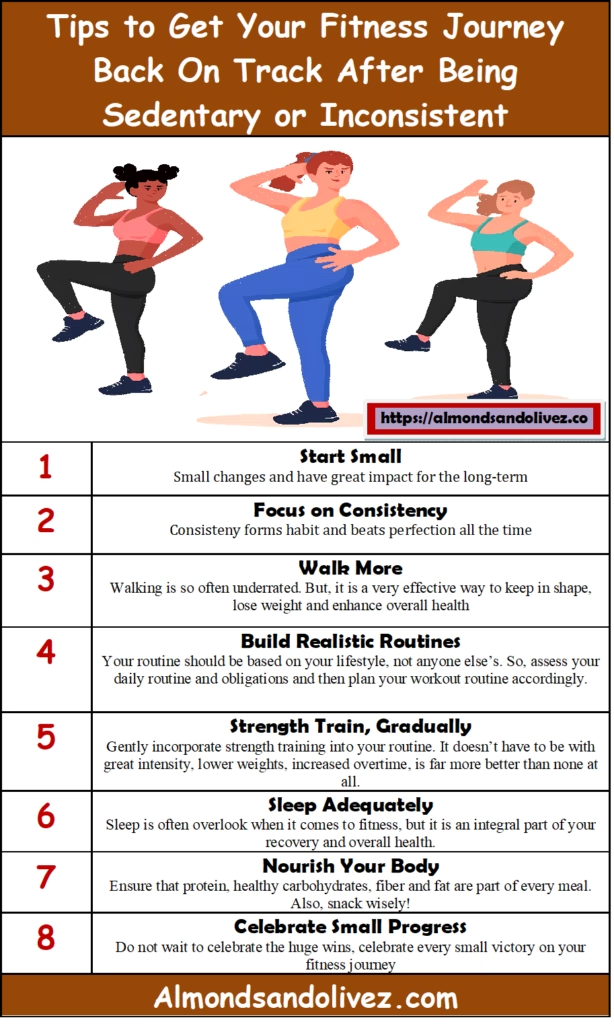
Practical Tips to Get Back on Track
Here are some practical tips to get you back on track with your fitness journey:
- Start small
- Focus on consistency
- Walk more
- Build realistic routines
- Strength train gradually
- Sleep adequately
- Nourish your body
- Stop waiting for “perfect motivation”
- Celebrate small progress
Illustrative Summary
Here is an illustrative summary of of some tips to get your fitness journey back
on track after being SEDENTARY or INCONSISTENT
Let’s Sum Up!
Getting back on track after inconsistency or sedentary living can feel intimidating, but it does not require perfection.
The body has an incredible ability to adapt, recover, and respond positively to movement, often faster than we expect.
Sometimes the hardest part is not the workout itself, but simply deciding to begin again.
Whether your restart looks like walking around the block, stretching in the morning, returning to the gym or dancing in your living room, it still counts.
Progress is not built in one perfect day. It is built through small actions repeated over time.
And sometimes, the decision to begin again may be one of the healthiest choices you make for yourself.
So, now that we have explored how to get back on track after being sedentary or inconsistent with your fitness journey, will you? Share it nuh!
You can read more about exercising and its benefits as well as other exercises that can help you to lose weight, tone and strengthen the abs as well as start your fitness programme. Click the articles below:
- Podcast – How to get your fit on in 2025 and Beyond
- Creating that ‘hiit’ fitness program
- Don’t tuck it in!
- Exercise, it is more than just for weight loss!
- So You Wanna Run
- So, You wanna Walk
- Video: Why You Need to Exercise
References and Further Readings
- Akash, Maksudul Shadat & Chowdhury, Shahanaz. (2025). Small changes, big impact: A mini review of habit formation and behavioral change principles. World Journal of Advanced Research and Reviews. 26. 3098-3106. 10.30574/wjarr.2025.26.1.1333.
- Alnawwar MA, Alraddadi MI, Algethmi RA, Salem GA, Salem MA, Alharbi AA. The Effect of Physical Activity on Sleep Quality and Sleep Disorder: A Systematic Review. Cureus. 2023 Aug 16;15(8):e43595. doi: 10.7759/cureus.43595. PMID: 37719583; PMCID: PMC10503965.
- Anderson E, Durstine JL. Physical activity, exercise, and chronic diseases: A brief review. Sports Med Health Sci. 2019 Sep 10;1(1):3-10. doi: 10.1016/j.smhs.2019.08.006. PMID: 35782456; PMCID: PMC9219321.
- Homan KJ, Sirois FM. Self-compassion and physical health: Exploring the roles of perceived stress and health-promoting behaviors. Health Psychol Open. 2017 Sep 14;4(2):2055102917729542. doi: 10.1177/2055102917729542. PMID: 29379620; PMCID: PMC5779931.
- K.I. Erickson, C.A. Raji, O.L. Lopez, J.T. Becker, C. Rosano, A.B.Newman, H.M. Gach, P.M. Thompson, A.J. Ho, L.H. Kuller (2010). Physical activity predicts gray matter volume in late adulthood. Neurology Oct 2010, 75 (16) 1415-1422; DOI:10.1212/WNL.0b013e3181f88359 https://n.neurology.org/content/75/16/1415.long
- Larsson L, Degens H, Li M, Salviati L, Lee YI, Thompson W, Kirkland JL, Sandri M. Sarcopenia: Aging-Related Loss of Muscle Mass and Function. Physiol Rev. 2019 Jan 1;99(1):427-511. doi: 10.1152/physrev.00061.2017. PMID: 30427277; PMCID: PMC6442923.
- Murano, S., Amano, Y., & Kaburagi, T. (2026). Subjective Sleep Quality Is Associated with Post-Exercise Appetite Loss in Female University Athletes: An Exploratory Cross-Sectional Study. Sports, 14(4), 157. https://doi.org/10.3390/sports14040157.
- Nguyen, H., & Morris, E. M. J. (2024). The role of clinical perfectionism and psychological flexibility in distress and wellbeing. Clinical Psychologist, 28(3), 207–220. https://doi.org/10.1080/13284207.2024.2362440.
- Park JH, Moon JH, Kim HJ, Kong MH, Oh YH. Sedentary Lifestyle: Overview of Updated Evidence of Potential Health Risks. Korean J Fam Med. 2020 Nov;41(6):365-373. doi: 10.4082/kjfm.20.0165. Epub 2020 Nov 19. PMID: 33242381; PMCID: PMC7700832.
- Pinckard K, Baskin KK, Stanford KI. Effects of Exercise to Improve Cardiovascular Health. Front Cardiovasc Med. 2019 Jun 4;6:69. doi: 10.3389/fcvm.2019.00069. PMID: 31214598; PMCID: PMC6557987.
- Roma MF, Busse AL, Betoni RA, Melo AC, Kong J, Santarem JM, Jacob Filho W. Effects of resistance training and aerobic exercise in elderly people concerning physical fitness and ability: a prospective clinical trial. Einstein (Sao Paulo). 2013 Apr-Jun;11(2):153-7. doi: 10.1590/s1679-45082013000200003. PMID: 23843053; PMCID: PMC4872886.
- Semenchuk, Brittany & Strachan, Shaelyn & Fortier, Michelle. (2018). Self-Compassion and the Self-Regulation of Exercise: Reactions to Recalled Exercise Setbacks. Journal of Sport and Exercise Psychology. 40. 1-9. 10.1123/jsep.2017-0242.
- Warburton, Darren & Bredin, Shannon. (2006). Health benefits of physical activity. Canadian Medical Association Journal. 174.
- World Health Organization. Global recommendations on physical activity for health. Geneva: World Health Organization; 2010. [PubMed][

 Jamaican Rice Porridge (The Easy Leftover Rice Version)