

Chia seeds have become a popular “superfood,” praised for their fibre, omega-3 fatty acids, and antioxidant content. But as their popularity grows, so do questions about their safety, particularly their oxalate content.
Many people, including myself, love to eat these small seeds. I love to add them to my yoghurt and smoothies.
But can eating too much chia seeds increase your risk of health problems like kidney stones? Or is this concern overblown? In this article, we break down the science behind chia seeds and oxalates, what it means for your health, and how to consume them safely. Let’s explore what research says!
What are Oxalates?
Oxalates (oxalic acid and its salts) are naturally occurring compounds found in many plant foods, including leafy greens (e.g., spinach), nuts and seeds and certain fruits and vegetables (Garland et al. 2020).
In the body, oxalates can bind with minerals like calcium to form calcium oxalate, the most common type of kidney stone.
However, for most people, oxalates are not harmful. But for some individuals, high intake may increase risk.
You can read more about chia seeds in this detailed article:
What are oxalates? Oxalates (oxalic acid and its salts) are naturally occurring compounds found in many plant foods, including leafy greens (e.g., spinach), nuts and seeds and certain fruits and vegetables.
Do Chia Seeds Contain Oxalates?
Yes, chia seeds do contain oxalates, but they are considered moderate, not extreme sources when compared to high-oxalate foods like spinach, beet greens or rhubarb (Noonan and Savage, 1999).
Nonetheless, other reports suggest that the oxalate levels in chia seeds are high, with two (2) tablespoons containing about 45 mg to over 100 mg (Garland et al. 2020). As such, reports
However, chia seeds are also rich in soluble fiber, calcium and magnesium. These nutrients can influence how oxalates are processed in the body.
Types of Oxalates
There are generally two (2) types of oxalates: soluble and insoluble oxalates.
Soluble oxalates are dissolves in water and can be absorbed into the bloodstream, as such, they are more bioavailable, while insoluble oxalates are able to bind to minerals like calcium and are typically excreted in your stool (Noonan and Savage, 1999; Zimmermann et al. 2005).
Therefore, one’s health outcomes will depend on the balance between these two (2) forms of oxalates, as too much in the body can lead to ill-health, including the development of calcium oxalates kidney stones (Noonan and Savage, 1999: Zimmermann et al. 2005).
How Oxalates Affect the Body
Oxalates themselves are not inherently harmful. However, in certain situations, they may contribute to kidney stones, with the most common type being calcium oxalate kidney stones.
This occurs when oxalate levels are high and fluid intake is low, which results in the formation of crystals which may accumulate in the kidneys (Noonan and Savage, 1999: Zimmermann et al. 2005).
Oxalates can also bind to minerals like calcium, which can potentially reduce their absorption (Garland et al. 2020). However, this effect depends on one’s diet, food combinations and health status.
Oxalates and Nutrient Absorption
A major concern often raised is that oxalates may reduce mineral absorption, especially calcium.
As explained earlier, research suggests that oxalates can bind calcium (a mineral) in the gut. This may reduce calcium absorption in that specific meal. Other minerals they can possibly bind to are magnesium and iron.
However, their effect upon the body is context-dependent, meaning that an individual’s overall diet matters more than just one single food. Additionally, calcium intake can offset oxalate binding (Garland et al. 2020).
Gut health also plays a role in oxalate binding. When oxalates bind to these minerals in the digestive tract, they form compounds known as insoluble oxalate salts, most notably calcium oxalate (Salgado et al. 2023; Encyclopedia.pub).
However, this effect is localized and meal-specific, not a reflection of your overall calcium status. In other words, eating a high-oxalate food may reduce calcium absorption from that particular meal, but not necessarily from your entire diet.
For most people, the impact is minimal. Research suggests that the body can adapt to varying oxalate intake, total daily calcium intake matters more than individual food interactions and that a balanced diet typically compensates for minor reductions in absorption (Karr et al. 2024). Therefore, in healthy individuals, oxalates are unlikely to cause calcium deficiency.
The interaction becomes more relevant under certain conditions, for example, diets that are consistently high in oxalates and low in calcium, individuals with increased mineral needs and those with digestive problems that affecting absorption (Karr et al. 2024). In these cases, reduced mineral bioavailability may have a more noticeable effect.
This is why pairing oxalate-containing foods with calcium-rich foods can help lower oxalate absorption. In addition, individuals should avoid excessive intake of any single high-oxalate food.
Oxalates and Kidney Stones
Kidney stones develop when certain substances in the urine become highly concentrated and begin to crystallize. Over time, these crystals may grow into stones (Garland et al. 2020).
Research suggests that around 70 to 80% of kidney stones are composed of calcium oxalate (Han et al. 2015; Holmes & Assimos, 2001). This has led to concern about dietary oxalate intake.
The researchers observed that the higher the oxalate intake, the more oxalate was found in the urine of study participants. For example, those consuming 10mg vs 250 mg dietary oxalate per day experienced 25% and 42% urinary oxalate, respectively. As such, they contend that the impact of dietary calcium on the bioavailability of ingested oxalate should not be overstated (Holmes & Assimos, 2001).
Nonetheless, not everyone who consumes oxalates will develop kidney stones. Therefore, research suggest that one’s risk will be dependent on multiple factors such as hydration status, genetic predisposition, gut microbiota and overall diet (Garland et al. 2020; Holmes & Assimos, 2001).
How to Reduce Potential Risks?
You don’t need to avoid chia seeds altogether, just use them wisely. Here is how you can reduce your risks of high oxalate consumption.
1. Stay Hydrated
Adequate water intake helps reduce the risk of kidney stone. This will help prevent the crystallization of minerals.
2. Balance Your Diet
Avoid combining multiple high-oxalate foods excessively.
3. Pair with Calcium-Rich Foods
Calcium can bind to oxalates in the gut, reducing absorption.
4. Avoid Excessive Intake
More is not always better; moderation matters.
The Role of Gut Bacteria and Oxalates
According to research, certain gut bacteria, such as Oxalobacter formigenes, can degrade oxalate in the intestine, which reduces how much oxalates are absorbed into the bloodstream.
Other gut bacteria that are also able to degrade oxalate into carbon dioxide and formate include Escherichia coli, Bifidobacterium spp., and Lactobacillus spp (Karamad et al. 2022; Ermer et al. 2023).
However, antibiotic use and gut imbalance may reduce these bacteria, which can result in increased absorption of oxalates.
Who Should Be Careful?
While chia seeds are safe for most people, some individuals may need to moderate their intake. These include:
- people with a history of kidney stones
- individuals with high urinary oxalate levels
- people with digestive disorders (e.g., fat malabsorption)
- those with low calcium intake
If this applies to you, it’s best to consult a healthcare professional for guidance and management of your oxalate intake.
So, Should I Still Consume Chia Seeds?
Despite the oxalate discussion, chia seeds remain highly nutritious, chia seeds provide omega-3 fatty acids (ALA), soluble fiber, antioxidant and plant-based protein. These nutrients support heart health, digestion and blood sugar control (Ullah et al. 2016).
So, while chia seeds do contain oxalates, it is still not listed among the highest-risk foods. Therefore, for most individuals, moderate intake is unlikely to significantly increase kidney stone risk.
However, as indicated earlier, one’s risk increases due to several factors, the main one being, consuming chia seeds in large quantities, especially, daily and in combination with other high-oxalate foods.
You can read more about the benefits of chia seeds and their risk in this detailed article:
How Much Chia Seeds are too Much?
For most healthy adults, 1–2 tablespoons per day is considered safe and beneficial (Garland et al. 2020; www.health.harvard.edu).
Problems may arise when it is consumed in large amounts daily, when an individual does not drink enough water and consuming a diet that is already high in oxalates.
A case in point as it relates to ‘high daily intake’ can be found in Garland’s study. In this study, a 59-year-old woman was diagnosed with chronic kidney disease, stage 3. She didn’t smoke, drink alcohol and was not on illicit drugs.
After several bloodwork, her dietary history was reviewed. It was found that she had followed a particular diet for six (6) years to treat her IBS symptoms. This diet entails the consumption of six (6) tablespoons of chia seeds and five (5) handfuls of almonds (which is also high in oxalates), daily. The researchers found that her oxalate levels in her urine were high as she was consuming way above the recommended levels of chia seeds and other oxalate foods, daily.
Nonetheless, her condition did improve when she switched to a low-oxalate diet with high fluid intake and worked closely with a nutritionist.
Frequently Asked Questions About Chia Seeds and Oxalates:
Are Chia Seeds High in Oxalates?
Chia seeds contain oxalates, but they are considered a moderate source compared to foods like spinach.
Can Chia Seeds Cause Kidney Stones?
For most people, moderate intake does not cause kidney stones. Risk is higher in susceptible individuals.
How Much Chia Seeds are Safe Daily?
About 1–2 tablespoons per day is generally considered safe for most people. Less for others.
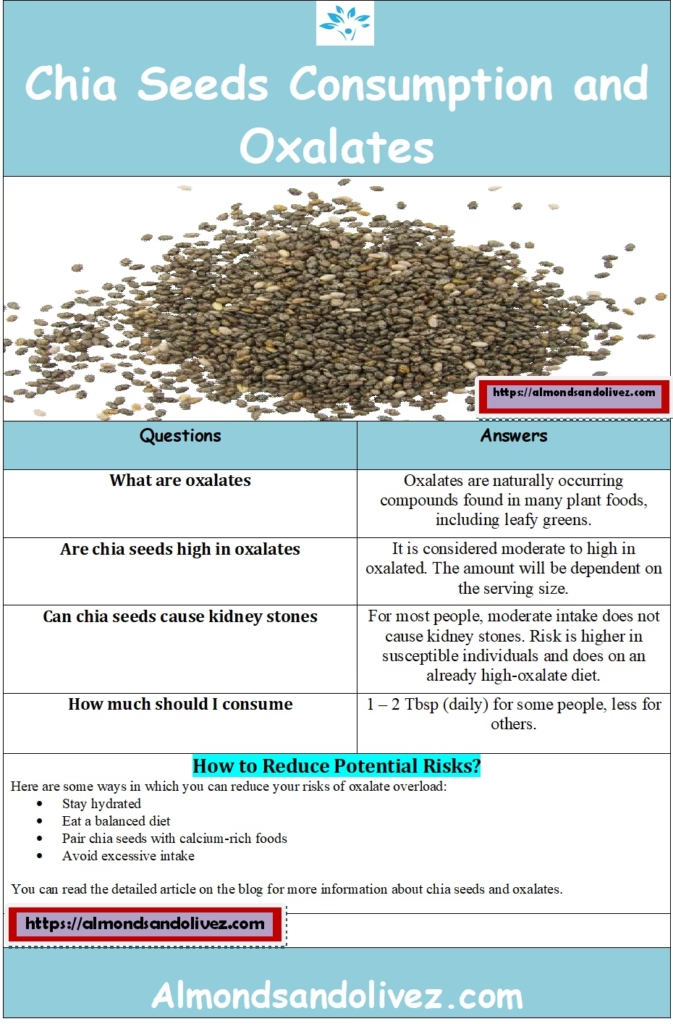
Illustrative Summary
Here is an illustrative summary of the Chia Seeds and Oxalates.
Let’s Sum Up!
Chia seeds are a valuable addition to a healthy diet, but like many nutrient-dense foods, they should be consumed with awareness.
While oxalates are relevant in specific contexts, chia seeds are not among the highest oxalate foods and can be safely consumed in moderation.
However, for higher-risk individuals, a more tailored approach may be necessary.
But understanding how oxalates work in the body allows you to enjoy them safely, confidently, and in balance.
So, now that we have explored the association between chia seeds and oxalate consumption, will you be avoiding chia seeds? Or will it now be able to find that balance due to its many health benefits? Share it nuh! In the comments below.
Here are some other useful articles and videos about chia seeds and other omega -3 fatty acids. You can also watch videos about the health benefits of chia seeds, as well as chia seeds and oxalates:
- Is Chia Seed Really an Omega-3 and Protein Powerhouse?
- Fat – who me?
- Video – Chia Seeds
- Video – Chia Seeds and Oxalates
- Chia Seed Water Recipe
References and Further Readings
- Ermer, T.; Nazzal, L.; Tio, M.C.; Waikar, S.; Aronson, P.S.; Knauf, F. Oxalate Homeostasis. Nat. Rev. Nephrol. 2023, 19, 123–138.
- Garland V, Herlitz L, Regunathan-Shenk R. Diet-induced oxalate nephropathy from excessive nut and seed consumption. BMJ Case Rep. 2020 Nov 30;13(11): e237212. doi: 10.1136/bcr-2020-237212. PMID: 33257378; PMCID: PMC7705561.
- Han H, Segal AM, Seifter JL, Dwyer JT. Nutritional Management of Kidney Stones (Nephrolithiasis). Clin Nutr Res. 2015 Jul;4(3):137-52. doi: 10.7762/cnr.2015.4.3.137. Epub 2015 Jul 31. PMID: 26251832; PMCID: PMC4525130.
- Holmes RP, Goodman HO, Assimos DG. Contribution of dietary oxalate to urinary oxalate excretion. Kidney Int 2001; 59:270–276. [Google Scholar]
- Karamad, D.; Khosravi-Darani, K.; Khaneghah, A.M.; Miller, A.W. Probiotic Oxalate-Degrading Bacteria: New Insight of Environmental Variables and Expression of the Oxc and Frc Genes on Oxalate Degradation Activity. Foods 2022, 11, 2876.
- Karr T, Guptha LS, Bell K, Thenell J. Oxalates: Dietary Oxalates and Kidney Inflammation: A Literature Review. Integr Med (Encinitas). 2024 May;23(2):36-44. PMID: 38911445; PMCID: PMC11193404.
- Noonan SC, Savage GP. Oxalate content of foods and its effect on humans. Asia Pac J Clin Nutr 1999; 8:64–74. [PubMed] [Google Scholar]
- Salgado, N., Silva, M.A., Figueira, M.E., Costa, H.S., & Albuquerque, T.G. (2023, August 28). Health Implications of Oxalates. In Encyclopedia. https://encyclopedia.pub/entry/48550.
- Ullah R, Nadeem M, Khalique A, Imran M, Mehmood S, Javid A, Hussain J. Nutritional and therapeutic perspectives of Chia (Salvia hispanica L.): a review. J Food Sci Technol. 2016 Apr;53(4):1750-8. doi: 10.1007/s13197-015-1967-0. Epub 2015 Oct 1. PMID: 27413203; PMCID: PMC4926888.
- Zimmermann DJ, Hesse A, von Unruh GE. Influence of a high-oxalate diet on intestinal oxalate absorption. World J Urol 2005; 23:324–9. 10.1007/s00345-005-0028-0 [DOI] [PubMed] [Google Scholar]


 Cerasee Tea Recipe – How to Make This Traditional Caribbean Bitter Tea