

There are many foods and ingredients known for their health benefits. However, it is not always practical to include all of them in our daily diet. Instead, focusing on nutrient-dense foods that deliver maximum benefits in small amounts can be a more effective approach to supporting overall health.
One such food is wheatgrass. Often referred to as a “green superfood,” wheatgrass is rich in chlorophyll, vitamins, minerals, and antioxidants that may support various aspects of health and well-being.
Sometimes called “green blood” due to its high chlorophyll content, wheatgrass has gained popularity as a natural wellness supplement that can be consumed in small quantities—often as little as a teaspoon per day.
But what exactly is wheatgrass, and what does the research say about its benefits? Let’s discuss!
You can read more about wheatgrass and other ‘supergreens’ in this article:
What is Wheatgrass?
Wheatgrass or Triticum aestivum linn, belongs to the Gramineae family. It is the young grass of the common wheat plant. It is also reportedly high in Chlorophyll (Chauhan et al. 2014). The chlorophyll content is purportedly about seventy (70%) percent and chemically resembles the haemoglobin of the human body, hence its nickname – ‘Green blood’ (Edwin and Sheeja, 2006).
In addition to the chlorophyll, wheatgrass purportedly has a plethora of other key nutrients such as seventeen (17) amino acids, of which eight (8) are essential to the human body (Walters, 1992). It also contains minerals, vitamins, and enzymes (Walters, 1992). Some of the minerals in wheatgrass include calcium, zinc, sodium, magnesium, iron, phosphorus, copper etc., and vitamins such as vitamins A, B, C, E and K (Chauhan et al. 2014; Desai and Goyal, 2005).
The fresh juice of the plant is denoted to possess anti-cancer and anti-ulcer activities (Chauhan et al. 2014). It is also purported to have antioxidant and anti-inflammatory activities as well as the potential to benefit those suffering from arthritis (Chauhan et al. 2014). Wheatgrass is also said to be able to build the blood, help with blood flow and detox the body due to its many biologically active compounds and minerals (Chauhan et al. 2014).
These benefits have landed it in the sphere of a superfood over the years, a title that appears to be well-fitting due to its many researched benefits. However, wheatgrass is not a new phenomenon in the health and wellness world as its consumption dates back to ancient times as it was traditionally used to treat many diseases and disorders (Chauhan et al. 2014).
In this article, we are going to explore three (3) of the most significant benefits of consuming wheatgrass, both in the short and long term. These include its ability to improve one’s blood sugar, its ‘talked about’ chlorophyll content, which is one of the main reasons for its popularity and some of its most potent nutrients (vitamins and minerals).
Three (3) Main Health Benefits of Wheatgrass
Wheatgrass has gained widespread attention for its rich nutritional profile and potential health-promoting properties. While it is often praised as a “superfood,” it is important to understand what the research actually suggests about its effects on the body.
Below are three key benefits of wheatgrass that have been explored in scientific studies, highlighting how this chlorophyll-rich plant may support overall health and well-being.
1. Wheatgrass and Blood Sugar
Diabetes Mellitus is reportedly one of the leading causes of both morbidity and mortality, globally (Shakib et al. 2017). Oxidative stress, which plays a critical role in the development of complications in diabetes patients can cause incidences of atherosclerosis, kidney diseases as well as nerve issues/neuropathy (Geerlings and Hoepelman, 1999). Additionally, according to (Papatheodoru et al. 2016), individuals who suffer from type 2 diabetes are more at risk of developing infections due to weakened immune responses.
While a healthy diet is the first recommendation when it comes to diabetes and overall health, research has shown that the consumption of wheatgrass may be able to help in the management of this disease. This was observed in a study with sixteen (16) males with type-2 diabetes. In this study, the participants consumed one hundred and fifty (150) mL of wheatgrass juice daily for twenty-one (21) days.
The juice was consumed on an empty stomach, before breakfast. The results showed a significant reduction in both fasting and postprandial plasma for all the participants (Shakib et al. 2017). According to research, postprandial plasma is a significant contributor which indicates if a diabetes patient has satisfactory or good control of their diabetes whereas an increase in fasting glucose will signify a worsening of the diabetes (Monnier, 2006).
The positive impact of wheatgrass on diabetes could be due to its many nutrients which include vitamins A, C, E, K and B as well as minerals such as sodium, potassium, calcium, iron, and magnesium etc. (Kumar et al. 2016). It is also a great source of protein and enzymes as well as the powerhouse, chlorophyll (Mujoriya and Bodla, 2011).
One of the reasons for its benefits for diabetes is its ability to heighten one’s metabolism and help the body to become more alkaline, thus reducing the level of acidity in the blood (Rimple et al. 2016). Additionally, the research contends that wheatgrass juice, due to its rich antioxidants helps to protect the body which can result in the regeneration of dying cells in the body (Chauhan 2014, Yadav et al. 2013). Studies also suggest that wheatgrass juice may also help to alleviate particular issues of diabetes and its complications.
2. Wheatgrass and Chlorophyll
Chlorophyll is considered one of the most important components of wheatgrass which is contained in its cells and is known as chloroplasts. Chloroplasts generate nutrients via sunshine (Mujariya & Bodla, 2012). According to research, the chemical formation of wheatgrass resembles that of the chemical formation of the human body (Mujariya & Bodla, 2012). Hence the reason the body can quickly absorb it. This is also one of the reasons it is nicknamed ‘the Green Blood.’
‘Green Blood’ (Chlorophyll), has a long history of being used as a medicine to manage certain ailments such as wound healing (Dashwood, 1997), neutralizing infections as well as its ability to get rid of parasitic infections (author – a study of wheatgrass). It was also well known then for its therapeutic uses, providing anti-inflammatory support for the body (Bower, 1947, Lorato et al. 1970) as well as acting as an internal deodorant for the body (Young et al. 1980).
It can also help the body to become more alkaline, thus warding off diseases. It also provides the body with major macronutrients such as proteins, carbohydrates, and the necessary fats (Mujariya & Bodla, 2012). As such, research contends that its major effects on the human body pertain to its ability to purify the blood, detoxify the liver, and cleanse the colon (Mujariya & Bodla, 2012).
In its liquid form, chlorophyll can easily get into the tissues of the body, rejuvenate them and rebuild them (Mujariya & Bodla, 2012). Additionally, research denotes that chlorophyll can help individuals who have been exposed to carcinogens (Mishra et al. 2011).
3. Nutritional Profile of Wheatgrass
One of the benefits of wheatgrass that is reiterated throughout this post is its many rich nutrients. Research denotes that it is packed with nutrients such as vitamins A, B, C, E, and K as well as some B vitamins (Mujariya & Bodla, 2012). Other nutrients of wheatgrass include Methylsulfonylmethane (MSM), proteins, enzymes and minerals such as iron, calcium, potassium, zinc and magnesium (Mujariya & Bodla, 2012). Wheatgrass reportedly have over seventeen (17) forms of amino acids, most of them essential (Bito et. al. 2020).
These nutrients are important to our overall health and well-being. Take, for example, vitamin A is essential for eye health and thus may help to improve eye health. It is said to also help to nourish the hair and skin. On the other hand, the B-vitamins help the body to convert food into energy, help with the creation of healthy skin and cells etc. (Combs, G.G. (2012). Vitamin C helps to strengthen the immune system, healthy teeth, and gums.
It is also considered a natural antibiotic (Mujariya & Bodla, 2012). Vitamin E is a potent antioxidant and may be able to protect the heart, Vitamin K. while MSM or sulfur helps to detoxify the body as well as help the body to properly absorb nutrients (Mujariya & Bodla, 2012). Additionally, proteins are essential for muscular strength and the overall structure of the body while enzymes, which are a digestive element, help with the proper overall digestion and thus with one’s overall health.
You can read more about vitamins and minerals in these articles:
How to Use Wheatgrass (Powder, Juice, Shots)
Wheatgrass can be consumed in several forms, making it easy to incorporate into your daily wellness routine. Whether you prefer convenience or freshness, there are options to suit different lifestyles and preferences.
1. Wheatgrass Powder
Wheatgrass powder is one of the most convenient forms available. It is made by drying and grinding fresh wheatgrass into a fine powder.
How to use:
- Mix 1 teaspoon into water, smoothies, or fresh juices
- Add to protein shakes or green blends
- Combine with fruits like bananas or berries to improve taste
Tip: Start with a small amount and gradually increase to allow your body to adjust.
2. Wheatgrass Juice
Fresh wheatgrass juice is often considered one of the most potent ways to consume wheatgrass due to its high concentration of nutrients.
How to use:
- Drink 30–60 ml (1–2 ounces) of fresh wheatgrass juice
- Consume on an empty stomach for better absorption
- Can be prepared at home using a juicer or purchased fresh
Tip: The taste can be strong, so you may dilute it with water or mix it with other fresh juices.
3. Wheatgrass Shots
Wheatgrass shots are small, concentrated servings of wheatgrass juice, commonly found in juice bars or health stores.
How to use:
- Take 1 shot (about 30 ml) daily
- Best consumed in the morning
- Follow with water or citrus juice if the taste is too intense
General Tips for Use
- Start with small amounts to assess tolerance
- Stay well hydrated when adding wheatgrass to your diet
- Use consistently for potential benefits over time
- Pair with a balanced diet for best results
Side Effects and Who Should Be Cautious
While wheatgrass is generally considered safe when consumed in moderate amounts, certain individuals should exercise caution. Those with wheat or grass allergies may be at risk of allergic reactions, even though wheatgrass is typically harvested before gluten develops. Similarly, individuals with Celiac Disease or gluten sensitivity should ensure that any wheatgrass product used is certified gluten-free to avoid potential cross-contamination (Vijole et. al. 2021; https://www.ars.usda.gov/).
Some of the noted side effects of consuming wheatgrass include headaches, a possible upset stomach, nausea, and constipation. However, these are reportedly short-lived and usually fade within the first couple of weeks of consumption, especially as your body climatizes to it.
Additionally, reports purport that wheatgrass should not be taken if pregnant, allergic to it, gluten intolerant, or using certain medications – particularly those for blood sugar control, blood pressure, or blood clotting as wheatgrass may influence these physiological processes.
Nonetheless, research contends that wheatgrass should not pose a threat to persons who are gluten intolerant as only the young wheatgrass and not the wheat grain, which contains gluten proteins are usually consumed (Vijole et. al. 2021; https://www.ars.usda.gov/).
Finally, those with compromised immune systems should take care when consuming fresh wheatgrass juice, especially if it is homemade, due to the potential risk of contamination if not properly handled. As with any dietary addition, it is always advisable to seek professional guidance when in doubt, especially if you suffer from certain ailments.
Illustrative Summary
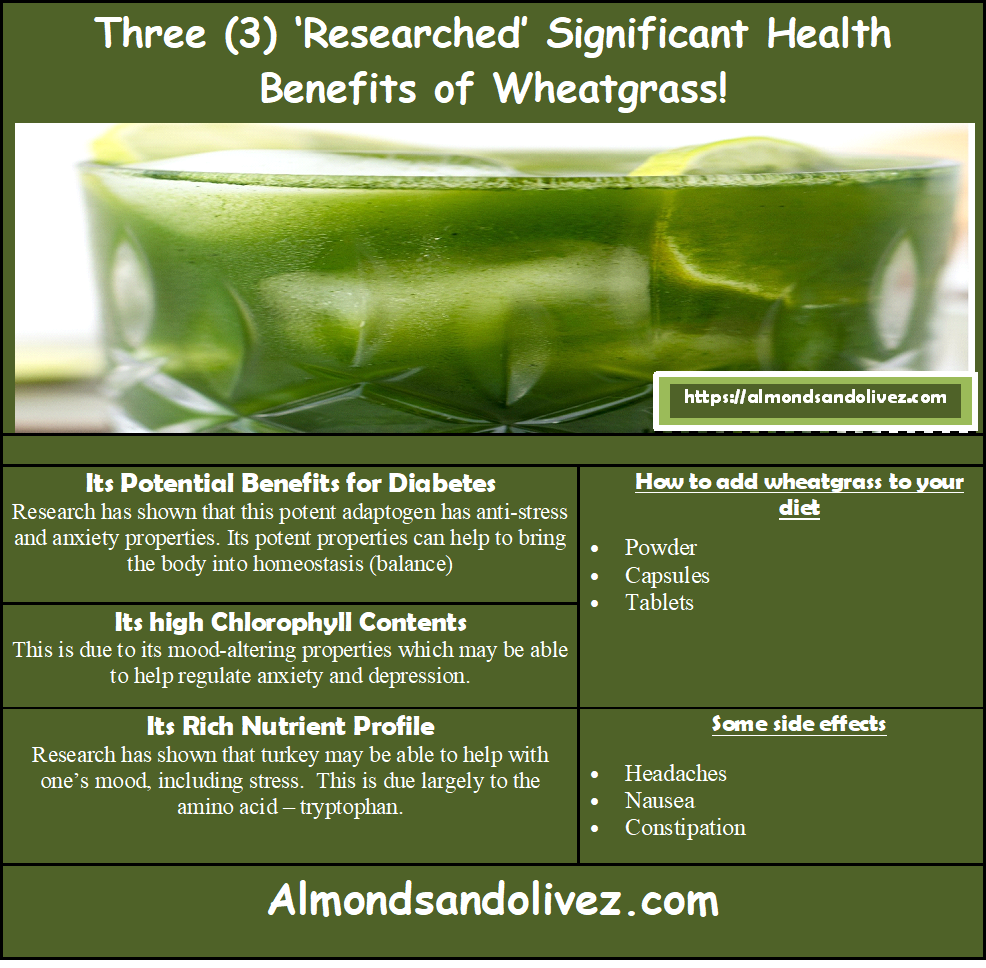
Here is an illustrative summary of the Three (3) ‘Researched’ Significant Benefits of Consuming Wheatgrass!
Let’s Sum Up!
Wheatgrass is considered a potent superfood, particularly due to its many rich nutrients. One most important one is chlorophyll or better yet – Green blood.
Wheatgrass is said to have many benefits including positively benefiting those suffering from type-2 diabetes, helping to detox the body, rebuilding the blood, improving eye health due to its high vitamin A content and providing the necessary minerals such as calcium, iron, and magnesium, among others. As such, having this as part of your wellness regimen could be a worthwhile choice.
So, have you ever heard of wheatgrass or tried it? Share it nuh!
You can learn more about other potent nutrients and vitamins in these articles. You can also watch the video about wheatgrass and other ‘supergreens’.
5 ‘must have’ super greens for every HealthNut Pantry!
Spirulina – The Ultimate Guide Including Five (5) Scientific Proven Benefits!
Elderberry – What it is and Five (5) Benefits that make it one of the World’s Renowned Berries!
Pine Bark Extract and Arthritis – Is there a positive Link? Let’s Explore the research!
Moringa – Nature’s Multivitamin without a Bottle – Here are Five (5) Researched Reasons Why?
- Video: Let’s Talk Super Greens
Editor’s Note: This article was last updated by a Research Consultant and Certified Nutrition Coach on March 24, 2026.
References and Further Reading
- Combs, G.G. (2012). The vitamins, 4th edn. Academic Press.
- Edwin E, Sheeja E. Color Atlas of Medicinal Plants. Edn 1, New Delhi CBS publisher and distributor; 45, 247, 2006.
- Chauhan M. A pilot study on wheat grass juice for its phytochemical, nutritional and therapeutic potential on chronic diseases. International Journal Of Chemical Studies 2014; 2(4): 27-34.
- Chauhan, Mukul & Chauhan, Mukul. (2014). A pilot study on wheat grass juice for its phytochemical, nutritional and therapeutic potential on chronic diseases.
- Dashwood R (1997) Chlorophylls as anticarcinogens. Int J Oncol 10:721–727.
- Desai TR, Goyal RK. Investigation into the Mechanism of Action and Effects of Triticum Aestivum (Wheat) Grass, 2005.
- Geerlings SE, Hoepelman AI. Immune dysfunction in patients with diabetes mellitus (DM). FEMS Immunology & Medical Microbiology 1999; 26 (3-4): 259-265.
- Kumar NS, Murali M, Nair AM, Nair AS. Green Blood Therapy of Wheat Grass-Nature’s Finest Medicine’-A Literature Review. IOSR Journal of Pharmacy and Biological Sciences 2016; 11(2): 57-64.
- Mishra, Vinod & Bachheti, Rakesh & Husen, Azamal. (2011). Medicinal Uses of Chlorophyll: A Critical Overview.
- Monnier L, Colette C. Contributions of fasting and postprandial glucose to hemoglobin A1c. Endocr Pract. 2006 Jan-Feb;12 Suppl 1:42-6. doi: 10.4158/EP.12.S1.42. PMID: 16627379.
- Mujariya, Rajesh & Bodla, Ramesh. (2012). A study on wheat grass and its Nutritional value. 2.
- Mujoriya R, Bodla RB. A study on wheat grass and its Nutritional value. Food Science and Quality Management 2011; 2: 1-9.
- Papatheodorou K, Papanas N, Banach M, Papazoglou D, Edmonds, M. Complications of Diabetes 2016. Journal of Diabetes Research, 2016.
- Rimple MKK, Kumar R, Newton A, Reeta SL. Poly pharmacological effects of green blood therapy: An update.World journal of pharmaceutical and medical research 2016; 2(1): 10-21.
- Shakib, MC, Gabrial, S & Gabrial, G.N. (2017). Beneficial effect of wheatgrass juice on some biochemical parameters in type 2 diabetic subjects with reduced lymphocytes count. Research Journal of Pharmaceutical Biological and Chemical Sciences.
- Vijole Bradauskiene, Lina Vaiciulyte-Funk, Bakht Shah, Darius Cernauskas, Mihaela Tita. (2021) Recent Advances in Biotechnological Methods for Wheat Gluten Immunotoxicity Abolishment – a Review. Polish Journal of Food and Nutrition Sciences, 5-20. Online publication date: 12-Feb-2021.
- Walters R. The Alternative Cancer Therapy Book. New York Avery Publishing Group, 1992, 299-308
- Yadav M, Sethi J, Dahyia K, Sood S, Gupta V, Singh V, Talwar A. Effect of TriticumAestiyium on physiological and biochemical parameters in high fat diet fed rabbits. Experimental medicine 2013; 18 (3-4): 39-42.

 Beauty is Skin Deep: 5 Best Foods for Lasting Skin Glow (A Researcher’s Guide)