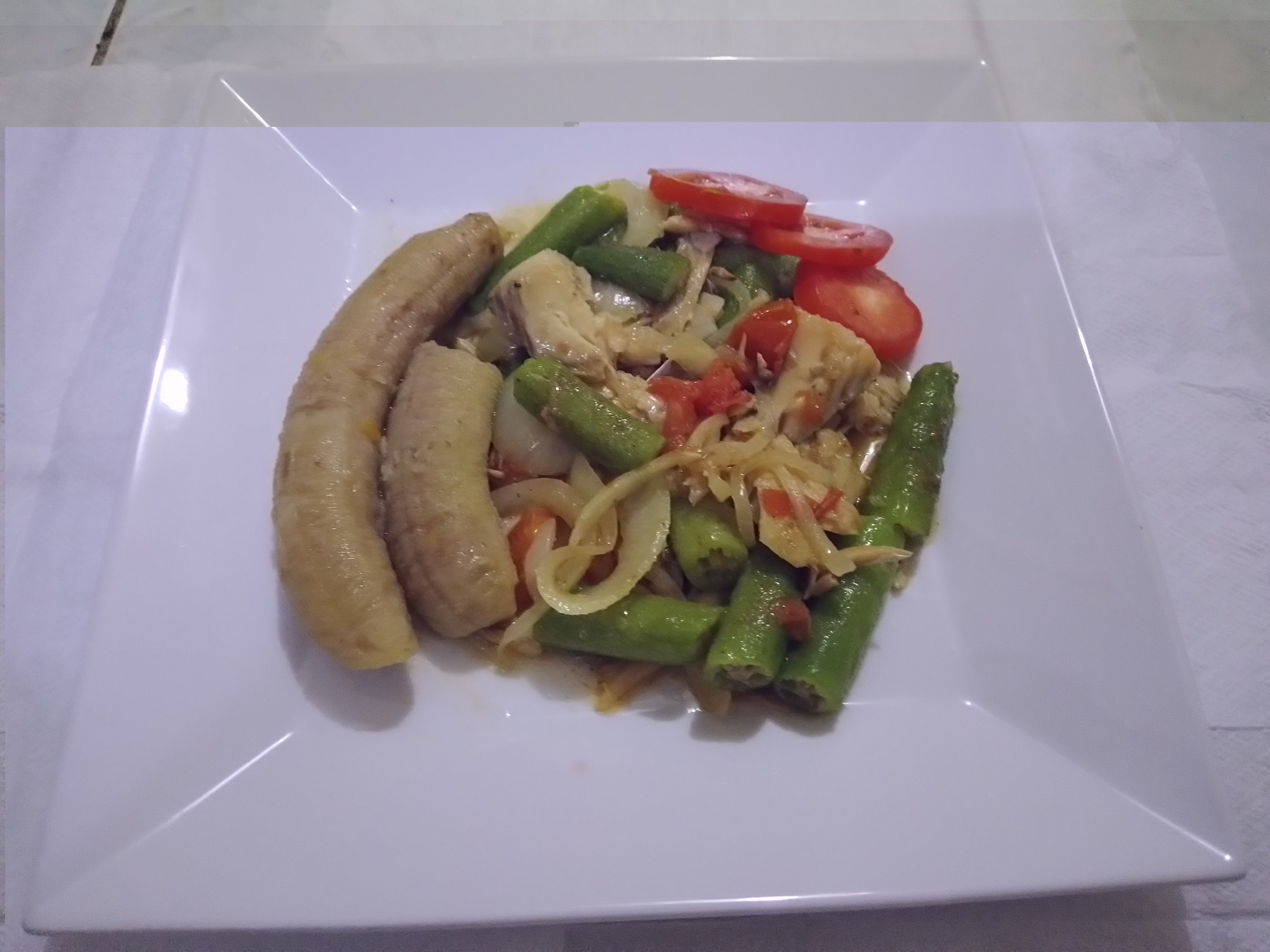
Saltfish and okra is a well-loved Jamaican dish, often enjoyed for breakfast but just as satisfying at any time of the day. Simple, flavourful, and nourishing, it’s a great example of how traditional meals can also support overall health.
Okra is a fiber-rich vegetable packed with vitamins and compounds that support digestion and heart health. When paired with saltfish, an excellent source of protein and essential fatty acids—this dish becomes both hearty and nutritious.
While it requires a bit of preparation, especially to properly soak and prepare the saltfish, the end result is a delicious, balanced meal that is well worth the effort.
If you’re looking for a traditional Jamaican recipe that is both healthy and satisfying, saltfish and okra is definitely one to try. Try it nuh!
INGREDIENTS
- ½ lb. saltfish (soaked & boiled).
- ½ Ib. Okras (or 10-12 medium to large-sized okras).
- 1 medium-sized tomato.
- 2 cloves garlic.
- 1 small/medium-sized onion
- 1 small, sweet pepper/Bell pepper (optional).
- 2 Tbsp cooking oil.
- ½ tsp black pepper (to taste).
- Powdered seasonings:
- Garlic powder
- Onion powder
- Paprika powder
INSTRUCTIONS
- Soak the saltfish in water overnight or for at least 4-8 hours. After a few hours, you can change the water to help remove more of the salt content.
- Add the soaked saltfish to boiling water and let it simmer for around 15-20 minutes or until tender. Ensure that the salt content is to your liking. If still too salty, you can change the water and add fresh water and let it simmer a bit more (5-10 minutes).
- Remove the pot from heat then remove the cooked saltfish to a bowl with room temperature water.
- Let it cool for a while.
- After cooling, remove bones and skin and then flake (break up in pieces) saltfish to your preferred sizes. I like a mixture of both large and small pieces.
- Remove the tips from the okra and cut them into halves/medium-sized pieces.
- Boil okra for about 5-10 minutes (until tender, not too soft) and set aside. Read the notes below to learn an additional way to use the okra without cooking it first.
- In a hot Frying Pan on low heat, add the cooking oil.
- Add onion, garlic and sweet pepper and stir.
- Add the saltfish and stir.
- Add the okras and continue to stir.
- Add this stage you can add a little water (2-3 Tbsp). This will help with the steaming of the okras.
- Add additional powdered seasonings (optional).
- Cover and let simmer for a minute or two.
- Turn off the stove.
- Serve and enjoy!
Notes:
You can cut the okras into small bite-size pieces. In this case, you will add them to the saltfish, seasonings, and spices, add a bit of water, and let everything cook for 2-5 minutes. For this dish, I wanted my okras to be a bit larger, hence the reason I cooked them first before adding them to the saltfish and seasonings.
Additionally, you can further add powdered seasonings after adding the okra to the saltfish to enhance the flavour. But do so as per your liking. You can enjoy your saltfish and okra with green bananas, yam, sweet potato dumplings, rice, etc. This can be a really filling meal, especially due to the okra which is high in fiber.
Bonus: You can use the water from the boiled okra to make a little ‘okra milk. Just add it to a blender with your preferred milk, cinnamon powder, vanilla extract, and honey/maple syrup for a little sweetness. Blend, add some ice and enjoy!
You can also enjoy this other great okra recipe and article about okra and its many health benefits and more by clicking the links below:
- Okra Punch – It’s all about the Fiber!
7 ‘must know’ health benefits of Okra including its positive effects on the skin and blood!
Ingredient Spotlight!
~ Saltfish~
Saltfish is the salt-cured and dried meat of Cod fish or some other meaty white fish. The drying process is what helps to preserve it for extended periods.
This cured fish is a good source of essential fatty acids and may help with skin and bone health. Saltfish is also purported to be high in protein and vitamin A and thus may be able to help with eye health.
To good health!

 The Mediterranean Diet – Benefits, Foods and How to Follow It