

Ozempic has become one of the most talked-about medications in the world of weight management. Depending on where you look, it is either portrayed as a revolutionary answer to obesity or criticized as an easy way out of a problem that should be solved with diet and exercise.
But why all this chaos? Are we asking the wrong questions? Is it truly a ‘double-edged sword?
For example, should we question whether Ozempic is a “good” or “bad” weight-loss drug? Or should we examine further, what it is doing inside the body, and what can it teach us about metabolism, appetite, blood sugar and weight management?
I believe if we ask these types of question, then our answers will take us beyond the celebrity stories, before-and-after photographs and social-media claims about “skinny shots.”
According to research, Ozempic contains a substance known as semaglutide. Semaglutideis a medication that belongs to a class called glucagon-like peptide-1, or GLP-1receptor agonists (Kommu and Whitfield, 2024).
GLP-1 is also a hormone naturally produced by our bodies, particularly in the gut after we eat (Holst, 2007). This is the substance that most of the weight loss claim is based and one that have garnered significant interest, both scientifically and otherwise.
It is often categorized as a medication, that does not simply “burn fat,” but interacts with a biological signaling system involved in glucose regulation, appetite and digestion (Naaz, 2025).
But the questions this article will explore are as follows: could understanding GLP-1 help us better understand metabolic health? Can food and lifestyle influence some of the same pathways? And where does the comparison between medication and “natural alternatives” stop being scientifically reasonable?
The article will also explore how you can ignite your natural GLP-1 receptors, what happens when you stop taking GLP-1 and some of the noted side effects of Ozempic. Let’s explore the science!
First, What Exactly is Ozempic?
Ozempic is the brand name for semaglutide (the generic active ingredient), an injectable GLP-1 receptor agonist.
In the United States, Ozempic is approved for adults with type 2 diabetes as an adjunct to diet and exercise to improve blood glucose control. Its current U.S. labeling also includes reducing certain cardiovascular risks in adults with type 2 diabetes and established cardiovascular disease and reducing certain kidney and cardiovascular risks in adults with type 2 diabetes and chronic kidney disease (Kommu and Whitfield, 2024; U.S. Food and Drug Administration; Ozempic.com).
It is important to distinguish Ozempic from Wegovy, which is another semaglutide product that is approved at a different dosing regimen for chronic weight management in appropriate individuals. (Kommu and Whitfield, 2024). Rybelsus is also a similar product that uses the same active ingredient as Ozempic and Wegovy. However, this product is in tablet form, and include an absorption enhancer (called SNAC) to help semaglutide absorb through the stomach lining (Kommu and Whitfield, 2024; Knudsen and Lau et al., 2019; Gallwitz B and Giorgino, 2021).
So, although the same active ingredient is involved, the products and approved indications are not interchangeable simply because they contain semaglutide.
In general, semaglutide belongs to a class of medications that mimic the action of GLP-1 at its receptor (Kommu and Whitfield, 2024).
But what exactly is GLP-1?
Ozempic is the brand name for semaglutide, an injectable GLP-1 receptor agonist. Semaglutide is the active ingredient. Semaglutide is also marketed under other brand names such as Wegovy and Rybelsus.
What is GLP-1: The Hormone You Already Have
GLP-1 (glucagon-like peptide-1) is not something pharmaceutical companies invented. But rather, something your body makes.
According to research – GLP-1 is an incretin hormone released by specialized cells in the gastrointestinal tract in response to nutrients entering the digestive system (Abdalqadir and Adeli, 2022). An incretin hormone is a type of gut hormone released by your small intestine after you eat food. Its main job is to signal your pancreas to release insulin into your bloodstream to help lower your blood sugar (Sciencedirect.com).
As such, among its important functions, GLP-1 helps stimulate insulin secretion when blood glucose is elevated, suppresses glucagon secretion in a glucose-dependent manner, slows gastric emptying and contributes to feelings of satiety (Drucker et al. 2017; Egan et al. 2003; Talsania et al. 2005).
In other words, GLP-1 is part of the communication system connecting the gut, pancreas and brain (Abdalqadir and Adeli, 2022).
This is one reason the GLP-1 story is so fascinating.
The medication is not introducing a completely foreign concept into the body. It is pharmacologically activating a biological pathway that already exists.
However, a substance having the same biological pathway does not mean that food or lifestyle can produce the same effect as a GLP-1 medication. This is part of the ‘meat’ of this article.
To this extent, Ozempic or Semaglutide is engineered to have a much longer duration of action than naturally occurring GLP-1. It therefore produces sustained receptor activation that ordinary meals do not replicate (Abdalqadir and Adeli, 2022; Kommu and Whitfield, 2024).
This is an important factor to take into account in the conversation surrounding its use, in whatever form you choose.
So, Is Ozempic Really a Metabolism Drug?
This depends on what we mean by metabolism.
Metabolism is not simply the rate at which your body “burns calories.”
According to research, metabolism encompasses an enormous network of processes involved in how your body, for example, how your body obtains energy from food, how it stores and uses energy, regulates blood glucose, responds to insulin, manages fats and carbohydrates, builds and maintains tissues, regulates appetite and food intake and adapts to changes in energy availability (Sánchez López de Nava A, Raja A, 2022).
Seen this way, semaglutide certainly has metabolic effects. However, it would not be prudent to call Ozempic a metabolism drug as this could be misleading. Additionally, if taken into this context as being a metabolism drug, people may think that the medication simply “speeds up” metabolism and that would not be the real story.
As research contends, a large part of its effect involves changing appetite, food intake, glucose regulation and gastrointestinal signaling (Drucker et al. 2017; Abdalqadir and Adeli, 2022)
This is important because it challenges one of the most persistent ideas surrounding weight: “If you just eat less and move more, your body will take care of the rest.” However, research has shown that human metabolism is considerably more complicated.
What Does GLP-1 Have to Do with Appetite?
Based on research, one of the most visible effects of GLP-1 receptor agonists is their influence on appetite (Shah and Vella, 2014).
Nonetheless, research contends that many people taking semaglutide report feeling fuller sooner, experiencing less hunger or having less interest in food (Blundell et al., 2017).
However, we must bear in mind that this isn’t simply a matter of willpower disappearing. As we have observed in research, sometimes, one might need more than willpower. But in this case, what is happening is that GLP-1 signalling participates in communication between the digestive system and the brain, including areas involved in appetite regulation.
Additionally, semaglutide also delays gastric emptying, particularly early in treatment, which can contribute to feelings of fullness (Blundell et al., 2017; van Can et al., 2014).
This helps explain why someone taking a GLP-1 receptor agonist may find it easier to eat less, which is an important lesson in itself.
Further Breakdown – Appetite is biological.
According to research, appetite is influenced by hormones, the nervous system, sleep, stress, food composition, eating patterns, environmental cues and many other factors (Miller, 2017; Ans et al., 2018).
However, this does not mean personal choices do not matter. What it means is that the biology influencing those choices is more complicated than mere “discipline” of even an adrenaline rush or “motivation.”
The Natural GLP-1 Question
This is one of the most commonly seen questions about GLP-1. In fact, it has generated enormous interest both online and offline. The question: can we increase our natural GLP-1 through food?
Based on research, the answer is ‘Yes.’ Food can influence GLP-1 secretion, but research has not shown that any single food has being a natural substitute for semaglutide.
Notwithstanding, research has shown that nutrients including protein, carbohydrates and fats can stimulate GLP-1 release after eating (van der Klaauw et al. 2013; Bodnaruc et al; 2016). Fiber-rich foods as well as fermented foods have also been shown to stimulate the body’s natural production of the hormone GLP-1 (de Jong et al. 2026)
There is also growing interest in how dietary fiber and the gut microbiome influence gut hormones, including GLP-1. This is scientifically interesting. But caution must be taken where this finding is concerned. As such, it should not be interpreted as: Eat this food to get the same effect as Ozempic. This type of pronouncement would not be aligned with research.
To this extent, based on the research, a balanced diet of protein, fat, fiber, fermented foods and healthy fats can stimulate a short-lived physiological response. However, a medication designed to activate the GLP-1 receptor for an extended period is doing something very different.
You can learn more about fiber, fat and carbohydrates and their impact on your overall health by reading these detailed articles as well as the highlighted podcast episodes:
- Fat, Who Me? Understanding the Types of Fats in our Foods
- Micronutrients and Macronutrients: What They Are, Why They Matter and How to Get Them
- Podcast: Fibermaxxing: Smart Health Habit or Just Another Wellness Trend?
- Podcast: Gut Health: Why It Matters!
Build Meals – Don’t Just Count Calories
One of the most useful lessons from metabolic research is that the whole meal matters.
For example, consider the difference between a sugary drink by itself and a meal containing vegetables, beans, fish, whole-food carbohydrates and a source of healthy fat.
They may contain carbohydrates, but they are not metabolically equivalent experiences.
Therefore, a balanced meal can provide fiber, protein, micronutrients, beneficial fats, slower-digesting carbohydrates, and greater satiety
This is one reason I prefer talking about eating patterns rather than individual “fat-burning foods.”
This is because, your metabolism does not encounter foods in isolation. As such, it responds to meals, patterns, activity, sleep and the broader physiological environment.
You can learn more about food patterns and how to eat for your overall health by reading the detailed articles below as well as listening to the highlighted podcast episodes. You can also learn more about sleep and how it affects your overall health, including brain health by listening to the podcast episodes below:
- The Mediterranean Diet: Benefits, Foods and How to Follow It
- Longevity Habits from the World’s Blue Zones: What Can We Learn?
- The Ketogenic Diet: Proven Benefits and Essential Cautionary Tales
- Podcast: Sleepmaxxing – Optimizing Sleep Like a Hacker
- Podcast: You’re Sleeping…But Are You Resting?
What About Resistant Starch and the Gut – Metabolic Connection?
According to research, resistant starch is a form of carbohydrate that is not completely digested in the small intestine (Baptista et al., 2024).
Research further contends that some resistant starch reaches the colon, where it can be fermented by gut microorganisms. This makes resistant starch interesting from a metabolic perspective (Nayak et al., 2022).
Some of the foods that can provide resistant starch include legumes, some whole grains and certain starchy foods that have been cooked and cooled.
It is important to note that the type of carbohydrate, its fiber content, degree of processing, portion, preparation and what you eat alongside it can all influence the overall metabolic response.
You can learn more resistant starch by listening to this article as well as the podcast episode:
- 7 Top Functional Foods of 2026 & Beyond – Backed by Science
- 5 Jamaican and Caribbean Foods for Weight Loss
- Podcast: Top Functional foods of 2026 and beyond
Using Exercise as a Metabolic Tool
Exercise is often reduced to one equation: exercise equals calories burned.
But research suggests that muscles are metabolically active tissues, and physical activity influences much more than energy expenditure (Theodorakis et al. 2024).
Studies have shown that exercise can improve insulin sensitivity, glucose handling, cardiovascular fitness, blood pressure and body composition.
A systematic review and meta-analysis of exercise interventions in adults with overweight or obesity found improvements in blood pressure and insulin resistance, among other outcomes (Battista et al., 2021).
And newer research examining GLP-1 receptor agonists alongside structured exercise suggests that combining the two can provide benefits for weight, fat mass and selected metabolic outcome (Jacuńska et. al., 2026).
This is particularly important because exercise may help address something medication alone cannot fully replace what is known as physical capacity (Khoramipour et. al, 2026). As such, while medication may help with managing imbalances like lowering blood pressure or controlling certain disease symptoms, it cannot physically rebuild your body’s structural strength and endurance. Hence, the importance of adding physical activity in the weight loss equation.
Therefore, being metabolically healthier is not just about weighing less. It is also about being able to move, build strength, maintain muscle and function well.
You can learn more about exercising and its impact overall health by reading the detailed articles below, listening to the highlighted podcast episode and watching a brief video:
- Exercise, it is more than just for weight loss
- Podcast: How to get your fit on in 2025 and Beyond
- Video: Let’s Talk Why You Need To Exercise
Don’t Forget Your Muscles
This is an extension of what was reiterated above due to the fact Ozempic conversations largely encompasses its effects on weight loss.
Weight loss can involve reductions in fat mass, lean mass and body water.
That means losing weight and improving body composition are not necessarily the same thing.
This is why resistance training deserves a place in any serious conversation about healthy weight management.
Research also suggest that strength training can help support muscle mass and physical function while dietary protein provides the amino acids needed for muscle maintenance and repair (Nagy et al., 2025).
You can learn more about resistance training and the benefits of exercising by reading these detailed articles:
- Zone-to-Zone Cardio for Metabolic Health
- What is High Intensity Interval Training? Benefits and Risks Explained
Ozempic Vs. Lifestyle: Is It Really Either/Or?
It is important to note that medication and lifestyle do not necessarily have to be opposing camps.
The 2026 American Diabetes Association (ADA) Standards of Care recognize obesity pharmacotherapy as one possible component of comprehensive treatment and recommend considering it alongside lifestyle changes for adults with type 2 diabetes when clinically appropriate (Diabetesjournals.org Standards of Care in Diabetes, 2026).
As such, one must be careful to not interpret this has – “Take the medication and forget about lifestyle.” Likewise, it is different from saying: “If you just eat better, nobody needs medication.”
As research has shown, some people can make substantial improvements through nutrition, physical activity, sleep and behavioural changes. On the other hand, others may need medication and some cases, some may need both.
Research has also shown that for people living with obesity or type 2 diabetes, the appropriate treatment can depend on medical history, metabolic health, other medications, preferences, access, tolerability and individual risk. Therefore, there is no responsible one-size-fits-all answer
What Happens When You Stop Semaglutide?
Research has shown weight gain and other variables like blood pressure reverting to pre-treatment baseline levels after discontinuation.
In the landmark STEP 1 extension study, participants who had received semaglutide for 68 weeks and then stopped treatment regained a substantial amount of the weight they had lost during the following year. Cardiometabolic improvements (such as blood pressure and blood sugar metrics) also reverted toward baseline (Wilding et al., 2022).
However, the finding should not be interpreted as: “Ozempic doesn’t work.” This is because, the participants had lost substantial weight while taking the medication.
Instead, it provides evidence for another important concept: Obesity is a chronic, relapsing condition, and ongoing pharmacotherapy or sustained management, which also include lifestyle changes, is often required to maintain long-term weight and health improvements (Wilding et al., 2022).
As such, the body does not necessarily remain at its post-weight-loss state simply because someone has reached a particular number on the scale.
This is one reason current clinical guidance considers some obesity medications to be long-term treatments rather than short courses that are automatically stopped once a target weight is reached.
What Can You Do Naturally?
We do not need to find a single “GLP-1 boosting” food. We can build a metabolic-health-supportive lifestyle around several well-established principles.
- Eat more minimally processed, nutrient-dense foods
Think vegetables, fruits, legumes, whole grains, nuts, seeds and appropriate protein sources.
- Make fibre a regular part of your diet
Beans, peas, lentils, vegetables, fruits, oats and other whole plant foods can contribute.
- Include protein at meals
Protein can support satiety and is particularly important when trying to preserve muscle during weight loss.
- Move your body regularly
Walking counts. Dancing counts. Cycling counts. Swimming counts.
And resistance training deserves special attention.
- Protect your sleep
Aim for adequate, consistent sleep rather than treating sleep as an optional luxury.
- Manage stress in realistic ways
You don’t need a perfect meditation routine. The goal is to develop strategies that make your overall life more manageable.
- Look beyond the scale
Pay attention to blood pressure, blood glucose, fitness, strength, waist circumference, sleep, energy and other meaningful measures of health.
So, Are We treating Weight or Metabolic Health?
Perhaps this is the most important question raised by the GLP-1 era.
For decades, conversations about weight have often centered almost exclusively on calories and body size.
However, the GLP-1 story has fortified the conversation. In that, it allows us to recognize that appetite, food intake, glucose regulation, digestion, hormones, the brain, muscle and metabolism are interconnected.
Nonetheless, that does not make calories irrelevant. Neither does it make the biology surrounding energy balance much more interesting.
For example, a person can want to lose weight and still have difficulty regulating appetite. Also, someone can lose weight and still have poor metabolic health. In addition, someone can have a larger body and be physically active with improving metabolic markers, and someone can have a body weight that appears “normal” while still having metabolic problems (Rubin, 2018).
Therefore, while weight is important, it is not the entire metabolic story.
A Word About Ozemipic Safety
Ozempic is a prescription medication, not a wellness supplement.
The current U.S. prescribing information includes warnings and precautions involving pancreatitis, diabetic retinopathy complications, hypoglycemia when used with certain diabetes medications, kidney injury related to volume depletion, severe gastrointestinal reactions, gallbladder disease and serious hypersensitivity reactions. It is also contraindicated in people with a personal or family history of medullary thyroid carcinoma or with multiple endocrine neoplasia syndrome type 2 (www.accessdata.fda.gov).
According to the U.S. Food and Drug Administration, common adverse effects include gastrointestinal symptoms such as nausea, vomiting, diarrhea, abdominal pain and constipation.
However, this does not mean that everyone taking semaglutide will experience serious problems. It means that the medication deserves the same respect we should give any prescription therapy: appropriate patient selection, medical supervision and continuous monitoring where needed.
Therefore, anyone considering starting, stopping or changing a prescription medication should discuss that decision with their healthcare professional rather than relying on social media or an online “natural alternative.”
A Researcher’s Perspective
This topic is of great interest to me, due to my interest in metabolic and functional health. As such, with the rise of Ozempic and other GLP-1 medications, has given us the opportunity to rethink how we talk about weight and of course, healthier lifestyle in general.
But we should not leave with the notion that everyone should take a GLP-1 medication or that nobody should. But rather, that metabolism is far more sophisticated than the old “eat less and exercise more” conversation suggests.
Therefore, GLP-1 is one piece of that puzzle and food is another. So are muscle, movement, sleep, stress, genetics, hormones, the gut, medications and the many other factors that influence metabolic health.
And yes, for some people, medication can be an important and appropriate part of that picture. But there is also value in understanding what our everyday choices can influence.
Therefore, we do not need to call broccoli “natural Ozempic” or even promise anyone that beans will replicate a prescription medication.
Instead, we need to learn how we can nourish the systems that regulate appetite, how we can support insulin sensitivity, preserve muscle while managing weight as well as build meals that are satisfying rather than simply smaller.
That, to me, is the more interesting story behind Ozempic. And it is a story that goes far beyond one medication.
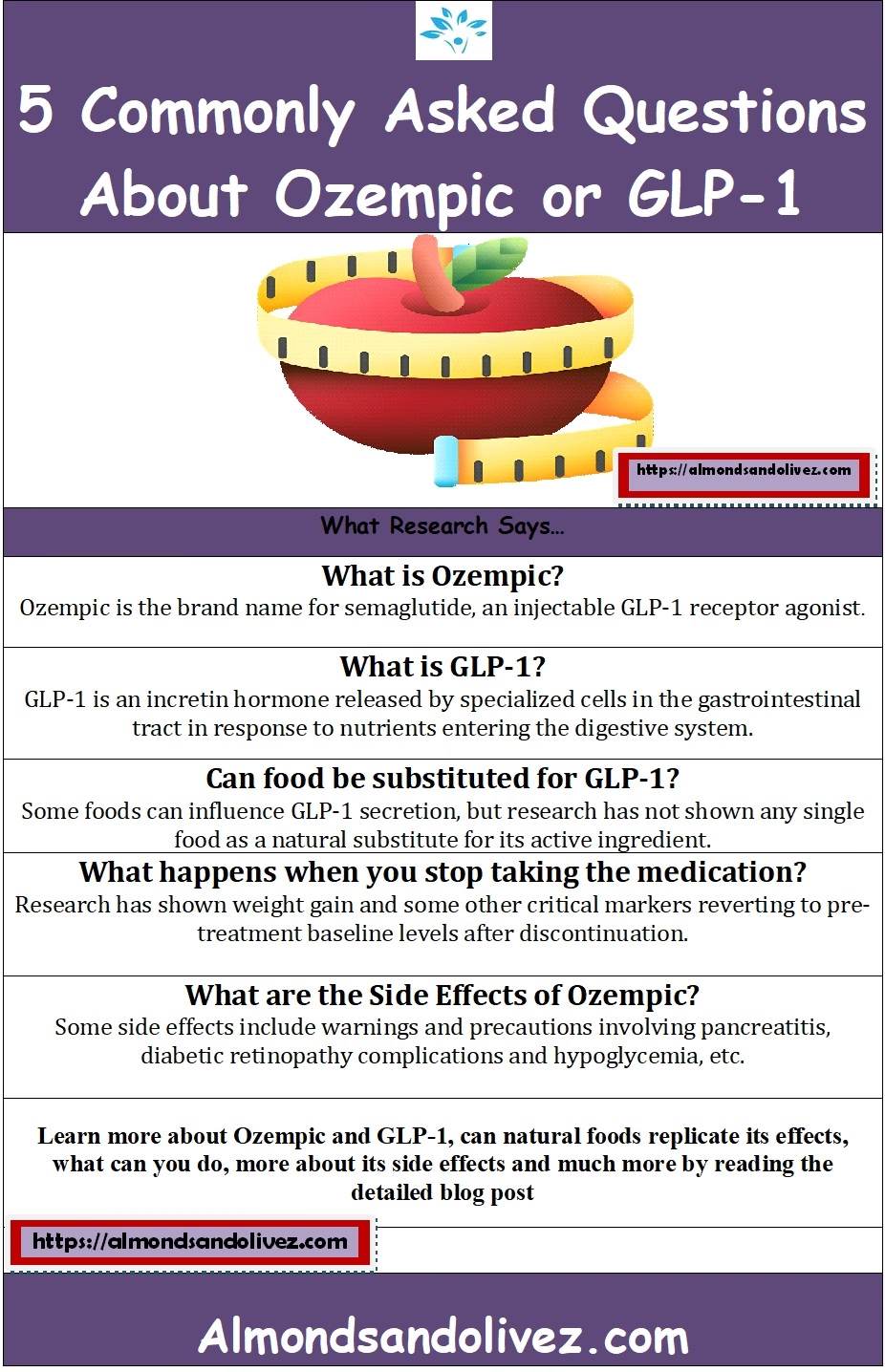
Illustrative Summary
Here is an illustrative summary of some of 5 Commonly Asked Questions About Ozempic and GLP-1
Let’s Sum Up!
Ozempic has changed the conversation around weight loss, but what is really happening inside the body? This article explores the science of GLP-1, appetite regulation, blood sugar, metabolism and weight management.
We also look at how fiber, protein, physical activity, sleep and other lifestyle factors may support some of the same metabolic pathways, while separating evidence-based strategies from the popular “natural Ozempic” claims.
So, now that we have explore Ozempic, especially as it relates to metabolic health, do you have a clearer picture of its use? Is this a drug you would use to lose weight and why? Share it nuh in the comments below.
Here are some other useful articles to help you understand the science of weight loss as well as how to maintain overall good health:
- The Mediterranean Diet: Benefits, Foods and How to Follow It
- Exercise, it is more than just for weight loss
- How to Get Your Fitness Journey Back on Track When You Have Been Sedentary or Inconsistent
References and Further Readings
- Abdalqadir N, Adeli K. GLP-1 and GLP-2 Orchestrate Intestine Integrity, Gut Microbiota, and Immune System Crosstalk. Microorganisms. 2022 Oct 19;10(10):2061. doi: 10.3390/microorganisms10102061. PMID: 36296337; PMCID: PMC9610230.
- American Diabetes Association Professional Practice Committee for Diabetes*; 8. Obesity and Weight Management for the Prevention and Treatment of Diabetes: Standards of Care in Diabetes–2026. Diabetes Care 1 January 2026; 49 (Supplement_1): S166–S182.
- Ans, Armghan & Anjum, Ibrar & Satija, Vaibhav & Inayat, Awaisha & Asghar, Zain & Akram, Imran & Shrestha, Bishesh. (2018). Neurohormonal Regulation of Appetite and its Relationship with Stress: A Mini Literature Review. Cureus. 10.7759/cureus.3032.
- Baptista NT, Dessalles R, Illner AK, Ville P, Ribet L, Anton PM, Durand-Dubief M. Harnessing the power of resistant starch: a narrative review of its health impact and processing challenges. Front Nutr. 2024 Mar 20;11:1369950. doi: 10.3389/fnut.2024.1369950. PMID: 38571748; PMCID: PMC10987757.
- Battista F, Ermolao A, van Baak MA, Beaulieu K, Blundell JE, Busetto L, Carraça EV, Encantado J, Dicker D, Farpour-Lambert N, Pramono A, Bellicha A, Oppert JM. Effect of exercise on cardiometabolic health of adults with overweight or obesity: Focus on blood pressure, insulin resistance, and intrahepatic fat-A systematic review and meta-analysis. Obes Rev. 2021 Jul;22 Suppl 4(Suppl 4):e13269. doi: 10.1111/obr.13269. Epub 2021 May 6. PMID: 33960110; PMCID: PMC8365642.
- Blundell J, Finlayson G, Axelsen M, Flint A, Gibbons C, Kvist T, Hjerpsted JB. Effects of once weekly semaglutide on appetite, energy intake, control of eating, food preference and body weight in subjects with obesity. Diabetes Obes Metab. 2017 Sep;19(9):1242-1251. doi: 10.1111/dom.12932. Epub 2017 May 5. PMID: 28266779; PMCID: PMC5573908.
- Bodnaruc AM, Prud’homme D, Blanchet R, Giroux I. Nutritional modulation of endogenous glucagon-like peptide-1 secretion: a review. Nutr Metab (Lond). 2016 Dec 9; 13:92. doi: 10.1186/s12986-016-0153-3. PMID: 27990172; PMCID: PMC5148911.
- de Jong JCBC, Lentjes MGW, Pietersma KF, Pasman WJ, Wopereis S, Hoevenaars FPM. Dietary fibers to boost endogenous GLP-1 secretion and satiety: a scoping review. Front Endocrinol (Lausanne). 2026 Jul 15; 17:1880500. doi: 10.3389/fendo.2026.1880500. PMID: 42528510; PMCID: PMC13414124.
- Drucker D.J., Habener J.F., Holst J.J. Discovery, characterization, and clinical development of the glucagon-like peptides. J. Clin. Investig. 2017; 127:4217–4227. doi: 10.1172/JCI97233.
- Egan J.M., Bulotta A., Hui H., Perfetti R. GLP-1 receptor agonists are growth and differentiation factors for pancreatic islet beta cells. Diabetes/Metab. Res. Rev. 2003; 19:115–123. doi: 10.1002/dmrr.357.
- Gallwitz B, Giorgino F. Clinical Perspectives on the Use of Subcutaneous and Oral Formulations of Semaglutide. Front Endocrinol (Lausanne) 12 (2021): 645507. [DOI] [PMC free article] [PubMed] [Google Scholar]
- Holst JJ. The physiology of glucagon-like peptide 1. Physiol Rev. 2007 Oct;87(4):1409-39. doi: 10.1152/physrev.00034.2006. PMID: 17928588.
- Jacuńska, J., Chmielewska, M., Wojno, A., Lenkiewicz, P., Noszczak, Ł., & Popowczak, M. (2026). GLP-1 Receptor Agonists and Physical Activity: A Narrative Review of Their Effects on Body Weight, Body Composition, and Metabolic Health. Applied Sciences, 16(21), 10949. https://doi.org/10.3390/app162110949.
- Khoramipour K, López-Ortiz S, Santos-Lozano A. Redefining the role of exercise: beyond medicine and polypill. EXCLI J. 2026 Jan 9;25:170-173. doi: 10.17179/excli2025-9114. PMID: 41768860; PMCID: PMC12946443.
- Kommu S, Whitfield P. Semaglutide. [Updated 2024 Feb 11]. In: StatPearls [Internet]. Treasure Island (FL): StatPearls Publishing; 2024 Jan-. Available from: https://www.ncbi.nlm.nih.gov/books/NBK603723/
- Knudsen LB, Lau J. The Discovery and Development of Liraglutide and Semaglutide. Front Endocrinol (Lausanne) 10 (2019): 155.
- Miller GD. Appetite Regulation: Hormones, Peptides, and Neurotransmitters and Their Role in Obesity. Am J Lifestyle Med. 2017 Jun 23;13(6):586-601. doi: 10.1177/1559827617716376. PMID: 31662725; PMCID: PMC6796227.
- Nagy SR, Mititelu M, Marin RC, Popovici V, Pallag A, Jurca T. The Impact of Protein and Amino Acid Supplementation on Muscular Strength and Endurance in Recreational Gym-Goers During 8-Week Resistance Training. Sports (Basel). 2025 Jun 11;13(6):182. doi: 10.3390/sports13060182. PMID: 40559694; PMCID: PMC12197060.
- Naaz, Shamreen. (2025). Intermittent Fasting or Ozempic: Exploring their Impact on Weight Loss and Metabolic Health. 10.21088/ip.2347.1506.13125.5.
- Nayak, Swarajya & Prusty, Reena. (2022). Resistant Starch: A Superfood for Our Digestive System.
- Rubin R. What’s the Best Way to Treat Normal-Weight People with Metabolic Abnormalities? JAMA. 2018;320(3):223–225. doi:10.1001/jama.2018.8188.
- Sánchez López de Nava A, Raja A. Physiology, Metabolism. [Updated 2022 Sep 12]. In: StatPearls [Internet]. Treasure Island (FL): StatPearls Publishing; 2022 Jan-. Available from: https://www.ncbi.nlm.nih.gov/books/NBK546690/
- Shah M, Vella A. Effects of GLP-1 on appetite and weight. Rev Endocr Metab Disord. 2014 Sep;15(3):181-7. doi: 10.1007/s11154-014-9289-5. PMID: 24811133; PMCID: PMC4119845.
- Talsania T., Anini Y., Siu S., Drucker D.J., Brubaker P.L. Peripheral exendin-4 and peptide YY3–36 synergistically reduce food intake through different mechanisms in mice. Endocrinology. 2005; 146:3748–3756. doi: 10.1210/en.2005-0473.
- Theodorakis N, Kreouzi M, Pappas A, Nikolaou M. Beyond Calories: Individual Metabolic and Hormonal Adaptations Driving Variability in Weight Management-A State-of-the-Art Narrative Review. Int J Mol Sci. 2024 Dec 15;25(24):13438. doi: 10.3390/ijms252413438. PMID: 39769203; PMCID: PMC11676201.
- van Can J, Sloth B, Jensen CB, Flint A, Blaak EE, Saris WH. Effects of the once‐daily GLP‐1 analog liraglutide on gastric emptying, glycemic parameters, appetite and energy metabolism in obese, non‐diabetic adults. Int J Obes (Lond). 2014; 38:784‐793. [DOI]
- van der Klaauw AA, Keogh JM, Henning E, Trowse VM, Dhillo WS, Ghatei MA, Farooqi IS. High protein intake stimulates postprandial GLP1 and PYY release. Obesity (Silver Spring). 2013 Aug;21(8):1602-7. doi: 10.1002/oby.20154. Epub 2013 May 13. PMID: 23666746; PMCID: PMC6548554.
- Wilding JPH, Batterham RL, Davies M, Van Gaal LF, Kandler K, Konakli K, Lingvay I, McGowan BM, Oral TK, Rosenstock J, Wadden TA, Wharton S, Yokote K, Kushner RF; STEP 1 Study Group. Weight regains and cardiometabolic effects after withdrawal of semaglutide: The STEP 1 trial extension. Diabetes Obes Metab. 2022 Aug;24(8):1553-1564. doi: 10.1111/dom.14725. Epub 2022 May 19. PMID: 35441470; PMCID: PMC9542252.


 Soursop Leaf Tea Benefits: Science-Backed Healing Properties, Side Effects & Dosage