
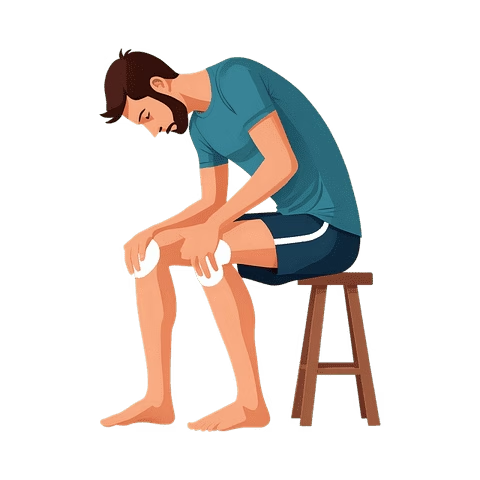
When I was a child, the common belief was that arthritis was something that only affected older people. As I got older, however, I realized that this notion was not entirely true. While aging can certainly play a role, arthritis is not simply a consequence of worn-out joints. Researchers now understand that several underlying factors may contribute to its development.
For many people, arthritis begins quietly. A little stiffness in the morning. A sore knee when climbing the stairs. Fingers that suddenly do not move as easily as they once did. At first, these symptoms may seem like a normal part of getting older, something to simply “live with.” However, researchers are increasingly learning that arthritis may be far more complex than simple wear and tear on the joints.
Today, arthritis is being viewed through a much broader lens, one that includes chronic inflammation, metabolic health, obesity, physical inactivity, nutrition, stress, immune dysfunction, and aging itself. In other words, arthritis may not just be about the joints. It may reflect deeper processes occurring throughout the body.
This shift in understanding matters, because arthritis affects far more than physical movement. It can influence independence, sleep, emotional well-being, quality of life, mental health, social engagement, and long-term mobility.
According to the World Health Organization (WHO), hundreds of millions of people worldwide live with osteoarthritis alone, making it one of the leading causes of disability globally.
Yet, despite how common arthritis is, many conversations surrounding it remain surprisingly limited in some circles, often focusing primarily on pain management while overlooking the broader lifestyle and inflammatory factors that researchers continue to investigate.
Arthritis Is Not Just One Disease
One of the biggest misconceptions about arthritis is the idea that it refers to one single condition.
In reality, “arthritis” is an umbrella term used to describe more than 100 conditions affecting the joints and surrounding tissues (National Institute of Arthritis and Musculoskeletal and Skin Diseases).
Some of the most common forms include:
Osteoarthritis
Often associated with joint degeneration and aging.
Rheumatoid Arthritis
An autoimmune condition where the immune system attacks joint tissues. It can also affect vital organs and connective tissues throughout the body.
Psoriatic Arthritis
Associated with psoriasis and immune dysfunction.
Gout
Linked to uric acid crystal accumulation and inflammation.
Although these conditions differ, chronic inflammation appears to play an important role in many forms of arthritis (Sokolove J and Lepus, 2013).
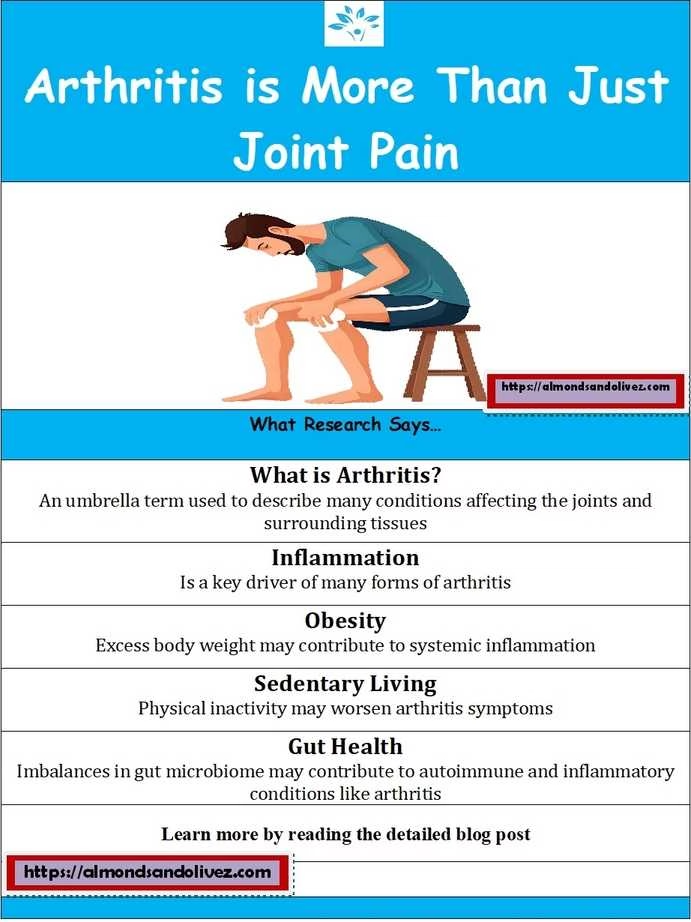
What is Arthritis? Arthritis is an umbrella term used to describe more than 100 conditions affecting the joints and surrounding tissues.
Researchers Are Increasingly Focused on Inflammation
Inflammation is the body’s natural defense mechanism and is purported as a key driver of many forms of arthritis. Short-term inflammation helps protect us from injury, infection and sometimes harmful stimuli (Sokolove J and Lepus, 2013).
However, chronic low-grade inflammation may become problematic when it persists over time.
Researchers now believe chronic inflammation may contribute to joint damage, cartilage breakdown, pain sensitivity and metabolic dysfunction (Leiva-Castro et al. 2025).
Several inflammatory molecules, including cytokines such as TNF-alpha and interleukins, are now heavily studied in arthritis research (Rahmati M et al. 2016).
This growing understanding has shifted arthritis discussions away from the outdated idea that joint pain is simply caused by “getting older.” Even osteoarthritis, once thought to be purely “wear and tear,” is now understood to have a significant inflammatory component (Knights et al. 2023).
You can learn more about inflammation by listening to the podcast episodes below:
The Link Between Obesity and Arthritis Goes Beyond Weight
Many people assume excess weight affects arthritis only because of increased pressure on the joints. While mechanical stress certainly matters, researchers now understand the relationship may be much deeper (Arthritis and Body Weight; Baah and Kohlmeier, 2024).
Fat tissue is not merely “stored weight.” It is metabolically active tissue capable of releasing inflammatory compounds known as adipokines (Baah and Kohlmeier, 2024).
This means, obesity may contribute to increased systemic inflammation, worsened joint stress, pain sensitivity and cartilage degradation (Center for Disease Control Prevention (CDC), 2021; Theis et al. 2018).
Studies suggest obesity is strongly associated with both osteoarthritis progression and reduced mobility (Baah and Kohlmeier, 2024)
Interestingly, arthritis risk may increase even in non-weight-bearing joints, suggesting inflammation, not just mechanical load, may be involved.
You can learn more about the benefits of exercising in the detailed articles below:
- Exercising, it is more than just for weight loss
- Exercise and mental health: Is there a positive link?
Sedentary Living May Quietly Worsen Joint Health
When joints hurt, many people naturally move less. However, prolonged inactivity may sometimes worsen stiffness, muscle weakness, reduced mobility and circulation issues (Geneen et al. 2017). Movement helps nourish joint tissues and maintain muscle support around the joints.
Research consistently shows that appropriate physical activity may help improve mobility, reduce pain perception, support muscle strength and improve function and quality of life (Center for Disease Control and Prevention (CDC); Geneen et al. 2017).
This does not mean intense exercise is always necessary.
In many cases, low-impact movement may be beneficial. Examples of low-impact movements include walking, swimming, stretching, yoga, resistance training and cycling.
The key is often consistency rather than intensity.
You can learn more about sedentary lifestyle and the benefits of exercising in the detailed articles below:
- Exercising, it is more than just for weight loss
- Exercise and mental health: Is there a positive link?
Could Food Influence Arthritis Symptoms?
Researchers continue exploring how dietary patterns may influence inflammation and arthritis symptoms.
While no single food cures arthritis, some dietary patterns appear more supportive of overall inflammatory balance.
Research frequently highlights the potential importance of fruits and vegetables, omega-3 fatty acids, fiber-rich foods, nuts and seeds and minimally processed foods. Conversely, diets that are high in ultra-processed foods, sugars, refined carbohydrates and trans fat have been associated with increased inflammatory markers in some studies (Tristan et al. 2023).
The Mediterranean dietary pattern, in particular, has received attention for its potential anti-inflammatory effects (Tsigalou et al. 2020; Aune et al. 2017).
You can learn more about ultra-processed foods, inflammation and the mediterranean diet by listening to the respective podcast episodes as well as reading the detailed blog post.
- Podcast – Ultra-Processed Foods: How Much Is Too Much?
- Podcast – Is Everything Inflammation
- The Mediterranean diet – Benefits, What it Entails and How To Do It
Sleep and Arthritis: An Often-Overlooked Relationship
Poor sleep and chronic pain often create a difficult cycle. Pain may disrupt sleep and poor sleep may worsen pain sensitivity.
Research suggests inadequate sleep may influence inflammatory pathways, pain perception, fatigue and emotional resilience (Haack et al. 2020).
According to research, many individuals living with arthritis also experiences sleep disturbances, which may further impact quality of life (McBeth et al. 2022). This highlights why wellness approaches to arthritis often need to extend beyond the joints alone.
You can learn more about sleep and its impact on the body by listening to the podcast episodes below:
Aging Matters – But It May Not Be the Whole Story
Aging remains an important risk factor for many forms of arthritis.
Over time cartilage naturally changes, joint tissues experience wear, muscle mass may decline, and recovery capacity may decrease.
However, researchers increasingly caution against viewing arthritis as an inevitable part of aging. This is because, many older people never develop the condition, while many younger adults live with early-stage joint damage (Hamodat et al. 2025).
Lifestyle factors throughout life may significantly influence inflammation, mobility, muscle preservation, metabolic health and joint resilience (Hamodat et al. 2025).
Healthy aging is not necessarily about avoiding aging itself, but supporting the body as it changes.
You can learn more about aging in the podcast episode below as well as the highlighted detailed blog post:
- What aging really looks like (and it is not anti-aging)
- Raw at 66: Challenging Aging and Nutrition Myths
- How to Move Pain-Free and Age with Strength
- Longevity Habits from the World’s Blue Zones: What Can We Learn?
The Emotional Toll of Arthritis Is Often Underestimated
Arthritis is not only physical.
Chronic pain may affect independence, confidence, social engagement, work life and mental health (Lumley et al. 2024).
Some individuals may withdraw from activities they once loved because movement becomes painful or exhausting.
Researchers increasingly recognize the importance of addressing the emotional dimensions of chronic illness alongside physical symptoms (Turner and Kelly, 2000).
A Researcher’s Perspective: What Can We Reasonably Conclude?
From a research perspective, several important conclusions emerge:
- Arthritis is far more complex than simple “wear and tear.”
- Chronic inflammation appears central to many forms of arthritis.
- Lifestyle factors may influence symptoms and progression.
- Movement remains important for joint health.
- Nutrition may help support inflammatory balance.
- Sleep, stress, obesity, and metabolic health all matter.
- Arthritis affects both physical and emotional well-being.
The science increasingly supports a whole-body wellness perspective rather than focusing only on isolated joints.
Looking for a More Structured Approach to Arthritis Management?
While this article provides an overview of arthritis and the factors that influence it, effective management often requires a more structured and comprehensive understanding of arthritis and current research and strategies being employed.
In my book, My Little Fingers: A Complete Arthritis Guide & Toolkit, I go deeper into:
- The types of arthritis and how they differ
- The role of inflammation in specific conditions
- Evidence-informed dietary frameworks
- Step-by-step lifestyle strategies
- Practical tools for daily application
If you’re looking for a more guided, detailed approach, the book provides a clear and structured roadmap.
If you’re ready to move from confusion to clarity:
Get your copy on Amazon today (My Little Fingers: A Complete Arthritis Guide and Toolkit)
Illustrative Summary
Here is an illustrative summary of Arthritis and Joint Care in General
Let’s Sum Up!
Arthritis is often discussed as though it is simply a normal consequence of aging. But modern research suggests the story may be much more complex.
Inflammation, lifestyle, metabolism, movement, nutrition, sleep, and emotional health all appear interconnected in ways researchers are still working to fully understand.
This does not mean arthritis can always be prevented or reversed.
However, it does suggest that supporting overall wellness may play a meaningful role in how the body experiences aging and inflammation.
Perhaps one of the most important lessons emerging from current research is this – Joint health is not isolated from the rest of the body.
How we move, eat, rest, cope with stress, and care for ourselves throughout life may all help shape the aging process in ways we are only beginning to appreciate.
So, now that we have explored the arthritis and some of the factors that can contribute to it, where you surprised? Do you or someone you know suffer from arthritis? How are they coping? Share it nuh! In the comments below.
Want a more structured and comprehensive understanding of arthritis and current research and strategies being employed? Get your copy of my book:
My Little Fingers: A Complete Arthritis Guide & Toolkit. Available now on Amazon.
Here are some other useful articles, podcast episodes and free downloads that can help you on your journey to better joints and overall health:
- Podcast: How to move pain-free and age with strength
- Podcast: You’re Sleeping, but are You Resting?
- Podcast: Sleepmaxxing – Optimizing Sleep like a Hacker
- Podcast – Ultra-Processed Foods: How Much Is Too Much?
- Podcast – Is Everything Inflammation
- The Mediterranean diet – Benefits, What it Entails and How To Do It
- Longevity Habits from the World’s Blue Zones: What Can We Learn?
- Free Download – Calcium – Rich Foods
- Free Download – Healthy Shopping List Guide
References and Further Readings
- Arthritis. National Institute of Arthritis and Musculoskeletal and Skin Diseases. https://www.niams.nih.gov/health-topics/arthritis/advanced. Accessed November 20, 2020.
- Aune, D.; Giovannucci, E.; Boffetta, P.; Fadnes, L.T.; Keum, N.; Norat, T.; Greenwood, D.C.; Riboli, E.; Vatten, L.J.; Tonstad, S. Fruit and vegetable intake and the risk of cardiovascular disease, total cancer and all-cause mortality—A systematic review and dose-response meta-analysis of prospective studies. Int. J. Epidemiol. 2017, 46, 1029–1056. [CrossRef].
- Center for Disease Control Prevention (CDC). National and state medical expenditure and workforce, National Interview Survey, 2014–2018. MMWR Morbidity and Mortality Weekly Report 2021;70(40): 1379-1385. Published July 18, 2018. Accessed February 17, 2024. https://www.cdc.gov/mmwr/volumes/70/wr/mm7040a2.htm?s_cid=mm7040a2_w33444296 [Google Scholar]
- Geneen LJ, Moore RA, Clarke C, Martin D, Colvin LA, Smith BH. Physical activity and exercise for chronic pain in adults: an overview of Cochrane Reviews. Cochrane Database Syst Rev. 2017 Apr 24;4(4):CD011279. doi: 10.1002/14651858.CD011279.pub3. PMID: 28436583; PMCID: PMC5461882.
- Haack M, Simpson N, Sethna N, Kaur S, Mullington J. Sleep deficiency and chronic pain: potential underlying mechanisms and clinical implications. Neuropsychopharmacology. 2020 Jan;45(1):205-216. doi: 10.1038/s41386-019-0439-z. Epub 2019 Jun 17. PMID: 31207606; PMCID: PMC6879497.
- Hamodat O, Ameed R, Alzarooni A, Elmohamed ARM, Zainal D, Alkandari JJ, Eladl M. Public Awareness and Knowledge Gaps in Osteoarthritis Prevention in the UAE: A Cross-Sectional Study on Risk Factors and Lifestyle Influences. Cureus. 2025 Jan 24;17(1):e77915. doi: 10.7759/cureus.77915. PMID: 39991382; PMCID: PMC11847555.
- Knights AJ, Redding SJ, Maerz T. Inflammation in osteoarthritis: the latest progress and ongoing challenges. Curr Opin Rheumatol. 2023 Mar 1;35(2):128-134. doi: 10.1097/BOR.0000000000000923. Epub 2022 Dec 22. PMID: 36695054; PMCID: PMC10821795.
- Leiva-Castro, C., Múnera-Rodríguez, A.M., Torres-Joya, G. et al. Modulating inflammation and oxidative stress in rheumatoid arthritis: a systematic review of nutraceutical interventions. Inflammopharmacol 33, 6357–6375 (2025). https://doi.org/10.1007/s10787-025-01976-8
- Longo UG, Lalli A, Bandini B, de Sire R, Angeletti S, Lustig S, Ammendolia A, Budhiparama NC, de Sire A. Role of the Gut Microbiota in Osteoarthritis, Rheumatoid Arthritis, and Spondylarthritis: An Update on the Gut-Joint Axis. Int J Mol Sci. 2024 Mar 13;25(6):3242. doi: 10.3390/ijms25063242. PMID: 38542216; PMCID: PMC10970477.
- Lumley S, Yu D, Wilkie R, Jordan KP, Peat G. Chronic pain-mental health comorbidity and excess prevalence of health risk behaviours: a cross-sectional study. Prim Health Care Res Dev. 2024 Apr 8;25: e15. doi: 10.1017/S1463423624000070. PMID: 38587013; PMCID: PMC11022513.
- McBeth J, Dixon WG, Moore SM, Hellman B, James B, Kyle SD, Lunt M, Cordingley L, Yimer BB, Druce KL. Sleep Disturbance and Quality of Life in Rheumatoid Arthritis: Prospective mHealth Study. J Med Internet Res. 2022 Apr 22;24(4): e32825. doi: 10.2196/32825. PMID: 35451978; PMCID: PMC9077504.
- Pickard JM, Zeng MY, Caruso R, Núñez G. Gut microbiota: Role in pathogen colonization, immune responses, and inflammatory disease. Immunol Rev. 2017 Sep;279(1):70-89. doi: 10.1111/imr.12567. PMID: 28856738; PMCID: PMC5657496.
- Rahmati M, Mobasheri A, Mozafari M. Inflammatory mediators in osteoarthritis: A critical review of the state-of-the-art, current prospects, and future challenges. Bone. 2016 Apr; 85:81-90. doi: 10.1016/j.bone.2016.01.019. Epub 2016 Jan 23. PMID: 26812612.
- Sokolove J, Lepus CM. Role of inflammation in the pathogenesis of osteoarthritis: latest findings and interpretations. Ther Adv Musculoskelet Dis. 2013 Apr;5(2):77-94. doi: 10.1177/1759720X12467868. PMID: 23641259; PMCID: PMC3638313.
- Theis KA, Roblin DW, Helmick CG, Luo R. Prevalence and causes of work disability among working-age U.S. adults, 2011-2013, NHIS. Disabil Health J. 2018; 11:108-115. doi: 10.1016/j.dhjo.2017.04.010 [PMC free article] [Google Scholar]
- Tristan Asensi M, Napoletano A, Sofi F, Dinu M. Low-Grade Inflammation and Ultra-Processed Foods Consumption: A Review. Nutrients. 2023 Mar 22;15(6):1546. doi: 10.3390/nu15061546. PMID: 36986276; PMCID: PMC10058108.
- Tsigalou C, Konstantinidis T, Paraschaki A, Stavropoulou E, Voidarou C, Bezirtzoglou E. Mediterranean Diet as a Tool to Combat Inflammation and Chronic Diseases. An Overview. Biomedicines. 2020 Jul 8;8(7):201. doi: 10.3390/biomedicines8070201. PMID: 32650619; PMCID: PMC7400632.
- Turner J, Kelly B. Emotional dimensions of chronic disease. West J Med. 2000 Feb;172(2):124-8. doi: 10.1136/ewjm.172.2.124. PMID: 10693376; PMCID: PMC1070773.
- Zeng L, Yang Q, Luo Y, Luo Y, Sun L. The Gut Microbiota: Emerging Evidence in Autoimmune and Inflammatory Diseases. Research (Wash D C). 2026 Feb 4; 9:1097. doi: 10.34133/research.1097. PMID: 41647244; PMCID: PMC12868559.
- Zhao T, Wei Y, Zhu Y, Xie Z, Hai Q, Li Z, Qin D. Gut microbiota and rheumatoid arthritis: From pathogenesis to novel therapeutic opportunities. Front Immunol. 2022 Sep 8; 13:1007165. doi: 10.3389/fimmu.2022.1007165. PMID: 36159786; PMCID: PMC9499173.


 Jamaican Carrot Punch Recipe – Creamy, Easy and Delicious