

Red light therapy (RLT), also known as photobiomodulation (PBM) or low-level light therapy (LLLT), has moved from niche clinical settings into gyms, wellness centres, and homes over the past decade.
While it’s commonly marketed for skin rejuvenation, hair growth, and muscle recovery, growing interest now centres on a deeper question – Can red light therapy influence metabolic health?
Metabolic health refers to how efficiently the body produces energy, regulates blood sugar, manages inflammation, and maintains healthy body composition. Because red-light therapy (RLT) directly interacts with mitochondria, the engines of cellular metabolism, it has sparked scientific curiosity in areas such as insulin sensitivity, inflammation, mitochondrial efficiency, and metabolic resilience (Hamblin, 2017).
In this article, we explore how red-light therapy interacts with metabolic pathways and overall metabolic health. What human and animal studies actually show, where evidence is promising, limited or overstated and how to use red-light therapy (RLT) safely without metabolic hype. Let’s Discuss!
How Does Red Light Therapy Work at the Metabolic Level?
Photobiomodulation (PBM), commonly referred to as red-light therapy (RLT) or low-level light or laser therapy (LLLT), is a non-invasive therapeutic approach that uses specific wavelengths of red and near-infrared (NIR) light to influence biological processes at the cellular level (Hamblin, 2017; Karu, 1999).
Photobiomodulation (PBM) typically delivers low-intensity red light (approximately 600–700 nm)and/ornear-infrared light (approximately 700–1,100 nm) to body tissues using light-emitting diodes (LEDs) or low-power lasers. Unlike ultraviolet (UV) radiation, these wavelengths reportedly do not ionize tissue, damage one’s DNA, or increase skin cancer risk when used appropriately (Hamblin, 2017; Karu, 1999).
Rather than causing thermal injury, photobiomodulation (PBM) works by stimulating light-sensitive molecules within cells, particularly in the mitochondria. The most widely accepted mechanism involves the absorption of photons by what is called ‘cytochrome c oxidase’, which is a key enzyme in the mitochondrial respiratory chain.
This interaction can enhance mitochondrial respiration, ATP (energy) production and nitric oxide signalling and redox balance, all of which are fundamental to tissue repair, inflammation regulation, and metabolic function (Karu, 1999; de Freitas & Hamblin, 2016).
Redox balance is described as a seesaw reaction in the body. For example, the number of electrons lost by one substance (oxidation) must be equal to the number of electrons lost by another substance (reduction) (Vedantu.com – Chemistry). Remember the seesaw? When one side goes up, the other goes down? Well, that’s the symbolic nature of redox balance.
PBM devices range from small consumer-grade masks, handheld units, and panels designed for home use to higher-powered clinical laser and LED systems used in dermatology, rehabilitation, and sports medicine settings. Importantly, the biological effects of photobiomodulation (PBM) depend heavily on wavelength, dose, power density, and treatment frequency, which explains why clinical outcomes can vary across studies (Huang et al., 2009).
You can watch the video about Red Light Therapy and Metabolic Health below:
How does Red Light Therapy Interact with Metabolic Pathways?
Mitochondria are central regulators of cellular energy metabolism, governing processes such as glucose utilization, fatty acid oxidation, insulin signalling, and redox balance. Because of this central role, interventions that influence mitochondrial function, such as photobiomodulation (PBM), are increasingly being investigated as potential metabolic modulators, not merely cosmetic or recovery tools (Karu, 1999; de Freitas & Hamblin, 2016, etc.).
The prevailing mechanistic model suggests that red and near-infrared light is absorbed by what is called cytochrome c oxidase (CCO), a key enzyme in the mitochondrial electron transport chain. This level of absorption can enhance electron transport efficiency, increase ATP synthesis, and alter reactive oxygen species (ROS) signaling.
At controlled levels, these reactive oxygen species (ROS) act as signalling molecules, activating pathways involved in cellular adaptation, inflammation control, and metabolic regulation rather than causing oxidative damage (Karu, 1999; de Freitas & Hamblin, 2016).
Photobiomodulation (PBM) may improve insulin sensitivity by influencing nitric oxide (NO) bioavailability, partly by dissociating nitric acid (NO) from cytochrome c oxidase (CCO). This may improve mitochondrial respiration and blood flow within the body’s tiniest vessels. This then helps with better delivery of oxygen and nutrients, factors that are relevant to insulin sensitivity and metabolic tissue function, particularly in skeletal muscle (Hamblin, 2017).
Emerging pre-clinical and early human studies suggest that photobiomodulation (PBM) may affect glucose metabolism and lipid handling through its actions on mitochondrial biogenesis and inflammatory mediators. Animal models have demonstrated improvements in insulin resistance, adipose tissue inflammation and lipid metabolism following photobiomodulation (PBM) exposure. However, translation to consistent human outcomes remains under investigation (Yoshimura et al. 2016; Ferraresi et al., 2015).
Importantly, photobiomodulation (PBM) appears to exhibit what is called a ‘biphasic dose–response.’ This means that the appropriate dosing can support metabolic signalling, while excessive or insufficient exposure may yield no benefit or reduced effects. This reinforces the idea that photobiomodulation (PBM) should only be viewed as a supportive metabolic tool, potentially complementing foundational lifestyle interventions such as nutrition, physical activity, and sleep, rather than a standalone metabolic treatment (Huang et al., 2009).
Red Light Therapy and Metabolic Health: What’s Being Studied?
Researchers’ interest is broad when it comes to red-light therapy. This is because continuous research shows how it can positively influence one’s overall health. As such, researchers are finding interest in how red-light therapy may influence mitochondrial function and energy metabolism as well as skin health, pain and inflammation.
Therefore, its metabolic interest is an area that is already in high focus due to the possible weight management component, seeing that photobiomodulation (PBM) may increase ATP production (Karu, 1999; de Freitas & Hamblin, 2016). Researchers are also interested in how it may help with insulin resistance, aging and metabolic disease, as mitochondrial dysfunction is largely associated with these conditions (Silva G, et al 2018; Silva G et al. 2020). Nonetheless, to-date, most mechanistic evidence is a result of animal studies, with limited human metabolic trials. Thus, the call for further recommendations and continuous studies remains heightened.
Another area of research, as it relates to its effects on metabolic health, is that of inflammation and metabolic stress. Research denotes that chronic low-grade inflammation is a hallmark of metabolic dysfunction (Hamblin, 2017). As such, studies are focusing on how photobiomodulation (PBM) may reduce pro-inflammatory markers and oxidative stress. Researchers are also showing interest in how anti-inflammatory effects may indirectly support metabolic health rather than directly ‘boost metabolism. (Hamblin, 2017, etc.).
Non-Metabolic Uses of Red Light Therapy (Where Evidence is Strongest)
While growing interest surrounds red-light therapy’s potential metabolic effects, the strongest and most consistent clinical evidence for photobiomodulation (PBM) lies outside of metabolism-focused outcomes. Much of the current research has concentrated on localized tissue responses, including skin health, wound healing, pain modulation, and hair growth, where mechanisms, dosing parameters, and outcomes are better defined.
Understanding these non-metabolic applications is important for two reasons: first, it helps distinguish well-supported clinical uses from emerging or experimental claims; and second, it provides context for why red-light therapy gained mainstream attention before metabolic research began to expand. The sections below summarize areas where evidence is currently most robust, based on randomized trials, systematic reviews, and regulatory clearances.
- Skin ageing, collagen synthesis and wrinkle reduction
Multiple clinical and laboratory studies show that red and near-infrared (NIR) light can stimulate collagen production and improve skin texture, fine lines and elasticity when appropriate parameters are used. Improvements are typically gradual (weeks to months) and depend on wavelength, energy dose, and treatment frequency (Couturaud et al. 2023; Hernandez-Bule et al. 2014; Lee et al. 2020).
Reviews and clinical summaries indicate that photobiomodulation (PBM) can be effective for skin rejuvenation, though optimal protocols vary between studies.
- Acne and inflammatory skin conditions
Red-light therapy (RLT), when combined with blue light in acne studies, can reduce inflammatory acne lesions and may decrease sebum production and inflammation. Some randomized controlled trials show modest benefits over weeks of treatment. However, acne protocols commonly pair multiple wavelengths for the best effect (Tuner and Hode, 2021).
- Wound healing & post-surgical recovery
There’s clinical and experimental evidence that photobiomodulation (PBM) can speed healing of acute wounds and reduce scar formation. Trials with LED therapy applied post-operatively to facial skin showed improved healing and reduced inflammation (Kurtti A et al. 2021).
- Pain, inflammation and musculoskeletal recovery
Several systematic reviews and randomized trials report reductions in pain and faster recovery after exercise or injury when LLLT/PBM is applied with appropriate dosing. Meta-analyses note beneficial effects for short-term pain relief and muscular recovery, although heterogeneity among studies (devices, wavelengths, doses) makes definitive conclusions about optimal parameters difficult (Luo WT et al. 2022; Alam et al. 2020).
- Athletic performance and muscle soreness
Some meta-analyses find that pre- or post-exercise photobiomodulation (PBM) can reduce delayed onset muscle soreness (DOMS) and improve some performance measures, but larger, better-standardized trials are needed. Recent systematic reviews show promising but mixed results, and effects appear to be parameter dependent. (Luo WT et al. 2022).
Delayed onset muscle soreness (DOMS) is the pain and stiffness you feel after intense, new or unaccustomed exercise. This is usually felt like 24-72 hours after that level of movement, hence, ‘delayed onset.’ When this happens, research suggests that the exercise causes microscopic tears in the muscle fibers which causes inflammation as the muscle repairs and gets even stronger.
- Hair growth (androgenic alopecia)
Low-level laser therapy (LLLT) devices have emerged as a nonpharmacologic intervention for promoting hair growth in androgenic alopecia (pattern hair loss). Clinical trials show hair density and thickness increase with repeated use over months. The evidence supports photobiomodulation (PBM) as a non-invasive option for some patients, though responses will vary (Shin et al. 2026; Mineroff et al. 2024). Evidence supports photobiomodulation (PBM) as a non-invasive option for some patients, though responses will vary (Shin et al. 2026; Mineroff et al. 2024).
What Science Supports for Metabolic and Non-Metabolic Outcomes
Research interest in red-light therapy or photobiomodulation (PBM) is broad and continues to expand as studies evolve, and scientific interest grows. Below is a summary of the categories with the clearest or most frequently studied evidence.
Metabolic Health (Emerging / Limited Evidence):
- Mitochondrial efficiency and cellular energy signalling.
- Inflammation modulation.
- Possible effects on insulin sensitivity (preclinical).
Non-Metabolic (Stronger Evidence):
- Local pain relief
- Skin rejuvenation
- Wound healing
- Hair growth
Is Red Light Therapy Safe?
Short answer: generally, yes — when used correctly. Unlike Ultraviolet (UV) radiation, red and near-infrared (NIR) wavelengths are not classically mutagenic (i.e. physical or chemical factors that induce random, widespread DNA mutations), and most studies report few or mild adverse effects (temporary redness, irritation, or transient pain). However, risks include overheating or burns if the device emits excessive energy or is damaged, and eye safety is an important consideration — direct eye exposure should be avoided, or appropriate eye protection should be used.
People on photosensitizing medications or with certain light-sensitive conditions should avoid photobiomodulation (PBM) unless supervised by a clinician. Regulatory bodies (e.g., dermatology and medical associations) emphasize correct dosing and device quality – Is red light therapy right for your skin? (American Academy of Dermatology Association).
Additionally, it is not recommended for people with metabolic conditions such as diabetes to use photobiomodulation (PBM) as a replacement for medical treatment. As such, research recommends that if you have diabetes or other metabolic conditions, you consult a healthcare provider before use, especially when targeting large body areas.
Red Light Therapy – Dosage, Wavelengths and How Often to Use It
One of the biggest sources of confusion is dosimetry — wavelength, power, energy density (J/cm²), treatment time, and frequency. Here are some key practical points:
- Wavelengths: Common therapeutic ranges are 630–670 nm (red) and 810–1,000+ nm (near-infrared). Red light is often favoured for superficial skin effects (collagen, acne), while near-infrared (NIR) light penetrates deeper tissue (muscle, joints) (Hernández-Bule et al. 2024).
- Energy density (fluence): Many clinical studies report effective doses between 1–10 J/cm² per treatment site for skin effects; for deeper tissues, higher doses may be used. Overdosing (too high energy) can reduce effectiveness. Photobiomodulation (PBM) shows a biphasic dose–response where both too little and too much light may reduce benefits (Huang et al., 2009; Zhang R and Qu J, 2023)
- Power & time: Higher power devices can deliver the same dose in less time; However, excessive or insufficient exposure can yield no better result or even reduce benefits (Huang et al. 2009). Device quality, beam uniformity, and cooling matter will play a role in dosage and outcome. Further, consumer at-home devices generally deliver lower power and require longer or more frequent sessions.
- Frequency: Typical clinical protocols range from 2–5 sessions per week for several weeks, then a maintenance schedule. Skin improvements may be noticeable after 6–12 weeks of consistent use; hair growth and muscle recovery outcomes also require repeated sessions over weeks to months (Hernández-Bule et al. 2024).
Because protocols vary, a professional clinic or device manual recommended by a clinician is the safest route for therapeutic use (American Academy of Dermatology).
Also, no standardized dosing protocols exist specifically for metabolic outcomes. Most metabolic claims are deduced from musculoskeletal or cellular studies rather than dedicated metabolic trials.
What are the Differences Between At-Home Devices and Clinical Lasers?
Red Light Therapy uses many different types of devices. Some devices are marketed to be used at home, while others are for trained professionals. But is there a difference between these devices?
- At-home devices are usually in the form of face masks, small panels, and handheld units. These are usually affordable and convenient but reportedly have lower power and may require longer or more frequent sessions.
Please bear in mind that not all consumer devices operate at therapeutically effective wavelengths or fluences. Therefore, it is recommended that you choose vetted devices with clear wavelength and irradiance specs.
- Clinical lasers or high-end LED arrays: There operates at higher power, and are usually used by trained professionals. So, you will usually see these in dermatology clinics and sports medicine centers. Evidence supporting certain outcomes often comes from these devices (Kurtti A et al. 2021).
Common Questions Answered
Red Light Therapy uses many different types of devices. Some devices are marketed to be used at home, while others are for trained professionals. But is Here are some common questions that are usually asked as it relates to the usage of red-light therapy (RLT) or photobiomodulation (PBM). Remember, to continue your own research and consult your healthcare provider before using any device of this nature.
Q1: Is it safe?
Yes. Research suggests that it is safe when used as directed, and red light therapy has few side effects. However, you should avoid staring directly at the light and follow device guidelines.
Q2: How long should a session last?
Most studies use 10–20 minutes, 3–5 times a week, depending on the area treated. However, your healthcare provider will make recommendations regarding frequency depending on the condition being treated, among other assessments.
Q3: Can I do it at home?
Yes — portable panels and masks are available, but results depend on the device’s power and wavelength accuracy. If you have certain conditions or darker skin tones, consult with a healthcare provider before any form of treatment.
Q4: Will red light therapy erase wrinkles overnight?
No. Collagen remodelling is gradual. Many studies document measurable improvements in skin texture and fine lines after weeks to months of consistent therapy.
Q5: Can I use an RLT mask while I sleep?
Only if the device is explicitly designed and tested for overnight use (most are not). Extended exposure does not necessarily equal better outcomes and can risk overheating or irritation. Follow manufacturer guidelines.
Q6: Is RLT safe for dark skin tones?
It is recommended that you speak to a Dermatologist if you have darker skin tones before using ‘at-home’ red-light devices. This is because darker skin tones are more sensitive to visible light. As such, using these types of devices may cause hyperpigmentation, which can be more intense and long-lasting (American Academy of Dermatology).
Q7: Can RLT help with chronic conditions like arthritis or fibromyalgia?
Some trials show pain reduction and functional improvements in musculoskeletal conditions, but results vary. Photobiomodulation (PBM) can be an adjunctive tool in a broader management plan; consult a clinician for chronic disease care (Fitzmaurice et al. 2023).
Q8: Can red light therapy replace medical treatment?
No. It is recommended by researchers as complementary, not a cure. Always consult your doctor for chronic or serious conditions.
Some Practical Takeaways
- Decide your goal: skin rejuvenation, hair growth, pain relief, athletic recovery or metabolic health. Different goals require different wavelengths and doses.
- RLT may support cellular energy production, not directly cause weight loss.
- Benefits, where metabolic health is concerned, if present, are likely indirect and gradual.
- Best viewed as a supportive wellness tool, not a metabolic treatment.
- Choose a reputable device or clinic: look for clear wavelength and irradiance specs, clinical evidence, and FDA clearance for the intended use, if possible.
- Follow dosing guidance: err on the side of manufacturer or clinician protocols; consistent use for weeks is usually necessary to see results. Avoid continuous or excessive exposure.
- Protect your eyes: never stare directly into LEDs or lasers and use recommended eye protection.
- Check medications and conditions: some drugs cause photosensitivity. Ask your healthcare provider if you have cancer, photosensitive conditions, or are on photosensitizing medications.
Illustrative Summary
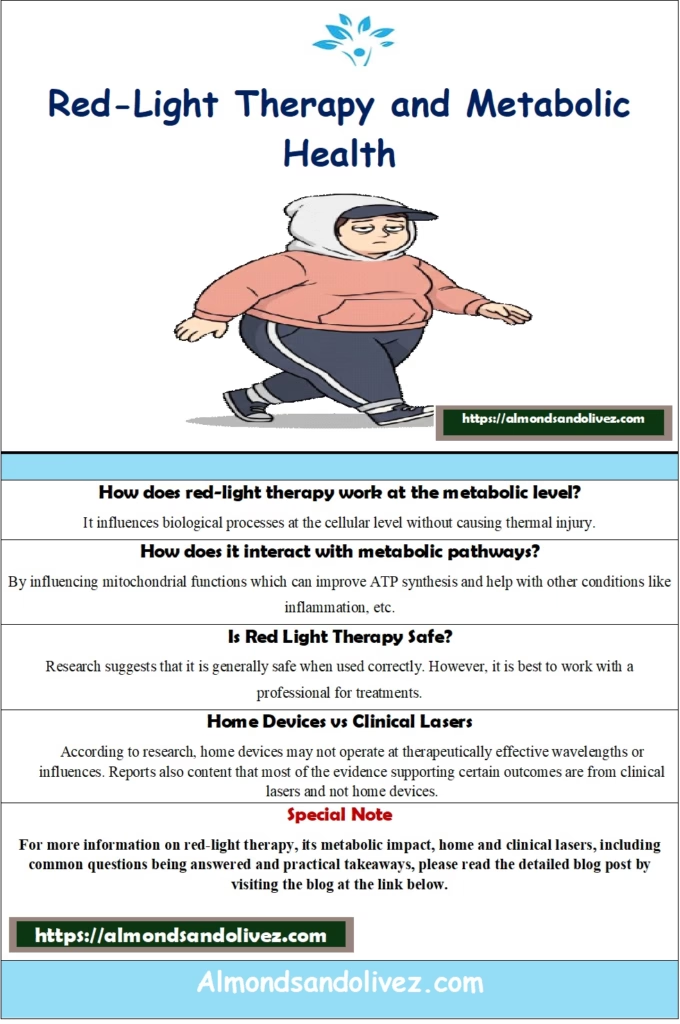
Here is an illustrative summary of RED LIGHT THERAPY AND METABOLIC HEALTH – WHAT SCIENCE SAYS!
Let’s Sum Up!
As new studies unfold in 2026, we’re learning that the future of wellness isn’t in pills or powders — it’s on our plates.
So, the next time you stir your morning coffee or prep your smoothie, ask yourself: What can this food do for my body today?
Red light therapy (photobiomodulation) is a promising, generally safe modality with growing clinical backing for skin rejuvenation, wound healing, hair growth and certain pain or muscle recovery outcomes. Researchers are also gaining interest in metabolic health, especially as it relates to insulin sensitivity and inflammation. The effects are real but typically gradual and dosage dependent.
The quality of evidence is strongest for some dermatologic and hair applications and more mixed for systemic, athletic claims, among others.
If you’re considering red-light therapy (RLT) or photobiomodulation (PBM), be pragmatic: set realistic expectations, pick a reputable device or clinic, follow evidence-based dosing, and talk to your clinician about photosensitivity risks or interactions with medications.
So, now that we have explored red light therapy in detail and answered some of the most frequently asked questions, is this something you would want to try? And for what condition? Share it Nuh! In the comments below.
Important to Note – Like any other treatment, always consult with your healthcare provider to get their professional feedback and for the best possible treatment.
You can learn more about red-light therapy (RLT) or photobiomodulation (PBM) in the video below. You can also read about foods and lifestyles that can help you manage certain medical conditions and even aging among many other healthful notes in the articles below:
- Video – Red Light Therapy and Metabolic Health: What Science Says!
- The Mediterranean Diet -Benefits, What it Entails and How to Do it!
- Sardines Health Benefits – Five (5) Must-Know Plus Side Effects
- Top Metabolism-boosting Foods for Weight Loss and Energy
References and Further Readings
- Alam, M., et al. (2020). “Efficacy of low-level laser therapy in musculoskeletal pain management: A meta-analysis.” European Journal of Pain, 24(8), 1534-1546. DOI: 10.1002/ejp.1434
- Couturaud V, Le Fur M, Pelletier M, Granotier F. Reverse skin aging signs by red light photobiomodulation. Skin Res Technol. 2023 Jul;29(7):e13391. doi: 10.1111/srt.13391. PMID: 37522497; PMCID: PMC10311288.
- de Freitas LF, Hamblin MR. Proposed Mechanisms of Photobiomodulation or Low-Level Light Therapy. IEEE J Sel Top Quantum Electron. 2016 May-Jun;22(3):7000417. doi: 10.1109/JSTQE.2016.2561201. PMID: 28070154; PMCID: PMC5215870.
- Ferraresi C, Kaippert B, Avci P, Huang YY, de Sousa MV, Bagnato VS, Parizotto NA, Hamblin MR. Low-level laser (light) therapy increases mitochondrial membrane potential and ATP synthesis in C2C12 myotubes with a peak response at 3-6 h. Photochem Photobiol. 2015 Mar-Apr;91(2):411-6. doi: 10.1111/php.12397. Epub 2014 Dec 30. PMID: 25443662; PMCID: PMC4355185.
- Fitzmaurice BC, Heneghan NR, Rayen ATA, Grenfell RL, Soundy AA. Whole-Body Photobiomodulation Therapy for Fibromyalgia: A Feasibility Trial. Behav Sci (Basel). 2023 Aug 29;13(9):717. doi: 10.3390/bs13090717. PMID: 37753995; PMCID: PMC10525895.
- Hamblin MR. Mechanisms and applications of the anti-inflammatory effects of photobiomodulation. AIMS Biophys. 2017;4(3):337-361. doi: 10.3934/biophy.2017.3.337. Epub 2017 May 19. PMID: 28748217; PMCID: PMC5523874.
- Hernández-Bule ML, Naharro-Rodríguez J, Bacci S, Fernández-Guarino M. Unlocking the Power of Light on the Skin: A Comprehensive Review on Photobiomodulation. Int J Mol Sci. 2024 Apr 19;25(8):4483. doi: 10.3390/ijms25084483. PMID: 38674067; PMCID: PMC11049838.
- Huang YY, Chen AC, Carroll JD, Hamblin MR. Biphasic dose response in low level light therapy. Dose Response. 2009 Sep 1;7(4):358-83. doi: 10.2203/dose-response.09-027.Hamblin. PMID: 20011653; PMCID: PMC2790317.
- Karu T. Primary and secondary mechanisms of action of visible to near-IR radiation on cells. J Photochem Photobiol B. 1999 Mar;49(1):1-17. doi: 10.1016/S1011-1344(98)00219-X. PMID: 10365442.
- Kurtti A, Nguyen JK, Weedon J, Mamalis A, Lai Y, Masub N, Geisler A, Siegel DM, Jagdeo JR. Light emitting diode-red light for reduction of post-surgical scarring: Results from a dose-ranging, split-face, randomized controlled trial. J Biophotonics. 2021 Jul;14(7):e202100073. doi: 10.1002/jbio.202100073. Epub 2021 May 4. PMID: 33788987; PMCID: PMC8919713.
- Lee, J., et al. (2020). “The effects of low-level laser therapy on facial skin rejuvenation: A randomized, controlled trial.” Photodermatology, Photoimmunology & Photomedicine, 36(5), 268-276. DOI: 10.1111/phpp.12606
- Luo WT, Lee CJ, Tam KW, Huang TW. Effects of Low-Level Laser Therapy on Muscular Performance and Soreness Recovery in Athletes: A Meta-analysis of Randomized Controlled Trials. Sports Health. 2022 Sep-Oct;14(5):687-693. doi: 10.1177/19417381211039766. Epub 2021 Aug 25. PMID: 34428975; PMCID: PMC9460079.
- Mineroff J, Maghfour J, Ozog DM, Lim HW, Kohli I, Jagdeo J. Photobiomodulation CME part II: Clinical applications in dermatology. J Am Acad Dermatol. 2024 Nov;91(5):805-815. doi: 10.1016/j.jaad.2023.10.074. Epub 2024 Feb 1. PMID: 38307144.
- Shin, Jung-Won & Paik, Kyungho & Na, Jung-Im & Lew, Bark-Lynn & Huh, Chang-Hun. (2026). Long‐Term Efficacy and Safety of Low‐Level Laser Therapy for Androgenetic Alopecia: A 12‐Month Prospective Trial. Dermatologic Therapy. 2026. 10.1155/dth/6621458.
- Silva G, Ferraresi C, de Almeida RT, et al. Infrared photobiomodulation (PBM) therapy improves glucose metabolism and intracellular insulin pathway in adipose tissue of high-fat fed mice. Lasers Med Sci, 2018; 33:559–571.
- Silva G, Ferraresi C, de Almeida RT, et al. Insulin resistance is improved in high-fat fed mice by photobiomodulation therapy at 630 nm. J Biophotonics, 2020; 13:e201960140.
- Tuner, J., & Hode, L. (2021). “Low-level laser therapy for pain management in musculoskeletal disorders: A systematic review and meta-analysis.” Journal of Clinical Medicine, 10(6), 1262. DOI: 10.3390/jcm10061262
- Yoshimura TM, Sabino CP, Ribeiro MS. Photobiomodulation reduces abdominal adipose tissue inflammatory infiltrate of diet-induced obese and hyperglycemic mice. J Biophotonics. 2016 Dec;9(11-12):1255-1262. doi: 10.1002/jbio.201600088. Epub 2016 Sep 16. PMID: 27635634.
- Zhang R, Qu J. The Mechanisms and Efficacy of Photobiomodulation Therapy for Arthritis: A Comprehensive Review. Int J Mol Sci. 2023 Sep 19;24(18):14293. doi: 10.3390/ijms241814293. PMID: 37762594; PMCID: PMC10531845.


 7 Top Functional Foods of 2026 & Beyond – Backed by Science