

Let’s face it — the concepts of micronutrients and macronutrients can feel daunting and, at times, confusing. Yet, whether we realize it or not, we are already familiar with their building blocks. Vitamins, minerals, carbohydrates, proteins, and fats are terms we hear often, even if we can’t always explain exactly what they do or why they matter.
The truth is, we have been consuming these nutrients our entire lives. They fuel our bodies, support essential functions, and are quite literally the reason we are here, alive and kicking today. Understanding how they work simply allows us to use them more intentionally.
The goal of this article is to break down micronutrients and macronutrients in clear, practical terms, so you can confidently apply this knowledge to your everyday health routine. By the end, you’ll have a better grasp of what your body truly needs — and how to nourish it in a way that supports long-term health and wellbeing. So, let’s get into it!
What are Micronutrients and Macronutrients?
Our bodies cannot survive without nutrients. As such, we have to ensure that we feed our cells with adequate and the right foods so that they can thrive and function optimally. The nutrients that our bodies yearn for are found in the various foods that we eat daily. These nutrients can be divided into two (2) broad categories – Micronutrients and Macronutrients.
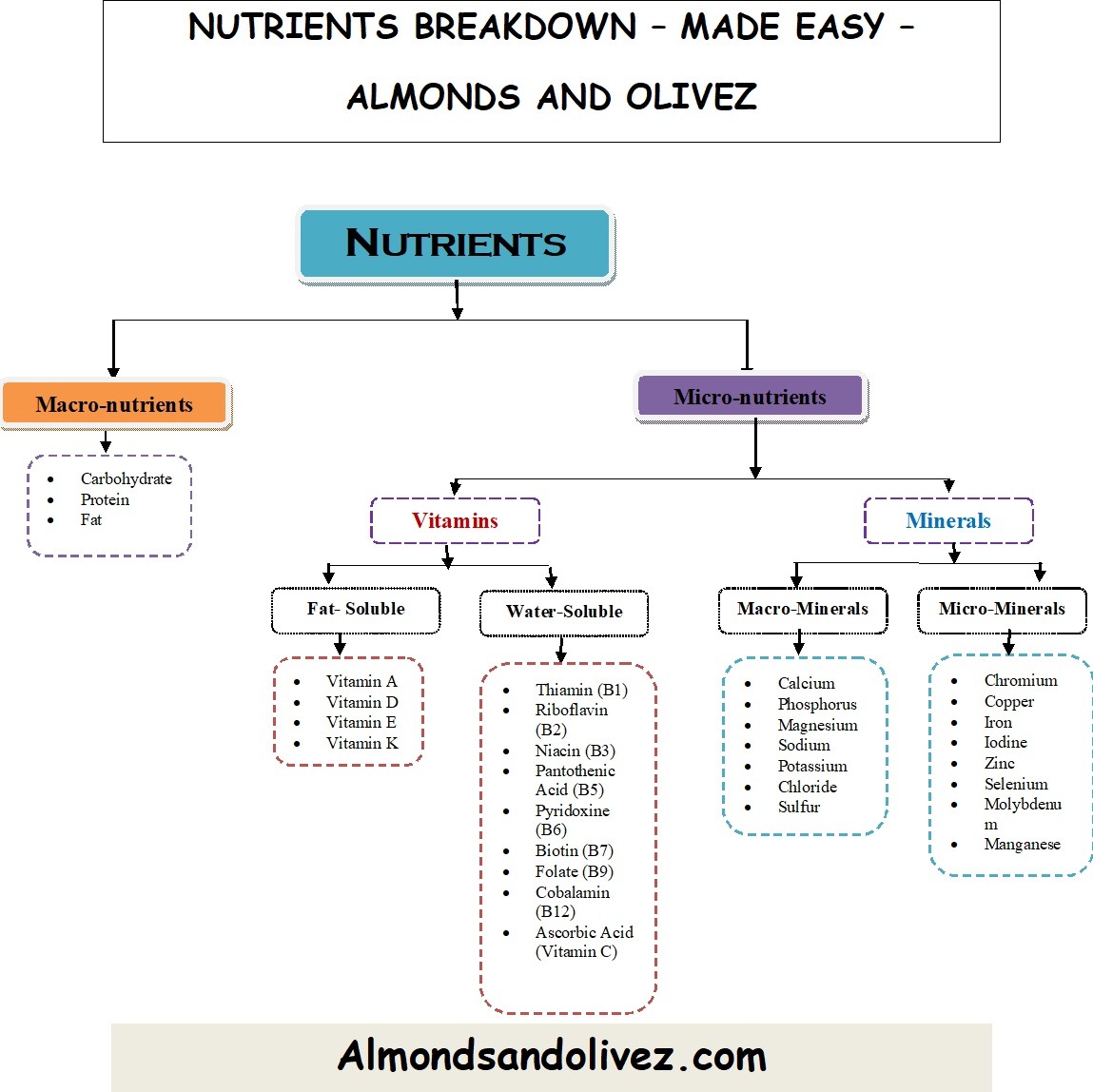
Micronutrients are our vitamins and minerals, which the body requires in small and in some instances larger amounts, especially in the case of macro-minerals. Meanwhile, Macronutrients are our Carbohydrates, Fats and Proteins which the body requires in larger amounts. Here is a pictorial illustration of the breakdown of nutrients below:
While water is not considered an essential nutrient by some researchers, others agree that it is an essential component of the human diet. Without water, none of the nutrients would be able to function optimally. As such, water provides the biological functions of the body, such as providing the body with structure, providing the fluid necessary for cell metabolism, and regulating the temperature of the body. Therefore, while the body can survive for up to five (5) weeks without the macronutrients of carbohydrates, protein and fat, it can only survive five (5) days without water.
In this article, we will break down the different nutrients under the two (2) main categories listed above. This will include their benefits and any noted side effects.
Two (2) Main Categories of Nutrients:
- Micro-Nutrients.
- Macro-Nutrients.
Micronutrients: The Power of Vitamins and Minerals
Micro-nutrients are our vitamins and minerals, which are available via our diet as well as by supplementation. Further, ‘micro’ equates to small, as such, our bodies only require micro-nutrients in small amounts, while macro-nutrients are usually required in larger amounts. Needless to say, micro-nutrients are critical to the body in ensuring normal metabolism, growth and physical and mental well-being. Here is a breakdown of micro-nutrients.
Vitamins
These are the micro-nutrients that are essential in small quantities for the health and development of our bodies. Vitamins can be ‘fat-soluble’ or ‘water-soluble.’ Fat-soluble vitamins are our vitamins A, D, E & K, which carry out a plethora of functions ranging from keeping our bones strong to helping our muscles to perform properly.
In addition, these vitamins are stored in the body’s tissues if they are consumed in abundance, which can lead to toxicity, especially in the case of vitamin A. On the other hand, water-soluble vitamins are our B-vitamins, such as Thiamin (B1), Riboflavin (B2), Niacin (B3), Pantothenic Acid (B5), Pyridoxine (B6), Biotin (B7), Folate (B9) and cobalamin (B12), as well as Ascorbic Acid (vitamin C).
These vitamins support the body’s blood vessels as well as strengthen the immune system. Unlike fat-soluble vitamins, water-soluble vitamins, except vitamin B12, are not stored in the body if consumed in excess but are excreted through the urine, sweat or bowels. Therefore, these vitamins must be consumed daily to ensure that the body is adequately replenished. For a more in-depth discussion on vitamins, please visit this article.
Minerals
Minerals are also considered micronutrients like vitamins and are essential in small quantities by the body. Minerals are further broken down into two (2) categories, macro-minerals and micro-minerals (trace minerals). Examples of macro-minerals that are vital to our bodies include calcium, potassium, iron, sodium and magnesium. Macro-minerals are termed as such as they are required in greater amounts than their counterpart – micro-minerals.
Micro-minerals comprise such minerals as copper, zinc, chromium, selenium and iodine. In general, minerals are essential for the optimal functioning of the body, especially the enzymatic ones (digestion and metabolism). According to research, about 4% of body mass consists of minerals. Please see this article for a more detailed discussion on minerals.
Macronutrients: The Big Picture (Carbs, Fats, Proteins)
While most of us may be more familiar with the term ‘micro-nutrients’, which are our vitamins and minerals as discussed above, the concept of macro-nutrients is often perceived to be more complex or a scientific phenomenon. However, macro-nutrients are simply our carbohydrates, protein and fat. These nutrients are required in larger amounts to fuel the body.
This fuel is ‘energy’ which is measured in calories and is needed by the body for growth, repair, tissue development, as well as nerve health. Notwithstanding its seemingly complex nature, we can easily create a healthy diet by simply knowing the macronutrients that comprise our foods, especially the common ones.
Take, for example, Broccoli, according to research, 1 cup contains about 5% or 11.20 grams of carbohydrates, and 7% or 3.71 grams of protein, while almonds contain 70% fat, 15% protein and 15% carbohydrates. Further, 1 cup of plain steamed Callaloo, which is one of Jamaica’s staple breakfasts, contains zero fat, 3 grams of protein, 5 grams of carbohydrates and around 4 grams of fiber, all in all, a healthy way to start any sunny or rainy day.
As such, the concept of macro-nutrients can become less daunting if we know the breakdown of macro-nutrients of foods, especially our favourite ones. Now, let’s take a more detailed look at these major nutrients.
Carbohydrates
Carbohydrates are considered the first major source of fuel to the body, as it provides the body with 4 kilocalories per gram. Carbohydrates exist in the form of sugar, starch and fiber and are categorized into two (2) basic forms – simple and complex carbohydrates.
Simple carbohydrates represent the various forms of sugars such as fructose (the sugar commonly found in fruits), sucrose (table sugar), lactose (the sugar found in milk) and finally glucose, or dextrose, which is found in fruits and honey.
Glucose is the major free-flow sugar that circulates in the blood and is thus referred to as ‘blood sugar.’ As such, insulin, which is the hormone that prompts the cells to absorb blood sugar for energy or storage, moves glucose from the blood into the cells for energy. Further, glucose is one of the only sugars that provide energy to the brain. When glucose is eaten in excess, it is stored in the liver as glycogen, our body’s energy reservoir and is then broken down into glucose when needed by the body.
Most importantly, simple carbohydrates are easily metabolized by the body and can cause blood sugar spikes. Blood sugar spikes occur when your blood sugar rises and then falls sharply after you eat. This type of rise and fall can result in lethargy, hunger and overeating, which can then lead to weight gain in the short-term, but over time, can lead to type-2 Diabetes due to the body’s inability to effectively lower blood sugar. In addition, blood sugar spikes can also cause your blood vessels to harden as well as narrows which can lead to a heart attack or stroke.
On the other hand, Complex carbohydrates are not easily metabolized by the body and thus take a longer time to be digested and absorbed into the bloodstream to produce energy. These include starch found in the form of grains, legumes, and tubers, as well as fiber which is a form of carbohydrate that cannot be digested by the body but is crucial to our health.
Other examples of complex carbohydrates include lentils, chickpeas, kidney beans, whole grains, oatmeal, quinoa and vegetables such as asparagus, cucumbers and broccoli. Therefore, eating carbohydrate-rich foods is important in ensuring that the body has what it needs to function at its peak. However, we must consume a diet that comprises more complex carbohydrates to keep the body fueled for extended periods.
Protein
Protein is the main structural component of all the body’s cells. It is made up of units called ‘amino acids’, which are made up of nitrogen. Nitrogen is a naturally occurring element that is responsible for growth and reproduction in both plants and animals.
Protein provides the body with 4 kilocalories per gram, which helps to regulate the body’s processes and can be used to provide energy for the body. However, the body’s preferred choices for energy metabolism are carbohydrates and lipids (fats).
Protein contains over twenty (20) different amino acids, with only nine (9) considered essential, which means that the body cannot manufacture these naturally. As such, we have to ensure that these essential amino acids are included in our everyday food choices. The essential amino acids are: histidine, isoleucine, leucine, lysine, methionine, phenylalanine, threonine, tryptophan and valine.
Histidine is required for the health of our brains and nerves and can be found in (poultry, beans and buckwheat), Isoleucine, is an isolated form of leucine that helps the body to produce haemoglobin and is found in (eggs, cashew and chia seeds), Leucine helps to stimulate muscle strength and growth and is prominent in foods such as (chicken, pumpkin and tuna), Lysine is required for muscle repair and growth and is plentiful in foods such as (eggs, poultry and almond),
Methionineis responsible for the growth of new blood vessels and muscle growth and can be found in these foods (fish, onion and cacao), Phenylalanine is converted to tyrosine, which is required to make protein and brain chemicals and is found in such goodies like (avocados, peanuts and quinoa), Threonine supports the immune system and the liver and is found in (hemp seeds, figs and leafy greens).
Tryptophan is converted to serotonin, which is the chemical that is responsible for unearthing feelings of happiness and stress reduction. This amino acid can be found in (chocolate, chickpeas and turkey meat) and lastly, the amino acid – Valine. Valine is needed by the body for muscle growth and repair and is found in spinach, broccoli and blueberries.
It is important to note that protein is divided into two (2) categories – Complete and Incomplete. Complete proteins are so-called because they contain all of the nine (9) essential amino acids. Complete protein foods include eggs, chicken and hemp seeds. Incomplete proteins are foods that do not contain all or enough of the nine (9) essential amino acids and include nuts, rice, pasta, yams and most beans.
As you can see, protein plays a vital role in our body, from muscle building and repair to the regeneration of our cells. It is more important for physical activity to aid in tissue repair. In physical activity, the muscle tissue is constantly being broken down; As such, proteins help to maintain the structural integrity of the body’s tissues. Protein also helps with hormone production as well as with the critical enzymes used in the process of digestion.
Fats
Fats, or better yet, lipids as it is known scientifically, are a group of fatty substances which include triglycerides (which are a major form of lipids and provide the body with energy as well as serve as a storage reservoir for fat) and cholesterol. These fatty substances are soluble in fat and not water, as in the case of our B-Vitamins and Vitamin C.
Fat provides a great source of energy and structure to the body’s cells and is found in such foods as avocados, dark chocolate and fatty fish. In addition, fats have the highest caloric content (9 kilocalories per gram). Therefore, they provide the body with the highest amount of energy when burnt.
Each gram of fat, whether the source is butter or a spoonful of peanut butter, provides the body with 9 kilocalories per gram. As such, fats are considered twice as energy-rich as both carbohydrates and protein. It is recommended that at least 20-35% of our daily calorie intake should come from fats.
Despite the criticism that fats have endured over the years, dietary fats are very important as they help the body to absorb the essential micronutrients such as Vitamin A, D, E, and K. Fats also help to insulate and keep us warm and help us to endure those gruelling exercise sessions.
In addition, fats provide our bodies with essential fatty acids such as linoleic and linolenic acid. Linoleic and linolenic acids are considered “essential” because our body cannot make them on its own or work without them. Our body needs these essential nutrients for brain development, controlling inflammation, and blood clotting. You can read more about fats in this article.
How to Balance Both for Optimal Health
Understanding the definitions is only half the battle; the real magic happens when you learn to balance both micronutrients and macronutrients on your plate. Remember, you don’t need to be a scientist to get this right; You just need a repeatable strategy that ensures your body gets the fuel (imacros) and the protection (micros) it needs. Here are some strategies or tips to balance both on your plate:
1. Use the “Plate Method” for Macros
A simple way to balance your macronutrients without counting every gram is to visualize your plate. Aim for:
- One-half non-starchy vegetables (High in Fiber and Micros).
- One-quarter lean protein (Essential Macronutrient for muscle repair).
- One-quarter complex carbohydrates or healthy fats (Macronutrients for sustained energy).
2. Eat the Rainbow for Micros
While macronutrients are about quantity, micronutrients are about quality and variety. Different colours in fruits and vegetables represent different vitamins and minerals.
- The Strategy: Challenge yourself to include at least three different colours in every meal. This “Intentionally Tailored” approach ensures a broad spectrum of micronutrients like Vitamin C, Potassium, and Magnesium without needing to track them individually.
3. Prioritize Whole Foods Over Processed Options
Macronutrients found in processed foods (like white bread or sugary snacks) are often “empty,” meaning they lack the micronutrient companions your body needs to process them efficiently.
- The Strategy: Choose “package deal” foods. For example, an orange provides carbohydrates (macro) along with Vitamin C and fiber (micros), whereas a sugary drink provides the macro without any of the health-sustaining micros.
4. Listen to Your Body’s Bio-Feedback
Optimal health is individualized. Remember, we are all unique. If you are feeling chronically fatigued, you may be hitting your “macro” calorie goals but falling short on “micros” like Iron or B12.
- The Strategy: Periodically audit how you feel at least two hours after eating. A truly balanced meal should leave you feeling energized and satisfied, not sluggish or hungry again immediately.
Illustrative Summary
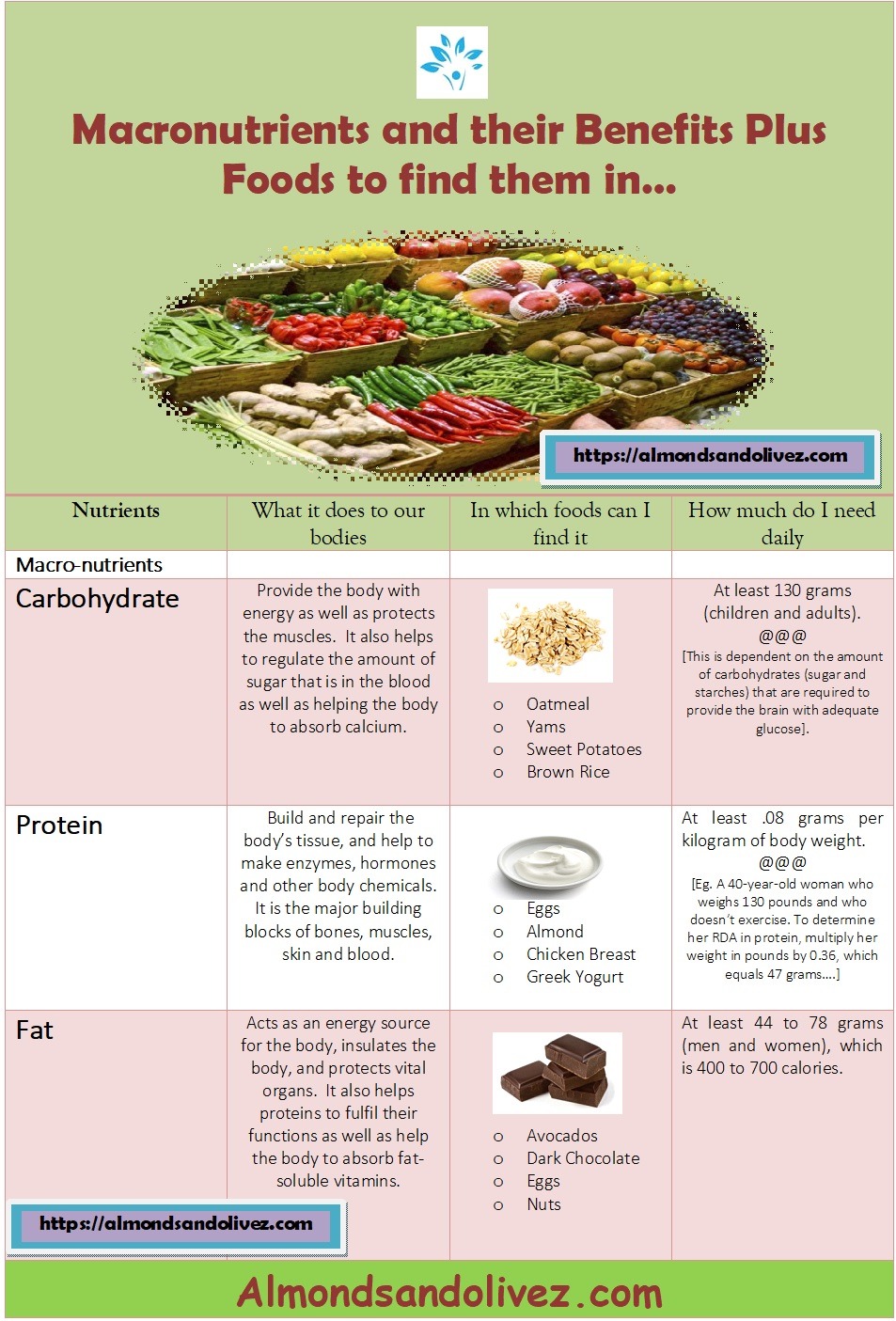
Here is a summary of the list of MACRONUTRIENTS, their benefits, and food sources, as well as the RECOMMENDED DAILY ALLOWANCES!
Let’s Sum Up!
Our foods are compact with nutrients, from a little cherry to a gigantic cantaloupe. These nutrients are in two (2) forms – Micro-nutrients and Macro-nutrients. Micro-nutrients are simply our vitamins and minerals, such as Vitamin A, D, E, Thiamin, calcium, potassium, and nutrients which are required for optimal health and well-being.
On the other hand, Macro-nutrients, which are categorized as ‘energy-yielding nutrients are required by the body for growth and sustained energy and include such nutrients as carbohydrates, fats and proteins.
Carbohydrates are our sugars and fibers which are required by the body for fuel, while protein is the building block of cells and fats for growth and energy. While these nutrients are critical to our health, we must ensure that we consume them in proportionate amounts based on our lifestyle and activity levels.
Unlike micro-nutrients, which can lead to toxicity or other health issues if consumed in large amounts, macro-nutrients, when consumed in excess, are stored in the body as fat, which can then be used as fuel.
Nonetheless, excess fat, especially of the saturated kind, can lead to artery-clogging, heart disease, strokes and that ‘tire around’ the waist that requires months, or even years of hardcore exercise to be transformed into a six-pack. So, let us keep it balanced, remembering that moderation is a virtue that must be practised in all spheres of life, and our diet is no exception.
You can read more on Vitamins and Minerals, as well as Fats, in these articles:
Editor’s Note: Last updated by a Research Consultant and Certified Nutrition Coach on January 14, 2026.
References and Further Readings
- All about Protein Foods Group (2017, Aug 29). Retrieved July 7, 2018, from https://www.choosemyplate.gov/protein-foods.
- Feldman M, et al. (2016). Digestion and absorption of dietary fat, carbohydrate, and protein. In: Sleisenger and Fordtran’s Gastrointestinal and Liver Disease: Pathophysiology, Diagnosis, Management. 10th ed. Philadelphia, Pa.: Saunders Elsevier.
- National Library of Medicine (U.S.). (2018, July 7). Carbohydrates: How carbs fit into a healthy diet.https://www.mayoclinic.org/healthy-lifestyle/nutrition-and-healthy-eating/in-depth/carbohydrates/art-20045705?p=1.

 Creating Your ‘HIIT’ Fitness Program