

Soursop is a familiar tropical fruit in Jamaica, the Caribbean and other parts of the world. This ‘bush’ tea, as it is popularly known, is appreciated for its distinctive flavour and traditional uses. But beyond the fruit, another part of the soursop tree has attracted considerable attention – its leaves.
Soursop leaf tea is traditionally consumed in various communities and is often touted for its supposed healing properties. The claims usually range from helping to manage blood sugar and blood pressure to fighting inflammation and even cancer.
But how much of this is supported by science?
Research has identified potentially active compounds in soursop fruit, but the leaves are also now getting their share of the scientific lens. Laboratory and animal studies have explored several possible health effects. However, the evidence is not as straightforward as many may suggest. Some promising findings are still preliminary, and important questions about the safety of regularly drinking the tea remain unanswered in some studies.
In this article, we explore the potential benefits of soursop leaf tea, what scientific research actually tells us, dosages, how to prepare, best time to consume and the precautions worth understanding before considering it as part of your wellness routine. Let’s explore the science!
What is Soursop Leaf Tea?
Soursop leaf tea is the brewing of the leaves of the soursop tree, scientifically known as Annona muricata, is also called graviola or guanabana in different parts of the world (Moghadamtousi et al. 2015). Although the fruit is widely enjoyed as a food, the leaves have a history of use in traditional herbal preparations.
The tea is generally made by steeping, brewing or boiling the leaves in water. The resulting infusion or decoction contains some of the plant’s naturally occurring compounds.
Researchers have identified several groups of compounds in soursop leaves, including flavonoids, phenolic compounds, alkaloids, and acetogenins. Acetogenins are the major constituents of soursop and are found in high concentrations in the mature leaves, bark and seeds. These substances have different biological activities, which is one reason researchers are interested in the plant (Mutakin et al. 2022; Zubaidi et al. 2023; Coria-Téllez et al. 2018).
However, the presence of biologically active compounds does not automatically mean that drinking the tea will produce a health benefit. The effects depend on factors such as the compound’s concentration, how it is extracted, the amount consumed, and how the human body responds to it.
Additionally, tea prepared at home may also differ substantially from a concentrated laboratory extract. Therefore, results obtained using one preparation cannot automatically be applied to another.
Nonetheless, soursop leaves are still consumed globally, including Jamaica and the Caribbean in general, and have become a traditional ‘bush tea’ pantry item.
You can learn more about soursop fruit by reading the detailed article below. You can also learn more about another member of the family – sweetsop by listening to the podcast episode:
Potential Soursop Leaf Tea Benefits: What Does the Research Say?
Several potential health effects have been investigated. It is important, however, to distinguish between effects observed in laboratory experiments, effects found in animals, and benefits demonstrated in human clinical trials. Further, some of the same benefits that are found in the fruit will, in most cases, be found in the leaves. Here are a few of the benefits that have been found in the leaves, scientifically.
1. Antioxidant Activity
One area of scientific interest is the antioxidant activity of compounds found in soursop leaves.
Antioxidants are substances that can help neutralize reactive molecules known as free radicals under certain conditions (Zehiroglu et al., 2019). As such, when reactive molecules accumulate beyond the body’s ability to manage them, oxidative stress can contribute to cellular damage and is usually cited as being associated with several chronic diseases (Zehiroglu et al., 2019).
Laboratory studies have identified phenolic compounds and flavonoids in soursop leaves that demonstrate antioxidant activity (Mutakin et al. 2022; Zubaidi et al. 2023).
This finding is scientifically interesting, but it needs to be interpreted carefully. Antioxidant activity measured in a laboratory does not establish that drinking soursop leaf tea will meaningfully reduce oxidative stress or prevent disease in humans.
However, the evidence does suggest that soursop leaves contain compounds with potential antioxidant properties. Whether drinking the tea delivers a meaningful health benefit in people has not been established. As such, the research continues.
2. Anti-Inflammatory Potential
Inflammation is part of the body’s normal defence and repair processes. However, persistent or dysregulated inflammation, reportedly, has been involved in cited in many chronic health conditions (Pahwa et al., 2023).
Researchers have investigated soursop leaf extracts for their possible effects on inflammatory pathways. Some laboratory and animal studies have reported changes in inflammatory mediators and responses (Bento et al., 2016; Quilez et al., 2015; Leonti et al., 2018).
These findings have generated interest in whether compounds from the plant might eventually have a role in developing new therapeutic products.
Nonetheless, more human studies are recommended to determine whether any such effect occurs with tea consumption, what amounts might be involved, and whether the potential benefits outweigh the risks.
You can learn more about inflammation by listening to these podcast episodes:
- Podcast: Is Everything Inflammation? What Science Says
- Podcast: Ultra-Processed Foods: How Much is Too Much?
- Podcast: Stress is Normal, But What it’s Doing to Your Body, Isn’t
3. Potential Effects on Blood Sugar
Soursop leaves have also attracted research interest because of their possible effects on glucose regulation.
A systematic review published in 2022 by Patricia Martín del Campo-Rayas et al. examined research on Annona muricata and hyperglycemia, or elevated blood glucose. The authors identified findings suggesting potential glucose-lowering activity, but the evidence came from different experimental approaches, including laboratory and animal studies (Martin et al., 2022).
Some limited human research has also investigated soursop preparations. However, findings from a specific extract or combination product cannot be assumed to apply to a cup of homemade leaf tea.
This distinction matters for anyone living with diabetes or prediabetes. This is important, because lowering blood glucose in an experimental study is not the same as demonstrating that a tea safely and consistently improves long-term blood sugar control.
To this extent, soursop leaf tea should not replace prescribed diabetes medication, medical monitoring, or established nutrition and lifestyle measures. Because a glucose-lowering effect is possible, combining it with diabetes medication without professional guidance could also create concerns about low blood sugar.
Nonetheless, the findings do show that there is preliminary scientific interest in the plant’s effects on glucose metabolism, but there is insufficient evidence to recommend soursop leaf tea as a treatment for diabetes.
4. Potential Effects on Blood Pressure
Another frequently mentioned benefit of consuming the leaves is that it may help lower blood pressure.
Some experimental research has reported blood-pressure-lowering effects from soursop leaf preparations. These observations provide a possible explanation for why the plant has been investigated in traditional and modern research settings (Alatas et al. 2020; Rosalina, et al., 2025).
Nevertheless, the evidence is limited, and experimental findings do not establish that drinking the tea safely manages hypertension.
Research has also shown that blood pressure is influenced by several factors, including genetics, dietary patterns, physical activity, stress, sleep, and underlying health conditions. Therefore, effective management may require prescribed medication alongside appropriate lifestyle changes (Pazoki et al. 2017; Ndanuko et a., 2016).
It is important to note that if soursop leaf preparations can lower blood pressure, there is also a potential concern for people taking antihypertensive medication. This is because the combined effects may not be predictable.
As such, the evidence means that the possibility of an effect on blood pressure deserves further investigation, but soursop leaf tea is not yet an established treatment for hypertension.
5. Antimicrobial Activity
Some laboratory studies have examined whether extracts from soursop leaves can inhibit certain microorganisms, including bacteria.
Research has shown that plant compounds are frequently investigated for antimicrobial activity because they may provide useful starting points for pharmaceutical research. Soursop is among the plants being explored in this area.
However, a substance inhibiting a microorganism in a laboratory dish does not mean that drinking an infusion will treat an infection in the body. The concentration needed to produce an effect, the body’s ability to absorb the substance, and potential toxicity all matter (Pai et al., 2016; Jemikalajah et al., 2021).
However, these laboratory findings are a starting point for research, and not necessarily proof that soursop leaf tea can treat bacterial or other infections. As such, it should not replace appropriate medical treatment.
6. Anticancer Properties: An Important Distinction
Researchers have investigated compounds from Annona muricata, including acetogenins, for their effects on cancer cells in laboratory experiments. Some studies have reported activity against particular cancer cell lines (Ilango et al., 2022; Rady et al., 2018; Qazi et al. 2018).
These findings have contributed to interest in the plant as a potential source of compounds for future drug development. However, cancer cells responding to an extract in a laboratory does not demonstrate that drinking soursop leaf tea treats cancer in a person. But it is promising and does offer hope.
Studies have also shown that a treatment must be assessed for its effectiveness, dosage, absorption, side effects, interactions, and ability to improve meaningful outcomes in patients. These are requirements that must be taken into consideration when it comes to plant compounds (El-Saadony et al., 2025).
However, there is currently insufficient reliable clinical evidence to establish soursop leaf tea as an effective cancer treatment or a means of preventing cancer. Nonetheless, the research is promising.
Potential Side Effects and Safety Warnings
When discussing herbal teas, it is tempting to focus exclusively on their potential benefits. But a responsible conversation about wellness must also consider safety.
Natural does not automatically mean harmless, particularly when a plant contains compounds that can have biological effects. Here are some of the noted side-effects or concerns raised scientifically when it comes to the consumption of soursop leaf tea:
1. Concerns About Neurotoxicity
One of the most important safety questions surrounding soursop is the presence of the compounds called annonaceous acetogenins. One such compound, annonacin, has been investigated for its effects on cells involved in energy production (German Federal Institute for Risk Assessment, 2020; Moghadamtousi et al., 2015).
Experimental research has raised concerns about potential toxicity to nerve cells. Researchers have also investigated associations between consumption of products from the Annonaceae plant family and atypical parkinsonism in parts of the French Caribbean (Lannuzel et al. 2006).
These findings warrant attention, but they do not prove that every exposure to soursop causes neurological disease. The risks associated with different plant preparations, quantities, and patterns of consumption are not fully understood.
Further, a risk assessment published in 2020 by the German Federal Institute, concluded that substantial uncertainties remained about the safety of soursop-based supplements. The available evidence did not allow researchers to establish a safe intake level for these products (German Federal Institute for Risk Assessment, 2020).
This is especially relevant when considering concentrated preparations or frequent, long-term consumption. Therefore, there is no well-established amount of soursop leaf tea that has been demonstrated to be safe for everyone.
2. Possible Effects on Blood Sugar and Blood Pressure
Due to the fact that experimental research has suggested that soursop preparations may influence blood glucose and blood pressure, people taking medication for diabetes or hypertension should be particularly cautious.
For example, research has shown that soursop leaf and extract may lower blood pressure; as such, combining it with prescription medications may cause your numbers to drop too low. The same goes for persons with diabetes. Research has shown that it may lower glucose levels, which may in turn, amplify the effects of diabetic medications, which could cause your blood sugar to get dangerously low (Issusilaningtya et al., 2024).
Additionally, the magnitude of any effect from a homemade tea remains uncertain, and reliable interaction data are limited. It is therefore not possible to provide a dependable dosage or predict how combining the tea with medication might affect an individual.
Therefore, it is recommended that you speak with a qualified healthcare professional before using soursop leaf tea medicinally if you take medication or have a condition that requires regular monitoring.
3. Pregnancy, Breastfeeding, and Other Health Considerations
There is insufficient evidence to establish the safety of medicinal soursop leaf tea during pregnancy or breastfeeding. This is due in part to the powerful cellular effects of acetogenins as observed n research.
This is the typical case as with almost all plants, herbs or ‘bush’ teas. As such, it is usually recommended that an individual should avoid the use pf medicinal plants or herbs during these periods unless a qualified healthcare professional advises otherwise.
Additionally, people with neurological conditions, or those with other significant health concerns, should also seek professional guidance before considering medicinal preparations of the leaves (German Federal Institute for Risk Assessment, 2020).
Importantly, the absence of clear safety data should not be interpreted as proof that a preparation is safe or even unsafe. It simple means, caution must be taken, or one should avoid it altogether.
4. Homemade Tea Is Not a Standardized Product
The concentration of compounds in soursop leaf tea may vary according to the maturity and condition of the leaves, how they are prepared, the amount of plant material used, and the time spent boiling or steeping.
Every household will brew their bush tea differently. For example, some may use two (2) leaves, while others may use considerably more. Also, brewing duration will also differ, and as such, overall benefits.
Additionally, commercial products may also vary in their composition and quality.
Consequently, there is no universally established preparation method or dosage that can be recommended as a proven, safe way to obtain medicinal benefits from soursop leaves.
Soursop Leaf Tea: Traditional Use Versus Scientific Evidence
Traditional knowledge is an important part of the history of food, plants, and wellness practices. Many communities, including those in Jamaica and the wider Caribbean, have long traditions of using plants in home preparations. Most of us have seen or heard about how our parents or grandparents, or even the elder up the street, have used herbs or ‘bush tea’ and never become ill. These tales have touted many health benefits, but most were presumed anecdotal.
Nonetheless, scientific research can help investigate these practices, identify active compounds, explore possible benefits, and evaluate risks. But traditional use and scientific proof are not interchangeable.
Likewise, a laboratory finding is not the same as a clinical trial, and a clinical trial involving a concentrated extract is not necessarily evidence for a homemade tea.
When evaluating claims about soursop leaf tea, consider these questions:
- Was the research conducted in human participants, animals, or laboratory cells?
- Did the study investigate the actual tea or a different extract?
- Were the outcomes clinically meaningful?
- Were side effects and longer-term safety assessed?
Have independent studies reproduced the findings? These questions will help you separate genuine scientific interest from marketing or anecdotal claims that go beyond the available evidence
Safe Daily Dosage and Long-term Use of Soursop Leaf Tea
Because soursop leaves (Annona muricata) contain highly potent, bioactive plant compounds (i.e. acetogenins), treating this traditional “bush tea” with respect and moderation is essential. Unlike everyday black or green tea, research suggests that soursop tea functions more like a natural supplement.
Therefore, based on traditional Caribbean practices and modern toxicological research, here are the safe dosage guidelines for healthy adults:
- The Daily Limit: Stick to 1 cup (8 ounces) per day.
- The Brewing Ratio: Use 2 to 3 medium soursop leaves per cup of water. Avoid over-boiling or crushing massive quantities of leaves into a single brew, as this can make the concentration of alkaloids too high for the liver to process comfortably.
According to research, the soursop plant produces a set of potent compounds known as annonaceous acetogenins. As such, the brewing ratio as expressed above follows the principle as observed in the Science of ‘what’s in the cup.’
This was based on the landmark study “Quantification of acetogenins in Annona muricata linked to atypical parkinsonism in Guadeloupe’ published in the journal ‘Movement Disorders,’ that quantified the powerful biological plant compound found in soursop extract and leaf across different preparations (Champy, P. et al., 2005). This compound, if consumed in excess, can lead to neurological risks.
The study found that an ordinary hot-water infusion of just crumpled leaves pulls out a very small, controlled amount of this compound – annonacin, which is about one hundred forty (140) micrograms per cup. This is less than what is contained in a single whole soursop fruit, which contains about fifteen thousand (15,000) micrograms (15 milligrams). Therefore, you get more of this powerful compound – annonacin from eating the whole fruit than from the regular brewing or steeping of the leaves as tea (Champy, P. et al., 2005).
- Why Crushing and Over-Boiling Worsens Toxicity:
Toxicological data from French food safety assessments show that crushing the leaves spikes the extracted annonacin level to 0.4 mg (140 mcg) or more per cup because it physically breaks the plant cell walls, forcing more lipophilic compounds (easily dissolved in fat/lipids) into the water. Keeping the leaves whole or lightly crumpled and limited to 2–3 leaves keeps the toxic load relatively low (Lannuzel et al. 2006).
- The “3-Week Rule” for Breaks: Traditional herbalism strongly advises against drinking soursop tea continuously without a break. A safe, research-backed cycle is to drink it daily for 3 to 4 weeks, followed by a full 1-week break or even longer before resuming. This gives your nervous system and kidneys time to reset (Höllerhage, M. et al., 2015; Champy et al., 2005).
To this extent, the study above concurred with this traditional rule, as it calculates that a human consuming one soursop fruit or one can of commercial nectar daily for a year would ingest a cumulative dose of annonacin equivalent to the amount that induced neurodegenerative brain lesions in laboratory rats.
This provided the foundational biological plausibility linking heavy, long-term consumption of soursop preparations to the abnormally high clusters of atypical, levodopa-unresponsive parkinsonism found in the French West Indies Study (Lannuzel et al. 2006; Champy et al., 2005).
Does This Mean You Should Completely Avoid the Whole Fruit?
Because the whole soursop fruit contains more ‘annonacin’, which can lead to neurological effects when consumed in excess and over long periods, research does not negate it not being eaten at all or even avoided. However, based on research, especially as it relates to the average person, strict caution is advised regarding frequency and existing health conditions.
Researchers, particularly neurologists, look at these findings as per the landmark study indicated above by Pierre Champy and colleagues through the lens of toxicology, specifically, that “the dose makes the poison” tea (Champy, P. et al., 2005).
However, we can evaluate the risk of consuming the whole fruit as cumulative and long-term. This is due to the fact that the studies did not find that eating a single soursop fruit causes instant neurological damage. Instead, the risk is tied to chronic, daily consumption over months or years.
Further, the neurodegenerative effects seen in the Guadeloupe study were linked to populations who consumed soursop fruit, juices, or traditional herbal medicines almost every single day as a staple part of their lifestyle (tea (Champy, P. et al., 2005; Höllerhage, M. et al., 2015).
Despite these findings, agencies like the French Agency for Food, Environmental and Occupational Health & Safety (ANSES) have noted that while the biological evidence is deeply concerning, it remains difficult to set an exact “safe daily limit” because human genetics and fruit chemical levels vary so wildly (German Federal Institute for Risk Assessment, 2020).
Therefore, the universal medical recommendation resulting from these follow-up studies is simply strict moderation for healthy adults, and complete avoidance for anyone with a neurological vulnerability.
Potential Dietary Guidelines
While there are no official universal bans on soursop by food safety agencies, medical researchers generally suggest the following precautionary approach:
- Moderation is Key: Occasional, sporadic consumption of the fruit (e.g., once or twice a month) is widely considered to carry a very low risk for healthy individuals.
- Avoid the Seeds: Annonacin is exceptionally high in soursop seeds. While people rarely eat the seeds intentionally, blending the fruit whole (seeds included) into smoothies or juices drastically increases the toxic load and should be strictly avoided.
High-Risk Individuals Who Should Avoid It
Research as well as medical experts strongly advise complete avoidance of soursop fruit, juice, and teas for:
- Individuals with Parkinson’s disease or a family history of movement disorders (as it can accelerate or worsen symptoms).
- Individuals with atypical parkinsonism or unexplained tremors/rigidity. Atypical Parkinsonism or what is often referred to as – Parkinson’s Plus syndromes,’ is a group of rare, progressive neurological disordersthat share motor symptoms with Parkinson’s disease which include muscle stiffness (rigidity), slowed movement (bradykinesia), tremors, and balance issues, but have distinct underlying causes, faster progression, and little to no response to standard Parkinson’s medications like levodopa (McFarland and Hess, 2017; Levin et al., 2016; Cleret de Langavant et al. 2022; Parkinson’s Association of South West Florida).
- Individuals with advanced kidney or liver disease, as these organs clear toxins from the body.
Is There a Best Time to Drink Soursop Leaf Tea?
There is no specific human clinical study that evaluates the best time to drink soursop leaf tea.
However, based on animal studies evaluating the sedative effects of Annona muricata extract, researchers typically observe behavioural sedation and muscle relaxation starting roughly 30 minutes after administration. Thus, the Caribbean folk medicine recommendation is to have the tea 30 to 60 minutes before bedtime (Souza et al. 2018).
As such, because soursop leaves are naturally caffeine-free and contain compounds that interact with serotonin receptors to lower cortisol (stress hormones), an evening cup is ideal for calming the nervous system and promoting deep sleep (Souza et al. 2018).
So, Should You Drink Soursop Leaf Tea for Its Health Benefits?
The answer depends on why you are considering it, but the current evidence does show its purported health benefits. However, it is not recommended or justified as a treatment or proven remedy for chronic disease.
Researchers have identified compounds in soursop leaves that may have antioxidant, anti-inflammatory, glucose-related, blood-pressure-related, and other biological effects in experimental settings. However, those findings are worth investigating further.
At the same time, the evidence supporting meaningful health benefits in humans remains limited, and concerns about potentially neurotoxic compounds make regular medicinal use difficult to recommend with confidence.
Therefore, if your goal is to support your overall health, it is typically recommended that you focus first on well-established foundations: a varied and balanced diet, regular physical activity suited to your circumstances, sufficient sleep, and appropriate preventive healthcare.
Nonetheless, if you enjoy learning about traditional plants, approach them with curiosity and sound judgement. Ask what the evidence shows, what it does not show, and what remains unknown about safety.
A Researcher’s Perspective
Research has shown that soursop leaves contain compounds that have attracted legitimate scientific interest. Nonetheless, it would be misleading for me to present soursop leaf tea as a proven treatment for diabetes, high blood pressure, cancer, or other diseases when the evidence does not establish those claims.
Additionally, while research has shown that the tea has fewer toxins per cup, heavy, daily herbal tea drinkers still suffered severe neurological clusters over decades. This suggested that over a long period, even small micro-doses can slowly accumulate or trigger chronic damage in the brain.
Nonetheless, the goal of this article is not to dismiss traditional knowledge. It is to examine it thoughtfully, recognize where the research is promising, and remain honest about the gaps.
Taking into thoughtful consideration that nature can offer valuable opportunities for scientific discovery, but a promising plant is not automatically a proven remedy. Therefore, understanding that difference is an important part of making informed decisions about your health.
Therefore. I believe that exploring natural foods and traditional wellness practices should go hand in hand with understanding the science.
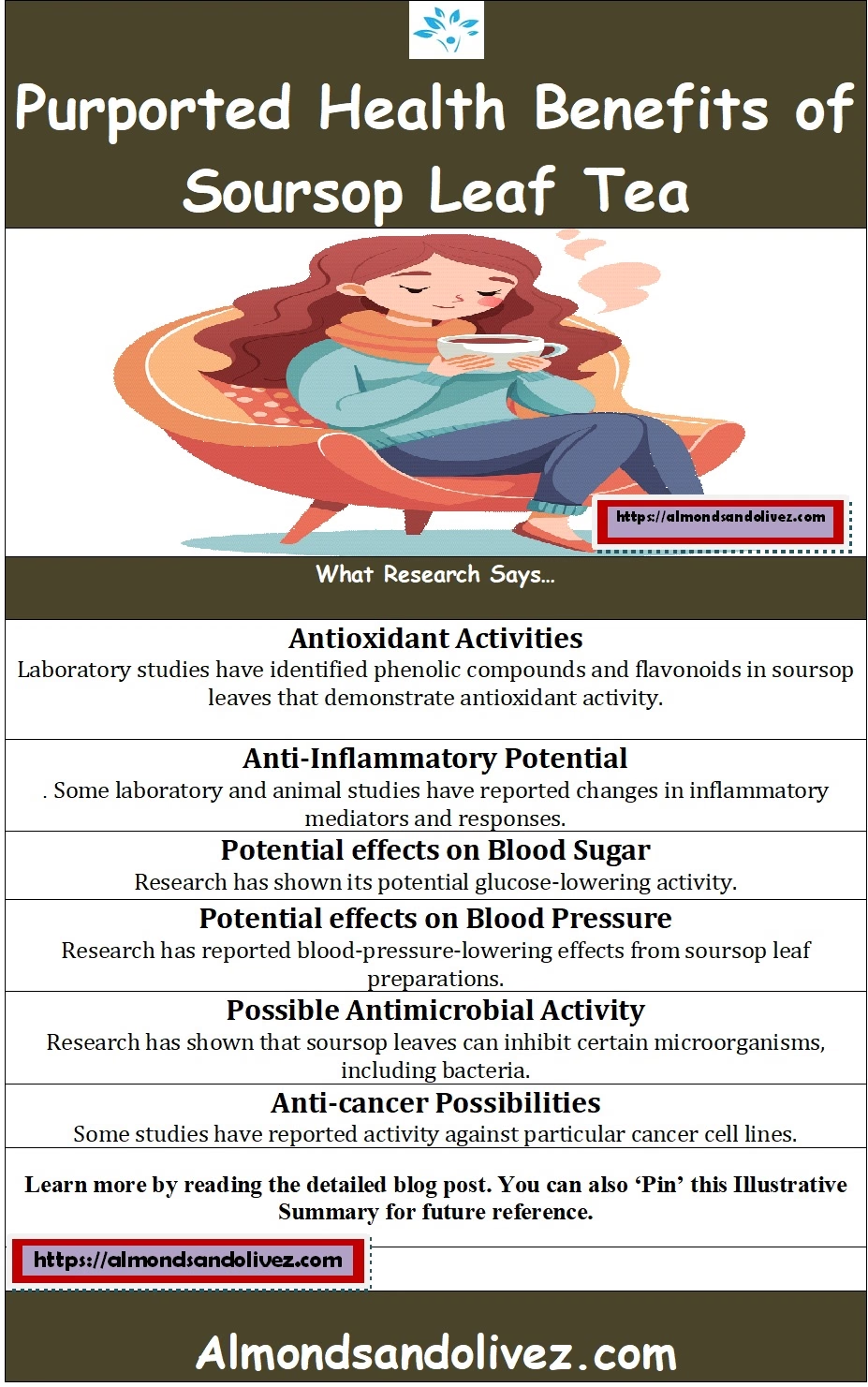
Illustrative Summary
Here is an illustrative summary of some of the Purported Health Benefits of Soursop Leaf Tea
Let’s Sum Up!
Soursop leaf tea is a powerful reminder that nature often provides exactly what we need to unwind. By blending time-honoured Caribbean traditions with modern safety guidelines, you can enjoy all the calming, stress-relieving benefits of this brew without overloading your body.
While the traditional use has been established for generations, science is certainly catching up, with animal studies highlighting the health benefits of this famous leaf – soursop.
Nonetheless, caution must be observed, particularly when it comes to persons with high blood pressure, high blood sugar, those with neurological disorder and those pregnant or breastfeeding.
So, now that we have explored soursop leaf tea scientifically, will this become part of your ‘bush tea’ pantry? Or is it already part of your regular wellness routine? Share it nuh in the comments below.
Here are some other useful articles about teas and powerful fruits that can support you on your health and wellness journey. I will also link a podcast episode about sweetsop, a relative of soursop.
- 5 Amazing Soursop Benefits Beyond Nerve Health
- 5 Powerful Health Benefits of Elderberry
- Top 5 Foods for Memory and Brain Health
- Soursop Leaf Tea Recipe
- Burdock Root Benefits
- Video – Let’s Talk Guinep Leaf Tea
- Podcast: Talk Fruit to Me – Sweetsop
- Free Download – Caribbean ‘Bush Tea’ Guide
References and Further Readings
- Alatas H, Sja’bani M, Mustofa M, Mukti AG, Bawazier LA, Irijanto F, Zulaela Z, Tomino Y. The effects of soursop supplementation on blood pressure, serum uric acid, and kidney function in a prehypertensive population in accordance with the 2017 ACC/AHA guideline. J Hum Hypertens. 2020 Mar;34(3):223-232. doi: 10.1038/s41371-019-0235-6. Epub 2019 Aug 28. PMID: 31462727.
- Bento, E.B.; de Brito Júnior, F.E.; de Oliveira, D.R.; Fernandes, C.N.; de Araújo Delmondes, G.; Cesário, F.R.A.S.; de Sousa
- Rodrigues, C.K.; dos Santos Sales, V.; de Figueiredo, F.R.S.D.N.; Lemos, I.C.S.; et al. Antiulcerogenic Activity of the Hydroalcoholic Extract of Leaves of Annona muricata Linnaeus in Mice. Saudi J. Biol. Sci. 2016, 25, 609–621. [CrossRef]
- Champy, P., et al. (2005). “Quantification of acetogenins in Annona muricata linked to atypical Parkinsonism in Guadeloupe.” Movement Disorders, 20(12), 1629–1633.
- Cleret de Langavant L, Roze E, Petit A, Tressières B, Gharbi-Meliani A, Chaumont H, Michel PP, Bachoud-Lévi AC, Remy P, Edragas R, Lannuzel A. Annonaceae Consumption Worsens Disease Severity and Cognitive Deficits in Degenerative Parkinsonism. Mov Disord. 2022 Dec;37(12):2355-2366. doi: 10.1002/mds.29222. Epub 2022 Oct 10. PMID: 36210778; PMCID: PMC10092620.
- Coria-Téllez, A.V.; Montalvo-Gónzalez, E.; Yahia, E.M.; Obledo-Vázquez, E.N. Annona muricata: A Comprehensive Review on Its Traditional Medicinal Uses, Phytochemicals, Pharmacological Activities, Mechanisms of Action and Toxicity. Arab. J. Chem. 2018,11, 662–691. [CrossRef].
- El-Saadony MT, Saad AM, Mohammed DM, Korma SA, Alshahrani MY, Ahmed AE, Ibrahim EH, Salem HM, Alkafaas SS, Saif AM, Elkafas SS, Fahmy MA, Abd El-Mageed TA, Abady MM, Assal HY, El-Tarabily MK, Mathew BT, AbuQamar SF, El-Tarabily KA, Ibrahim SA. Medicinal plants: bioactive compounds, biological activities, combating multidrug-resistant microorganisms, and human health benefits – a comprehensive review. Front Immunol. 2025 Apr 28; 16:1491777. doi: 10.3389/fimmu.2025.1491777. PMID: 40375989; PMCID: PMC12079674.
- German Federal Institute for Risk Assessment (BfR), Department of Food Safety, Berlin, Germany; Raclariu-Manolica AC, Bakhiya N, Hirsch-Ernst KI. Risk assessment regarding the use of Annona muricata in food supplements. EFSA J. 2020 Nov 26;18(Suppl 1): e181112. doi: 10.2903/j.efsa. 2020.e181112. PMID: 33294051; PMCID: PMC7691614.
- Höllerhage, M., et al. (2015). “Neurotoxicity of Dietary Supplements from Annonaceae Species.” International Journal of Toxicology, 34(6), 543–550.
- Ilango S, Sahoo DK, Paital B, Kathirvel K, Gabriel JI, Subramaniam K, Jayachandran P, Dash RK, Hati AK, Behera TR, Mishra P, Nirmaladevi R. A Review on Annona muricata and Its Anticancer Activity. Cancers (Basel). 2022 Sep 19;14(18):4539. doi: 10.3390/cancers14184539. PMID: 36139697; PMCID: PMC9497149.
- Issusilaningtyas, Elisa & Rochmah, Nikmah. (2024). Effectiveness of Soursop Leaf Extract in Reducing Glucose Levels in Diabetes Mellitus Patients: Literature Study. Journal of Pharmacopoeia. 1. 1-8. 10.62872/36x6v823.
- Jemikalajah, J.D., Enwa, F.O., & Chiedozie, E.C. (2021). ANTIBACTERIAL ACTIVITY OF ANNONA MURICATA (SOURSOP) LEAF EXTRACT) ON Escherichia coli and/ Pseudomonas aeruginosa.
- Lannuzel A, Höglinger GU, Champy P, Michel PP, Hirsch EC, Ruberg M. Is atypical parkinsonism in the Caribbean caused by the consumption of Annonacae? J Neural Transm Suppl. 2006;(70):153-7. doi: 10.1007/978-3-211-45295-0_24. PMID: 17017523.
- Leonti M., Sahpaz S., Karioti A., Jantan I., Wahab A.S., Mariam Abdul Wahab S., Areeful Haque M., Arshad L. Exploring the Leaves of A. muricata L. as a Source of Potential Anti-Inflammatory and Anticancer Agents. Front. Pharmacol. 2018; 1:661. doi: 10.3389/fphar.2018.00661.
- Levin J, Kurz A, Arzberger T, Giese A, Höglinger GU. The Differential Diagnosis and Treatment of Atypical Parkinsonism. Dtsch Arztebl Int. 2016 Feb 5;113(5):61-9. doi: 10.3238/arztebl.2016.0061. PMID: 26900156; PMCID: PMC4782269.
- Martín del Campo-Rayas P, Valdez Miramontes EH, Reyes Castillo Z. Annona muricata as Possible Alternative in the Treatment of Hyperglycemia: A Systematic Review. Journal of Medicinal Food. 2022;25(3):219-229. doi:10.1089/jmf.2021.0058.
- McFarland NR, Hess CW. Recognizing Atypical Parkinsonisms: “Red Flags” and Therapeutic Approaches. Semin Neurol. 2017 Apr;37(2):215-227. doi: 10.1055/s-0037-1602422. Epub 2017 May 16. PMID: 28511262; PMCID: PMC5961706.
- Moghadamtousi, S.Z.; Fadaeinasab, M.; Nikzad, S.; Mohan, G.; Ali, H.M.; Kadir, H.A. Annona muricata (Annonaceae): A Review of Its Traditional Uses, Isolated Acetogenins and Biological Activities. Int. J. Mol. Sci. 2015, 16, 15625–15658.
- Mutakin M, Fauziati R, Fadhilah FN, Zuhrotun A, Amalia R, Hadisaputri YE. Pharmacological Activities of Soursop (Annona muricata Lin.). Molecules. 2022 Feb 10;27(4):1201. doi: 10.3390/molecules27041201. PMID: 35208993; PMCID: PMC8878098.
- Ndanuko RN, Tapsell LC, Charlton KE, Neale EP, Batterham MJ. Dietary Patterns and Blood Pressure in Adults: A Systematic Review and Meta-Analysis of Randomized Controlled Trials. Adv Nutr. 2016 Jan 15;7(1):76-89. doi: 10.3945/an.115.009753. PMID: 26773016; PMCID: PMC4717885.
- Pahwa R, Goyal A, Jialal I. Chronic Inflammation. [Updated 2023 Aug 7]. In: StatPearls [Internet]. Treasure Island (FL): StatPearls Publishing; 2023 Jan-. Available from: https://www.ncbi.nlm.nih.gov/books/NBK493173/
- Pai BM, Rajesh G, Shenoy R, Rao A. Antimicrobial Efficacy of Soursop Leaf Extract (Annona muricata) on Oral Pathogens: An In Vitro Study. J Clin Diagn Res. 2016 Nov;10(11): ZC01-ZC04. doi: 10.7860/JCDR/2016/18329.8762. Epub 2016 Nov 1. PMID: 28050493; PMCID: PMC5198446.
- Pazoki, Raha & Dehghan, Abbas & Evangelou, Evangelos & Warren, Helen & Gao, He & Caulfield, Mark & Elliott, Paul & Tzoulaki, Ioanna. (2017). Genetic Predisposition to High Blood Pressure and Lifestyle Factors: Associations with Midlife Blood Pressure Levels and Cardiovascular Events. Circulation. 137. CIRCULATIONAHA.117.030898. 10.1161/CIRCULATIONAHA.117.030898.
- Qazi AK, Siddiqui JA, Jahan R, Chaudhary S, Walker LA, Sayed Z, Jones DT, Batra SK, Macha MA. Emerging therapeutic potential of graviola and its constituents in cancers. Carcinogenesis. 2018 Apr 5;39(4):522-533. doi: 10.1093/carcin/bgy024. PMID: 29462271; PMCID: PMC5888937.
- Quilez, A.M.; Montserrat-de la Paz, S.; De la Puerta, R.; Fernández-Arche, M.A.; García-Giménez, M.D. Validation of Ethnopharmacological Use as Anti-Inflammatory of a Decoction from Annona muricata Leaves. Afr. J. Tradit. Complement. Altern. Med. 2015, 12, 14–20.
- Rady I, Bloch MB, Chamcheu RN, Banang Mbeumi S, Anwar MR, Mohamed H, Babatunde AS, Kuiate JR, Noubissi FK, El Sayed KA, Whitfield GK, Chamcheu JC. Anticancer Properties of Graviola (Annona muricata): A Comprehensive Mechanistic Review. Oxid Med Cell Longev. 2018 Jul 30; 2018:1826170. doi: 10.1155/2018/1826170. PMID: 30151067; PMCID: PMC6091294.
- Rosalina, Dela & Nurazizah, Tsaniya & Naurah, Ghina & Supriadi, Dedi & Noviati, Elis & Kusumawaty, Jajuk. (2025). Impact of Soursop Leaf Decoction on Blood Pressure in Individuals with Hypertension: A Systematic Literature Review. Genius Journal. 6. 241-259. 10.56359/gj. v6i1.530.
- Souza DO, Dos Santos Sales V, de Souza Rodrigues CK, de Oliveira LR, Santiago Lemos IC, de Araújo Delmondes G, Monteiro ÁB, do Nascimento EP, Sobreira Dantas Nóbrega de Figuêiredo FR, Martins da Costa JG, Pinto da Cruz GM, de Barros Viana GS, Barbosa R, Alencar de Menezes IR, Bezerra Felipe CF, Kerntopf MR. Phytochemical Analysis and Central Effects of Annona Muricata Linnaeus: Possible Involvement of the Gabaergic and Monoaminergic Systems. Iran J Pharm Res. 2018 Fall;17(4):1306-1317. PMID: 30568689; PMCID: PMC6269576.
- Zehiroglu C, Ozturk Sarikaya SB. The importance of antioxidants and place in today’s scientific and technological studies. J Food Sci Technol. 2019 Nov;56(11):4757-4774. doi: 10.1007/s13197-019-03952-x. Epub 2019 Jul 29. PMID: 31741500; PMCID: PMC6828919.
- Zubaidi SN, Mohd Nani H, Ahmad Kamal MS, Abdul Qayyum T, Maarof S, Afzan A, Mohmad Misnan N, Hamezah HS, Baharum SN, Mediani A. Annona muricata: Comprehensive Review on the Ethnomedicinal, Phytochemistry, and Pharmacological Aspects Focusing on Antidiabetic Properties. Life (Basel). 2023 Jan 28;13(2):353. doi: 10.3390/life13020353. PMID: 36836708; PMCID: PMC9968120.


 Why Blood Sugar Matters for Non-Diabetics: The Science of Glucose Regulation