

Cerasee tea is one of those traditional bush teas that many of us in Jamaica and the Caribbean grew up drinking, whether we liked it or not. Its unmistakable bitterness is often associated with “cleansing” or “cooling the body,” and it continues to be used in many households today.
But beyond tradition, what does science actually say about cerasee tea?
Made from the leaves and stems of the Momordica charantia, cerasee tea has been used for generations to support digestion, blood sugar balance, and overall wellness.
However, while some of these uses are supported by emerging research, others remain largely anecdotal. In this article, we’ll explore the potential health benefits, possible side effects, and how to use cerasee tea safely. Let’s explore what research says!
What is Cerasee Tea?
Cerasee tea is an herbal infusion made from the leaves and stems of Momordica charantia, commonly known as bitter melon or bitter gourd. It is widely used in Caribbean bush medicine and is also recognized in traditional systems across Asia and Africa.
The plant itself contains a wide range of bioactive compounds, including polyphenols, flavonoids, triterpenoids, saponins and Polypeptide-p (plant insulin-like compound) (Thakur et al. 2016).
These compounds are known for their antioxidant and anti-inflammatory properties, which are believed to contribute to their hypoglycemic effects (Joseph & Jini, 2013).
In this article, we explore the potential health benefits of cerasee tea, noted side effects and how to enjoy it safely. You will also be able to download the free Caribbean Bush Tea Guide.
You can read more about cerasee in these detailed articles:
What is Cerasee tea? Cerasee tea is an herbal infusion made from the leaves and stems of Momordica charantia, commonly known as bitter melon or bitter gourd.
Potential Health Benefits of Cerasee Tea – What Science Says
They say the more bitter the medicine, the better it works, and Cerasee takes that rule to heart. Cerasee has been used for centuries to detoxify the body and balance the system. While it might seem simple, this rugged vine is a nutritional heavyweight. If you can get past the initial “bite,” here are a few of the potential benefits of adding Cerasee to your wellness routine.
1. May Support Blood Sugar Control
One of the most well-documented effects of Momordica charantia is its potential role in blood glucose regulation.
Research suggests that compounds in the plant may improve insulin sensitivity, enhance insulin secretion, reduce blood glucose levels, and increase glucose uptake by cells (Richter et al. 2023).
A review by Joseph and Jini (2013) found that bitter melon exhibits hypoglycemic activity through multiple biochemical pathways, making it of interest in managing Type 2 Diabetes.
Some small clinical studies and animal models have also shown reductions in fasting blood glucose, though results are variable and dosage-dependent. One such study was conducted by Bailey et al (2013), which showed that cerasee may improve glucose tolerance.
This result was ascertained after the researchers administered cerasee to normal mice for thirteen (13) days, which resulted in that conclusion. As such, they suggested that cerasee may exert what is called an ‘extrapancreatic effect’, which can contribute to the body removing glucose (sugar) from the bloodstream and utilizing it for energy or storing it in the muscles and liver. Extrapancreatic effects mean that cerasee may be able to lower glucose without increasing insulin production.
You can read the detailed article about cerasee and blood sugar by clicking the link below. You can also listen to a podcast episode which provides even more details about blood sugar, prevention, diet and overall management:
2. Antioxidant Support
Antioxidants play a crucial role in the body, particularly as it relates to oxidative stress. Oxidative stress has been linked to the development of several diseases, such as diabetes mellitus, coronary heart disease, cancers, and Alzheimer’s disease (Perumal et al 2021). It has also been linked to chronic inflammation and aging.
Cerasee contains plant compounds that help combat oxidative stress in the body. The antioxidant activity of bitter melon compounds may help protect cells from damage. Some of the antioxidant activities are due to its bioactive compounds that include catechin, gallic acid and vitamin C (Perumal et al 2021).
Researchers have reported the presence of ascorbic acid in cerasee fruit (Anilakumar, Phani, and Nallamuthu, 2015). Ascorbic acid, or vitamin C, is a well-known powerful antioxidant that is usually found in many plant foods, such as oranges and lemons (Lawson et al., 2017). Vitamin C acts as a potent free radical scavenger that helps to reduce oxidative stress, cellular damage and the risk of chronic disease (Carr and Maggini, 2017; Gulcin, 2012).
You can read more about vitamin C in this article:
3. May Support Immune Function
Traditional use of cerasee tea often includes its role in “cleansing” or fighting illness.
Some studies suggest that compounds in the plant may have antimicrobial properties and antiviral activity (Grover, Yadav, & S. P., 2004). This is due largely to its rich antioxidant properties, which reportedly possess antidiabetic, antimicrobial, antiviral and anticancer activities.
These properties may support the immune system indirectly by helping the body manage microbial exposure (Grover & Yadav, 2004).
However, these findings are mostly from in vitro studies and should be interpreted cautiously.
4. May Support Digestive Health
Cerasee tea has long been used as a digestive aid in Caribbean traditions.
While clinical data is limited in this area, its plant compounds may be able to relieve constipation, support gut health and address intestinal discomfort (Chang et al 2021).
This aligns with traditional use, though more human studies are needed.
You can learn more about gut health by listening to this podcast episode:
5. May Help Reduce Inflammation
Chronic inflammation is a key driver of many diseases, including cardiovascular disease, metabolic syndrome and type 2 diabetes. It also reportedly fuels metabolic syndrome through cytokine-driven damage (Chavda et al 2024).
Research indicates that bitter melon compounds may inhibit pro-inflammatory cytokines and modulate inflammatory signalling pathways (Bortolotti et al 2019).
This may partly explain its traditional use as a “cooling” or “cleansing” tea.
The anti-inflammatory properties of the plant’s phytochemicals may also help support overall health and reduce inflammation-related conditions.
You can learn more about inflammation by listening to this podcast episode:
You can also download your FREE Caribbean ‘Bush Tea’ Guide, which contains a few of the ‘bush teas’ consumed not only in Jamaica, but the Caribbean at large. The list consists of the teas explored scientifically on this blog – Almonds and Olivez:
Side Effects and Risks of Cerasee Tea
Despite its potential benefits, cerasee tea is not risk-free, especially when consumed in large amounts or under certain conditions.
1. Hypoglycemia (Low Blood Sugar)
Because cerasee may lower blood glucose, excessive intake can lead to dizziness, weakness and confusion (Jia et al 2017). This risk is higher in individuals with Type 2 Diabetes who are taking medication such as insulin or oral hypoglycemics.
2. Gastrointestinal Disturbances
High intake may cause abdominal pain, diarrhea and nausea. These effects are linked to the plant’s bitter compounds and bioactive constituents (Patel et al. 1968).
3. Toxicity with Excessive Use
Some studies have reported adverse effects associated with high doses of bitter melon extracts, including reduced haemoglobin levels and potential liver stress (in animal studies) (Bortolotti M et al. 2019). While tea is typically less concentrated, overuse is still not advisable.
4. Pregnancy and Fertility Risks
Certain compounds in Momordica charantia have been associated with uterine stimulation and potential abortifacient effects (Basch et al. 2003). As a result, cerasee tea is not recommended during pregnancy.
5. Drug Interactions
Cerasee tea may interact with medications, particularly those for blood sugar and blood pressure. This could amplify their effects and lead to complications.
You can read more about the side effects of cerasee in these detailed articles:
Cerasee tea should be avoided by pregnant individuals and used cautiously by people with diabetes, low blood pressure, or those taking medication that affects blood sugar or blood pressure.
How to Use Cerasee Tea Safely
Cerasee tea can be included as part of a wellness routine, but moderation is essential.
Here are a few practical guidelines when it comes to the consumption of cerasee tea:
- Use small amounts of leaves
- Avoid very strong or concentrated brews
- Limit use to occasional consumption (e.g., once or twice per week)
- Avoid long-term daily use
If you have any underlying health conditions or are taking medication, it is best to consult a healthcare provider before use.
Illustrative Summary
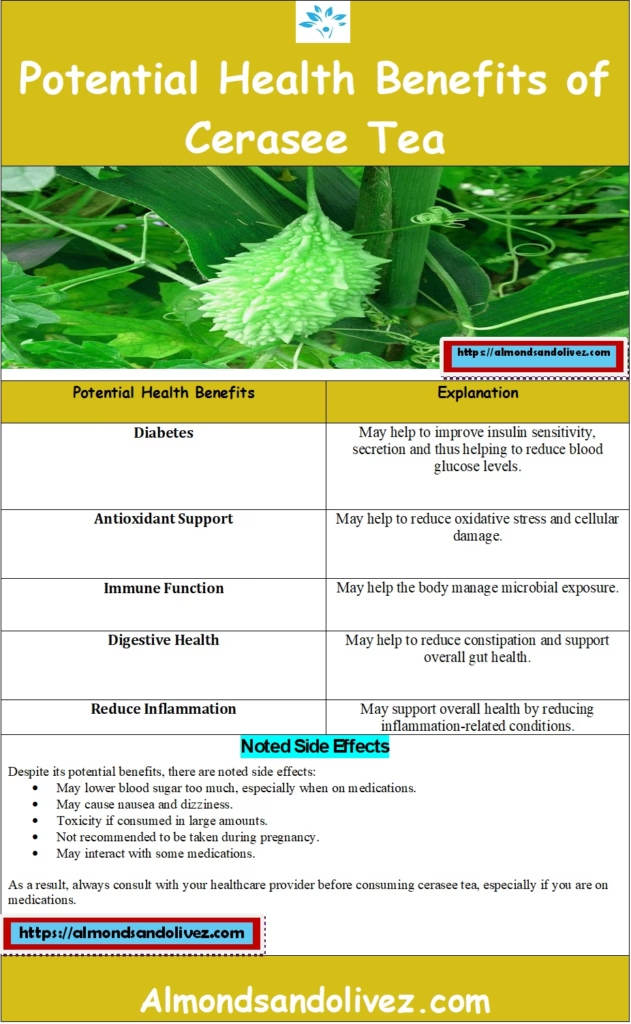
Here is an illustrative summary of the Potential Health Benefits of CERASEE TEA
Let’s Sum Up!
Cerasee tea is a powerful example of how traditional practices and modern science can intersect.
While research suggests that Momordica charantia contains beneficial compounds that may support blood sugar control, immunity, and overall health, much of the evidence is still emerging, particularly when it comes to the tea itself.
This means that while cerasee tea may support health, it should not be viewed as a treatment or cure.
As with many herbal remedies, the key is balance.
As such, cerasee tea can be a valuable addition to your wellness routine, but it should be used thoughtfully, safely, and in moderation.
So, now that we have explored the potential benefits of cerasee tea, have you ever consumed this tea? If not, would you consume it? If yes or no, why? Share it nuh! In the comments below.
Here are some other useful articles and free downloads that can help you on your journey to a healthier lifestyle.
- Free Download – Caribbean Bush Tea Guide
- Cerasee and Diabetes
- Is Cerasee Good for Your Kidneys
- How to Make Guinep Leaf Tea
- Soursop leaf tea: The Nerve Health Tea
- 5 Amazing Soursop Benefits
- Video – Let’s Talk Cerasee
References and Further Readings
- Anilakumar K.R., Phani K.G., Nallamuthu I. Nutritional, pharmacological and medicinal properties of Momordica charantia. International Journal of Food Sciences and Nutrition. 2015; 4:75–83. doi: 10.11648 /j.ijnfs.20150401.21. [DOI]
- Bailey CJ, Day C, Turner SL, Leatherdale BA. Cerasee, a traditional treatment for diabetes. Studies in normal and streptozotocin diabetic mice. Diabetes Res. 1985 Mar;2(2):81-4. PMID: 3899464.
- Basch E., Gabardi S., Ulbricht C. (2003). Bitter melon (Momordica charantia): a review of efficacy and safety. Am. J. Health Syst. Pharm. 60 356–359. 10.1093/ajhp/60.4.356 [PubMed]
- Bortolotti M, Mercatelli D, Polito L. Momordica charantia, a Nutraceutical Approach for Inflammation-Related Diseases. Front Pharmacol. 2019 May 8; 10:486. doi: 10.3389/fphar.2019.00486. PMID: 31139079; PMCID: PMC6517695.
- Carr AC, Maggini S. Vitamin C and Immune Function. Nutrients. 2017 Nov 3;9(11):1211. doi: 10.3390/nu9111211. PMID: 29099763; PMCID: PMC5707683.
- Chang CI, Cheng SY, Nurlatifah AO, Sung WW, Tu JH, Lee LL, Cheng HL. Bitter Melon Extract Yields Multiple Effects on Intestinal Epithelial Cells, and Likely Contributes to Anti-diabetic Functions. Int J Med Sci. 2021 Feb 24;18(8):1848-1856. doi: 10.7150/ijms.55866. PMID: 33746602; PMCID: PMC7976585.
- Chavda VP, Feehan J, Apostolopoulos V. Inflammation: The Cause of All Diseases. Cells. 2024 Nov 18;13(22):1906. doi: 10.3390/cells13221906. PMID: 39594654; PMCID: PMC11592557.
- Grover, J. K., Yadav, & S. P. (2004). Pharmacological actions and potential uses of Momordica charantia: A review. Journal of Ethnopharmacology, 93, 123–132. 10.1016/j.jep.2004.03.035.
- Gülçin I. Antioxidant activity of food constituents: An overview. Archives of Toxicology. 2012; 86:345–391. doi: 10.1007/s00204-011-0774-2.
- Jia S, Shen M, Zhang F, Xie J. Recent Advances in Momordica charantia: Functional Components and Biological Activities. Int J Mol Sci. 2017 Nov 28;18(12):2555. doi: 10.3390/ijms18122555. PMID: 29182587; PMCID:
- Joseph B., Jini D. Antidiabetic effects of Momordica charantia (bitter melon) and its medicinal potency. Asian Pac. J. Trop. Dis. 2013; 3:93–102. doi: 10.1016/S2222-1808(13)60052-3.
- Lawson M., Jomova K., Poprac P., Kuča K., Musílek K., Valko M. Free radicals and antioxidants in human disease. Nutritional Antioxidant Therapies: Treatments and Perspectives. 2017;283–305 doi: 10.1007/978-3-319-67625-8_12.
- Patel J.C., Dhirawani M.K., Doshi J.C., Karelia in the treatment of diabetes mellitus. Indian J. Med. Sci. 1968; 22:30–32.
- Perumal V, Khatib A, Uddin Ahmed Q, Fathamah Uzir B, Abas F, Murugesu S, Zuwairi Saiman M, Primaharinastiti R, El-Seedi H. Antioxidants profile of Momordica charantia fruit extract analyzed using LC-MS-QTOF-based metabolomics. Food Chem (Oxf). 2021 Jan 26; 2:100012. doi: 10.1016/j.fochms.2021.100012. PMID: 35415640; PMCID: PMC8991829.
- Richter E, Geetha T, Burnett D, Broderick TL, Babu JR. The Effects of Momordica charantia on Type 2 Diabetes Mellitus and Alzheimer’s Disease. Int J Mol Sci. 2023 Feb 28;24(5):4643. doi: 10.3390/ijms24054643. PMID: 36902074; PMCID: PMC10002567.
- Thakur, Mamta & Sharma, R. (2016). BITTER GOURD: HEALTH PROPERTIES AND VALUE ADDITION AT FARM SCALE a. 1.


 How to Make Guinep Leaf Tea (Caribbean Bush Tea Recipe)