

Why do some people live well into their eighties (80s), nineties (90s) and even One Hundred (100s), while staying active, happy, and healthy? If you are a believer of the Bible, then you might say, we are all given three scores and 10 years, which is 70 years. Any more years, and you are in ‘brawta’, as we would say in Jamaica. Some people may even remark – we live and die because it is just our time.
But suppose longevity also had to do with how we live our lives? There are people, who are nearing there three scores and ten and even way younger, and are of ill-health and constantly in pain. So, maybe, just maybe, longevity may also be a factor of our lifestyles.
This is the believe of researchers of the Blue Zones. The Blue Zones are regions of the world where people live significantly longer and healthier lives than average. Studied extensively by National Geographic Fellow Dan Buettner, these areas hold timeless lifestyle secrets we can all learn from. In this article, we explore the simple, evidence-based habits practiced in Blue Zones—and how you can adopt them into your modern life. Let’s explore what research says!
Despite their cultural differences, these communities share a surprising number of lifestyle similarities—clues to the mystery of healthy aging.
Overview – Health and Longevity
For centuries, humanity has sought the key to a longer life. This quest for exceptional longevity has led researchers to five extraordinary corners of the globe, collectively known as the Blue Zones. These regions—Okinawa (Japan), Sardinia(Italy), Nicoya Peninsula (Costa Rica), Ikaria (Greece) and Loma Linda (California).
These regions boast the world’s highest concentrations of centenarians (people living past 100) and supercentenarians, often enjoying vibrant lives from the chronic diseases that plague most of the industrialized world. (Poulain et al., 2004; Buettner, 2010)
Coined by demographers Gianni Pes and Michel Poulain, and popularized by author and explorer Dan Buettner, the Blue Zones represent a natural experiment in human health. The key takeaway is not a singular genetic advantage, but a powerful confluence of environmental, social, and lifestyle factors. The secrets, distilled into nine foundational principles, offer a comprehensive blueprint for maximizing human lifespan and health span. (Poulain et al. 2013)
This article explores what exactly are the blue zones, the nine foundation principles of longevity, what to have in your pantry if you want to eat like people of the blue zones, and how to apply the nine longevity principles of the blue zones to your personal life.
Longevity Habits of the World’s Blue Zones
- What are the Blue Zones?
- The foundational principles of longevity
- Pantry items to have for blue zone living
- How to apply the longevity principles of the blue zones
What Exactly is a Blue Zone?
The term “Blue Zone” has a straightforward, almost accidental origin rooted in meticulous demographic research.
The concept was first coined by demographers Gianni Pes and Michel Poulain in the early 2000s. While studying mortality and extreme longevity on the Italian island of Sardinia, they noticed a cluster of villages, particularly in some of the mountainous regions (Ogliastra region), that had an exceptionally high concentration of male centenarians (Poulain et. al 2004; Poulain et al. 2013).
Therefore, to mark these unique villages on a map, they literally drew what are called concentric blue circles around the area. This visual aid led to the enduring term: the Blue Zone (Poulain et al., 2004). Concentric blue circles are described as two or more circles that share a common center point but have different radii. They usual appear as nested rings (Study.com).
The Foundational Principles of Longevity – The Power of 9
Buettner and his team identified nine shared lifestyle characteristics, often referred to as the Power of 9, that consistently appear across these diverse geographic and cultural settings. These principles were not premise on short-term fixes or extreme diets, but rather about creating an environment that naturally nudges individuals toward healthy, long-term habits.
According to the researchers, this type of lifestyle implies that genetics account for only about 20% of life expectancy, while the remaining 80% is determined by the environment and lifestyle (Buettner, 2010). Here are the nine (9) principles:
1. Move Naturally (Movement)
Centenarians in the Blue Zones don’t hit the gym or run marathons; instead, movement is engineered into their daily existence. They live in environments that necessitate gentle, constant activity. Take these for example:
- Daily Walking: They walk to the store, to their neighbours, or to work. Their towns often lack extensive, modern transportation, making walking the primary mode of travel.
- Manual Labor: Activities like gardening, farming, and doing household chores without modern conveniences (e.g., kneading bread by hand, chopping wood) keep their bodies active and strong well into old age (Buettner, 2010; Poulain M, Herm A, 2025).
- Sardinia’s Shepherds: In the mountainous Barbagia region of Sardinia, male centenarians were often shepherds, a profession that involves miles of walking up and down steep terrain daily, leading to strong legs and robust cardiovascular systems.
The key is to consistently avoid long hours of sitting, ensuring light, non-strenuous physical activity is a foundational part of the daily routine.
2. Having a Sense of Purpose
A fundamental shared characteristic among the regions is a strong, sustained reason to live which is a strong sense of purpose. This sense of purpose acts as a psychological buffer against stress and a motivator for healthy living. Take for example, the concept of Ikigai which is linked to Okinawa. This concept translates to “the reason you wake up in the morning.” (Buettner, 2010).
It often involves a role within the family or community, which help to provide a sense of identity and contribution (Buettner, 2010). Another is Plan de Vida in Nicoya, which means expressing a clear life plan. This is often centered around the maintaining of their family farms or caring for their great-grandchildren (Buettner et al. 2016).
A growing body of evidence links a high sense of purpose to reduced inflammation, lower risk of stroke and heart disease, and a lower overall mortality rate, potentially adding up to seven healthy years (Hill & Turiano, 2014).
3. Stress Management (Down Shift)
Chronic stress is linked to inflammation, which accelerates age-related diseases (National Institutes of Health). People living in the Blue Zone, while experiencing stress like everyone else, have daily rituals to shed it. For example, some regions have varying cultural rituals, which helps them to reflect on their ancestors, loved ones, etc.
Additionally, reports denotes that the Adventist in Loma Linda observe the Sabbath and thus take this time to pray or focus on family and faith and the Ikarians take a traditional midday nap or what is called a siesta (Buettner, 2010). According to research, midday naps have been associated with a lower risk of heart disease (Naska et al. 2007; Hellenic Study, 2007).
The crucial component is the daily nature of the practice. These simple, consistent practices help to reduce stress, which leads to lowering of the body’s inflammatory response and reduce stress hormones. It may also help to reduce the acceleration of aging (Yegorov et al. 2020).
4. Eating Habits (The 80% Rule and Plant-based)
One of the simplest and most powerful dietary rules is the ancient Confucian adage, “Hara Hachi Bu,” practiced by the Okinawans (Japan) who are known for having a higher percentage of centenarians. This adage means – ‘eat until you are eight parts (out of ten) full or eat until you are 80% full. As such, it instructs people to stop eating when they feel comfortable, not until stuffed (Bluezones.com; Cleveland Clinic).
Studies have shown that this type of practice can lead to lower body mass index (BMI), longevity and even help in the prevention of certain cognitive conditions such as dementia (Dong et al. 2023; National Institutes of Health).
Research also links consistent mild caloric restriction to lower production of insulin and IGF-1 (Insulin-like Growth Factor 1), both of which are metabolic signals tied to aging and cancer risk (Redman LM, Ravussin E, 2010).
Another habit of people of the Blue Zones is that their diet is overwhelmingly plant-based, with beans (legumes) being the cornerstone of meals. Meat is eaten sparingly, perhaps a few times a month.
With the exception of Loma Linda (California), centenarians typically drink one to two glasses of wine daily, usually with friends and food, a moderate habit associated with a lower risk of heart disease (Buettner, 2010).
A common thread is also eating the smallest, lightest meal of the day in the late afternoon or early evening, which maximizes the benefits of an overnight fast.
5. Plant Slant (Dietary Focus)
The foundation of the diets of the regions of the blue zones is – plant-based. In fact, most of the centenarians’ studies, practices a predominantly plant-based eating. Therefore, meat is rarely consumed (typically a few ounces and a few times per month, not day) and when it is, it is often used as a side dish or to flavour meals, and not as the main source of protein (Buettner, 2010). As such, the foods below form most of the based or foundation for blue zones cuisines:
- Beans and Legumes: The cornerstone of nearly every Blue Zone diet is the bean. This includes fava beans (Sardinia), black beans (Nicoya), lentils (Ikaria), and soybeans/tofu (Okinawa). Beans are cheap, readily available, and packed with fiber, protein, and complex carbohydrates, making them an ideal longevity food (Buettner, 2010).
- Other Staples: Whole grains (like sourdough and oatmeal), root vegetables (sweet potatoes in Okinawa), and seasonal produce fill the rest of the plate.
- Olive Oil and Fats: In the Mediterranean Blue Zones (Sardinia and Ikaria), extra virgin olive oil is the primary source of fat, a monounsaturated fat rich in antioxidants and linked to reduced inflammation and improved cardiovascular health.
Other Key Dietary Notes:
- Nuts and Seeds: Daily consumption of nuts is common in all Blue Zones and is linked to a significantly lower risk of death from all causes (Balakrishna et al. 2022). You can read more about nuts and their benefits in this article – Let’s get nutty – Five (5) ‘must-have’ nuts for your wellness pantry.
- Sugar Avoidance: Centenarians consume only a fraction of the added sugar found in typical Western diets, limiting their intake primarily to natural sugars found in fruits and honey (Buettner, 2010).
- Whole Foods: They eat whole foods—unprocessed or minimally processed—and rarely consume supplements, getting all their nutrients from the food they eat. Some areas though rarely consumed processed foods, which helps to drastically reduce their sugar intake and unhealthy fats or even food colouring or dyes.
- Water Quality: In Nicoya, the water is naturally very hard, rich in calcium and magnesium, which is thought to contribute to stronger bones and lower rates of heart disease (Buettner, 2010).
6. Moderate Alcohol (Wine, mostly Red)
The study showed that most people of the blue zones consumed alcohol, moderately, but regularly with the exception of those of the Adventist faith (Loma Linda) which abstain from wine altogether.
- The Limit: The sweet spot appears to be one to two glasses per day, consumed with food and friends.
- Sardinian Cannonau: The local Sardinian wine, Cannonau, has an exceptionally high concentration of polyphenols (antioxidant compounds) compared to other wines, potentially enhancing its protective effects (Buettner, 2015). The Ikarians also typically enjoy one to two glasses of local red wine daily with friends and/or food (Buettner, 2010).
- The Context Matters: The habit is tied to the social ritual of dining and connection, reinforcing the social support principles, rather than solitary, excessive drinking. Research has shown that the consistent intake of a small to moderate amount of alcohol, particularly in a social setting, is associated with a lower risk of heart disease (Buettner, 2010).
7. Social Connection (A sense of belonging)
The world’s longest-lived people prioritize family. As such, family is first place in their everyday or weekly activities. This helps to promote a system of mutual support and care.
- Intergenerational Living: Centenarians in all Blue Zones live with or near their children and grandchildren, and multi-generational homes are common (Buettner, 2010). This provides elders with built-in purpose, reduces caregiver burden, and is a significant factor in promoting child well-being. As such, aging relatives are not generally institutionalized like in some western countries. This gives them a sense of purpose and well-being, and thus reducing the stress associated with isolation.
- Commitment to a Partner: Having a stable, committed life partner has been shown to add years to life expectancy.
8. Belong (Faith and Community)
The vast majority of centenarians belong to a faith-based organization, regardless of denomination.
- Research indicates that attending faith-based services four times a month can add increase life expectancy (Buettner, 2010). This benefit applies to those who belong to any faith and is likely due to the strong social network and communal support it provides (Tindle et al., 2009). As such, the benefit is attributed less to the specific beliefs and more to the social network and stress relief afforded by belonging to a supportive community (Tindle et al., 2009).
9. Right Tribe (Social Connection)
Forming and maintaining the right social circles is critical because healthy behaviors are contagious.
- Moai in Okinawa: Okinawans created moai—groups of five friends who are committed to each other for life. They provide social, financial, and emotional support as they age (Buettner, 2010).
- Positive Influence: Studies show that a person’s risk of obesity, smoking, and even happiness are strongly influenced by their close social network (Christakis and Fowler, 2007; New England Journal of Medicine, 2007). Centenarians “curate” social circles that actively support healthy habits and outlooks. Additionally, Social science research has demonstrated that habits—good and bad—are contagious. If your three best friends are obese, your chances of becoming obese increase by over 150%. Conversely, if your friends are active and healthy, those traits are more likely to rub off on you (Christakis & Fowler, 2007). The Right Tribe creates a positive peer pressure for longevity.
Pantry Items to Have for Blue Zone Living
Stocking a Blue Zone pantry is about prioritizing whole, plant-based foods and making the healthy choice the easy choice. The diet across all five zones is roughly 80–100% plant-based, focusing on fiber-rich staples, healthy fats, and minimal processed ingredients.
Here is a guide to the essential categories for building your longevity kitchen, based on the principles of the Power of 9.
1. Legumes (The Cornerstone)
Beans are the single most important longevity food, common across every Blue Zone (Okinawa, Sardinia, Nicoya, Ikaria, and Loma Linda). They are packed with protein, complex carbohydrates, and soluble fiber.
- Dried & Canned Beans: Stock up on black beans (Nicoya staple), chickpeas (Mediterranean staple), lentils, and fava beans.
- Tip: Keep both dried (for cost and quality) and canned (for quick meals) on hand.
- Soy Products (Okinawa Focus): Tofu (firm or extra-firm), edamame, and sometimes miso or natto. Tofu is a key protein source in the Okinawan diet
2. Nuts and Seeds (Healthy Fats)
Centenarians snack on nuts daily. They are excellent sources of heart-healthy fats, protein, and antioxidants.
- Nuts: Almonds (Mediterranean), walnuts (high in Omega-3s), pistachios, and peanuts (technically a legume, common in Okinawa).
- Seeds: Chia seeds, flax seeds (ground for better absorption), and sesame seeds (often used for oil and seasoning).
- Tip: Store nuts and seeds in the freezer or fridge to keep the healthy oils from going rancid.
3. Whole Grains and Starches
These provide sustained energy and fiber, replacing simple processed carbohydrates.
- Grains: Oats (for breakfast), brown rice or wild rice (Okinawan and general staple), quinoa, and barley (used extensively in Sardinian minestrone).
- Breads: 100% whole-grain sourdough bread (fermented sourdough is generally easier on the digestive system).
- Starches: Sweet potatoes (especially the purple Okinawan variety), squash (winter varieties like butternut and acorn), and yams.
4. Fats and Oils
Choose anti-inflammatory fats, minimizing processed vegetable oils.
- Extra Virgin Olive Oil (EVOO): The primary fat in Mediterranean Blue Zones (Sardinia and Ikaria). Use it for cooking (at lower temperatures) and finishing dishes generously.
- Avocados: A healthy fat source found near the Nicoya zone.
- Nut Butters: All-natural peanut butter or almond butter with no added sugars or hydrogenated oils.
5. Herbs and Spices
Centenarians season their food richly, boosting flavor and nutritional value without added salt, sugar, or excessive fats.
- Mediterranean Focus: Oregano, thyme, rosemary, sage, bay leaves (essential for stews and beans), and fresh garlic.
- Okinawan Focus: Turmeric (a potent anti-inflammatory spice), ginger, and scallions.
- Heat: Red pepper flakes (for stimulating circulation).
6. Beverages and Miscellaneous
- Teas: Herbal teas like rosemary and sage (Ikaria), and green tea (Okinawa).
- Canned/Jarred Items: Canned crushed or diced tomatoes (for stews and sauces) and olives.
- Vinegars: Red wine vinegar and apple cider vinegar for dressing and flavor.
- Sweeteners: Keep sugar to an absolute minimum. Use small amounts of local honey (Ikaria) or maple syrup for occasional sweetness.
By focusing your grocery trips on these categories, you naturally reduce your intake of highly processed foods, sugary items, and excessive meat, making the principles of the Blue Zones a natural part of your daily routine.
To help you on your grocery shopping quest, you can download your free Healthy Shopping Grocery List Guide.
How to Create Your Personal Blue Zone
The secrets of the Blue Zones aren’t limited to remote villages; they’re actionable habits you can integrate into a busy modern lifestyle. The goal is to engineer your environment so that the healthy choice becomes the default choice, utilizing the “Power of 9” principles popularized by Dan Buettner.
1. Move Naturally (Beyond the Gym)
The longevity secret isn’t strenuous exercise; its constant, gentle movement engineered into your day.
- Ditch the Desk Chair Often: Set a timer to stand up and move every 20 minutes. Do simple bodyweight exercises (squats, calf raises) or stretch while taking a call.
- Active Commuting/Errands: Park your car in the furthest spot, or better yet, walk or bike for short trips to the store or post office.
- Garden and Tend: Start a small garden (even on a balcony) or take up simple yard work. This involves natural bending, lifting, and repetitive movement.
- Automate Chores: Skip labor-saving devices when possible (e.g., use a broom instead of a robot vacuum, wash dishes by hand).
2. Reduce Chronic Stress
You need a clear reason to wake up and a method to routinely shed stress.
- Find Your Ikigai (Purpose): Identify one thing you look forward to doing each day and one thing that makes you feel needed (e.g., volunteering, mentoring, pursuing a meaningful hobby). Write it down.
- Institute a Daily “Down Shift”: Dedicate 15–30 minutes daily to a stress-reducing ritual:
- The Modern Siesta: Take a 20-minute power nap.
- Mindfulness: Meditate, pray, or practice deep breathing.
- Unwind Time: Transition devices off an hour before bed and read a physical book.
3. The Blue Zone Plate (Eating Habits)
Focus on incorporating calorie restriction and plant-based foods, not eliminating entire food groups.
- Embrace the 80% Rule (Hara Hachi Bu): Put 20% less food on your plate than you think you want. Eat slowly and mindfully. Wait 15 minutes before considering a second helping.
- Prioritize the “Longevity Trio”: Make beans, nuts, and whole grains the main energy source for most meals. Aim for at least 1/2 cup of legumes (black beans, lentils, chickpeas) daily.
- Meat as a Side Dish (or Skip It): Limit meat consumption to small portions (3 oz or less) no more than twice a week.
- Strategic Sips (Wine @ 5): If you drink, enjoy 1–2 glasses of red wine with dinner, not alone or in excess. Choose lower-sugar wines and skip daily consumption if you’re not already a moderate drinker.
4. Building Your Tribe (Social Connection)
Longevity is a group effort. Your social environment strongly influences your health habits.
- Institute “Loved Ones First” Time: Schedule non-negotiable time with family and partner, even if it’s just a shared, screen-free meal. Call an older relative daily or weekly to check in.
- Find Your Moai (Right Tribe): Actively cultivate a small, committed group of 3–5 friends who share your values for healthy living. Organize regular, physically active or purpose-driven meetups (e.g., a walking club, a cooking group).
- Find Your “Belong” Community: Join a community that provides consistent social engagement, whether it’s a faith group, a neighborhood association, or a hobby club (book club, volunteer organization). The key is regular, deep interaction and support.
By making small, consistent changes rooted in these nine principles, you can shift your environment and habits to mimic the powerful, life-extending advantages found in the world’s original Blue Zones.
Criticism of the Blue Zone Study
While the concept of the Blue Zones has been widely accepted and popularized, it has not been without criticism. Some researchers have raised concerns regarding the validity and interpretation of the data used to support exceptional longevity in these regions.
One notable critic is Saul Newman, a geneticist who has questioned the reliability of age-related data reported in certain Blue Zone populations. Newman examined self-reported age data from some of the original study regions and compared these with available official birth records. His analysis suggested that, in some cases, reported ages did not align with official documentation, or that such records were unavailable to verify the claims.
Based on these findings, Newman proposed that some individuals may not have known their exact age, while others may have unintentionally or deliberately misreported it. He further suggested that, in certain instances, age misreporting could be influenced by social or economic factors, such as eligibility for pension benefits.
In addition to concerns about age verification, Newman also questioned whether individuals in some Blue Zone regions consistently experience a higher quality of life in older age. He cited observations related to factors such as depression, obesity, and lower consumption of fruits and vegetables among some elderly populations.
In response, Dan Buettner, one of the leading researchers behind the Blue Zones concept, argued that Newman’s analysis was not peer-reviewed and did not accurately reflect the broader body of evidence gathered over time.
Buettner maintained that although some Blue Zone regions may experience higher levels of poverty compared to more developed countries, they tend to have lower incidences of chronic diseases such as cardiovascular disease and diabetes, which are often associated with high consumption of processed foods (Poulain and Herm, 2025).
He further emphasized that age validation in such populations is an ongoing process and acknowledged that limitations in data collection had already been outlined in the original research.
Another criticism relates to the commercialization of the Blue Zones concept, with some suggesting that the focus has shifted away from its original intent of studying and supporting vulnerable, socio-economically challenged populations (Smith, 2024).
Despite these criticisms, many researchers agree that studies of this nature still provide valuable insights into lifestyle patterns that may support longevity. By examining these populations, researchers can continue to explore practical and sustainable approaches to promoting longer, healthier lives.
Illustrative Summary
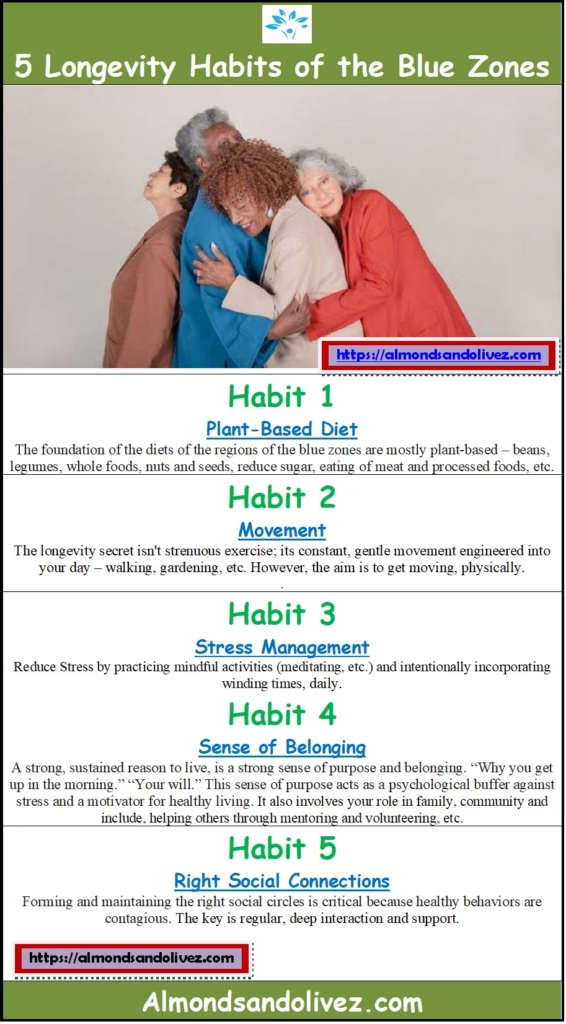
Here is an illustrative summary of the LONGEVITY HABITS of the BLUE ZONES
Let’s Sum Up!
The most significant secret of the Blue Zones is that longevity is not a singular achievement, but the cumulative result of a lifetime of simple, healthy, environmentally supported habits.
These centenarians didn’t plan to live to 100; they simply lived in a way that made it inevitable. Their environment, culture, and social connections nudge them into making the right choices every day.
You don’t need to move to Ikaria or Okinawa to reap these benefits. By intentionally adopting the Power of 9 principles—moving more naturally, finding your purpose, cutting your calories by 20%, embracing a plant-forward diet, and fortifying your social circle—you can create your own personal Blue Zone, paving the way for a happier, healthier, and measurably longer life.
So, now that we have explored the Blue Zones of the World, is this a lifestyle you would want to embrace, if not yet? Share it nuh!
Here are a few useful articles and free downloads that can help you on your journey of a healthier lifestyle.
- Our ABCs – A Complete Vitamins Overview
- Exercising is more than just for weight loss
- Micronutrients and Macronutrients
- Video – Key Nutrients for your diet
- Podcast – Is Everything Inflammation?
- Podcast – Raw at 66: Challenging Aging and Nutrition Myths
- Free Download – Healthy Grocery Shopping List Guide
References and Further Readings
- Balakrishna R, Bjørnerud T, Bemanian M, Aune D, Fadnes LT. Consumption of Nuts and Seeds and Health Outcomes Including Cardiovascular Disease, Diabetes and Metabolic Disease, Cancer, and Mortality: An Umbrella Review. Adv Nutr. 2022 Dec 22;13(6):2136-2148. doi: 10.1093/advances/nmac077. PMID: 36041171; PMCID: PMC9776667.
- Buettner, D. (2010). The Blue Zones: 9 Lessons for Living Longer from the People Who’ve Lived the Longest. National Geographic Books.
- Buettner D, Skemp S. Blue Zones: Lessons from the World’s Longest Lived. Am J Lifestyle Med. 2016 Jul 7;10(5):318-321. doi: 10.1177/1559827616637066. PMID: 30202288; PMCID: PMC6125071.
- Christakis NA, Fowler JH. The spread of obesity in a large social network over 32 years. N Engl J Med. 2007 Jul 26;357(4):370-9. doi: 10.1056/NEJMsa066082. Epub 2007 Jul 25. PMID: 17652652.
- Dong W, Kan L, Zhang X, Li M, Wang M, Cao Y. Association between body mass index and cognitive impairment in Chinese older adults. Front Public Health. 2023 Oct 18; 11:1255101. doi: 10.3389/fpubh.2023.1255101. PMID: 37927863; PMCID: PMC10622794.
- “Don’t Eat until You’re Full ― Instead, Mind Your Hara Hachi Bu Point.” Cleveland Clinic, 3 July 2024, health.clevelandclinic.org/dont-eat-until-youre-full-instead-mind-your-hara-hachi-bu-point
- Hill PL, Turiano NA. Purpose in life as a predictor of mortality across adulthood. Psychol Sci. 2014 Jul;25(7):1482-6. doi: 10.1177/0956797614531799. Epub 2014 May 8. PMID: 24815612; PMCID: PMC4224996.
- JAMA and Archives Journals. (2007, February 13). Siesta Sense: Midday Napping Associated with Reduced Risk Of Heart-related Death. ScienceDaily. Retrieved March 25, 2026, from www.sciencedaily.com/releases/2007/02/070212184206.htm.
- Poulain, M., Pes, G. M., Salaris, L., Palmieri, A., Easi, M., Masala, I., … & Ferrucci, L. (2004). Identification of a geographic area characterized by an exceptional longevity. Experimental Gerontology, 39(9), 1129-1134.
- Poulain M, Herm A. Blue Zone, a Demographic Concept and Beyond. Am J Lifestyle Med. 2025 May 28:15598276251342502. doi: 10.1177/15598276251342502. Epub ahead of print. PMID: 40452754; PMCID: PMC12119521.
- Naska A, Oikonomou E, Trichopoulou A, Psaltopoulou T, Trichopoulos D. Siesta in Healthy Adults and Coronary Mortality in the General Population. Arch Intern Med. 2007;167(3):296–301. doi:10.1001/archinte.167.3.296
- Michel Poulain & Anne Herm & Gianni Pes, 2013. “The Blue Zones: areas of exceptional longevity around the world,” Vienna Yearbook of Population Research, Vienna Institute of Demography (VID) of the Austrian Academy of Sciences in Vienna, vol. 11(1), pages 87-108.
- “Okinawa, Japan.” Blue Zones, 6 Aug. 2024, www.bluezones.com/explorations/okinawa-japan/.
- Redman LM, Ravussin E. Caloric restriction in humans: impact on physiological, psychological, and behavioral outcomes. Antioxid Redox Signal. 2011 Jan 15;14(2):275-87. doi: 10.1089/ars.2010.3253. Epub 2010 Aug 28. PMID: 20518700; PMCID: PMC3014770.
- Tindle HA, Chang YF, Kuller LH, Manson JE, Robinson JG, Rosal MC, Siegle GJ, Matthews KA. Optimism, cynical hostility, and incident coronary heart disease and mortality in the Women’s Health Initiative. Circulation. 2009 Aug 25;120(8):656-62. doi: 10.1161/CIRCULATIONAHA.108.827642. Epub 2009 Aug 10. PMID: 19667234; PMCID: PMC2901870.
- Smith DG, Do people in ‘blue zones’ actually live longer? New York: New York Time; 2024. https://www.nytimes.com/2024/10/24/well/live/blue-zones-longevity-aging.html [Google Scholar][Ref list].
- Yegorov YE, Poznyak AV, Nikiforov NG, Sobenin IA, Orekhov AN. The Link between Chronic Stress and Accelerated Aging. Biomedicines. 2020 Jul 7;8(7):198. doi: 10.3390/biomedicines8070198. PMID: 32645916; PMCID: PMC7400286.


 What is Cardio Exercise? Benefits, Types and How to Do It at Home