

Cardiovascular disease remains one of the leading causes of death globally, and sedentary lifestyles continue to rise. Amid busy schedules and increasing screen time, physical activity often takes a back seat.
One of the most accessible and effective forms of exercise is cardiovascular exercise, commonly referred to as “cardio.”
But what exactly is cardio exercise? How does it benefit your health? And can you truly get effective cardio workouts at home without expensive equipment? Let’s explore what research says!
You can learn more about how to create a fitness routine here.
Cardio exercise, also called aerobic exercise, is any physical activity that increases your heart rate and breathing for a sustained period. It strengthens the heart and lungs, improves circulation, and enhances endurance. Common examples include brisk walking, jogging, cycling, dancing, and stair climbing.
What is Cardio Exercise?
Cardio exercise, short for cardiovascular exercise, refers to physical activity that increases your heart rate and breathing for a sustained period.
It primarily engages large muscle groups such as, the legs and arms and improves the efficiency of the heart, lungs, and circulatory system (Bull FC et al. 2020; World Health Organization, 2020). Examples of cardio exercises include: Brisk walking, jogging, cycling, jump rope, dancing and swimming.
According to the World Health Organization (WHO), adults should engage in regular moderate to vigorous physical activity to reduce the risk of chronic diseases. Cardio exercise works by:
- Strengthening the heart muscle
- Improving oxygen delivery
- Enhancing circulation
- Increasing aerobic capacity (VO₂ max)
Over time, this leads to better endurance and improved metabolic health.
In this article, we will explore what exactly is cardio exercise? How does it benefit your health? Can you truly get effective cardio workouts at home without expensive equipment? Types you can do at home, duration, and answering some frequently asked questions about cardio in general.
Benefits of Cardio Exercise
A growing body of research shows that regular cardiovascular (cardio) exercise plays an important role in maintaining overall health and preventing several chronic diseases. Cardiovascular activities, such as brisk walking, cycling, dancing, or aerobic workouts, help strengthen the heart, improve circulation, and support multiple systems in the body.
Below are some of the most well-researched benefits of engaging in regular cardio exercise.
1. Supports Heart Health
One of the most well-known benefits of cardio exercise is its positive impact on the cardiovascular system. Regular aerobic activity strengthens the heart muscle, allowing it to pump blood more efficiently throughout the body. This improved circulation helps deliver oxygen and nutrients to tissues and organs more effectively (Warburton et al. 2018; Warburton et al. 2017).
Research has shown that individuals who engage in regular physical activity have a lower risk of coronary heart disease, stroke, and other cardiovascular conditions. Cardio exercise may also improve lipid profiles by increasing high-density lipoprotein (HDL) cholesterol, often referred to as “good cholesterol,” while lowering harmful low-density lipoprotein (LDL) cholesterol levels (Sattelmair et al 2011; Warburton et al. 2018; Warburton et al. 2017).
According to the World Health Organization, regular aerobic exercise significantly reduces the risk of cardiovascular disease and contributes to improved heart function.
2. Helps Improve Blood Pressure
High blood pressure, also known as hypertension, is a major risk factor for heart disease and stroke. According to research, engaging in regular cardio exercise can help lower both systolic and diastolic blood pressure. (Carpio-Rivera et al. 2016; Chobanian et al. 2003; Pontes et al. 2008).
Physical activity improves blood vessel elasticity and enhances the ability of arteries to dilate, which allows blood to flow more freely. Over time, this reduces the strain on the heart and vascular system (Carpio-Rivera et al. 2016; Chobanian et al. 2003; Pontes et al. 2008).
Research suggests that moderate aerobic exercise, such as brisk walking, cycling, or swimming, can reduce blood pressure by several millimeters of mercury (mmHg), which can significantly reduce the risk of cardiovascular complications (Carpio-Rivera et al. 2016).
You can read more about blood pressure in this detailed article:
3. Enhances Blood Sugar Control
Research has shown that cardio exercise can also play a key role in improving blood glucose regulation. During aerobic activity, muscles use glucose for energy, which helps lower blood sugar levels.
Additionally, regular physical activity improves insulin sensitivity, meaning that the body becomes more efficient at using insulin to transport glucose from the bloodstream into cells (Warburton, DE et. al 2001).
This benefit is particularly important for individuals at risk for or living with metabolic conditions such as Type 2 Diabetes, as regular exercise can help manage blood sugar levels and reduce the risk of complications associated with diabetes (Warburton, DE et. al 2001).
You can read more about blood sugar by listening to this podcast episode:
4. Supports Weight Management
Cardio exercise contributes to energy expenditure, meaning the body burns calories during physical activity. When combined with a balanced diet, regular cardio can help support healthy weight management (Cox, 2017, etc.).
Activities such as brisk walking, jogging, cycling, or aerobic workouts increase metabolic activity and encourage the body to utilize stored fat for energy. Over time, this can help reduce excess body fat and maintain a healthier body composition.
Importantly, regular exercise may also help regulate appetite hormones and improve metabolic efficiency, making it easier to maintain long-term weight control (Cox, 2017).
You can read more about exercise and weight management among other benefits in this detailed article:
5. Improves Mental Health and Mood
Cardio exercise has also been shown to have profound effects on mental health and emotional well-being. During physical activity, the body releases several neurotransmitters and hormones—including endorphins and serotonin—that contribute to improved mood and reduced stress (Franz and Hamilton, 1905; Vaux, 1962).
Research indicates that regular aerobic exercise can help reduce symptoms associated with anxiety, depression, and chronic stress. In some cases, exercise has even been recommended as a complementary approach in the management of mild to moderate depression (Franz and Hamilton, 1905; Vaux, 1962).
Additionally, engaging in physical activity may improve sleep quality, cognitive function, and overall emotional resilience.
You can read more about exercise and mental health in this detailed article:
6. May Increase Longevity
Higher levels of cardiorespiratory fitness have consistently been associated with a reduced risk of premature death from all causes.
Studies suggest that individuals who maintain good cardiovascular fitness tend to have lower mortality rates compared to those who are physically inactive. This is largely due to the protective effects of exercise on the heart, metabolic health, immune function, and overall physiological resilience.
Incorporating regular cardio exercise into one’s lifestyle—even in moderate amounts—can therefore contribute to a longer and healthier life.
You can read more about exercise and mental health in these articles:
Types of Cardio You Can Do at Home
You do not need a gym membership to perform effective cardio. Here are some cardio options you can do at home. These are categorized in two (2) categories – Low-impact and moderate to vigorous.
Low-Impact Cardio Options:
Low-impact exercises elevate the heart rate while placing minimal stress on the joints. They are ideal for beginners, older adults, individuals with joint concerns, or those returning to exercise after a break.
1. Marching in Place
Marching in place involves lifting your knees alternately while standing upright, mimicking a walking motion without forward movement. Increasing arm swings or knee height can raise intensity. This movement improves circulation, coordination, and cardiovascular endurance with minimal joint strain.
2. Step-Ups
Step-ups involve stepping onto and off a stable platform, a stair, or a low bench. This exercise engages the quadriceps, hamstrings, and gluteal muscles while elevating heart rate. It supports lower-body strength and balance while providing moderate aerobic conditioning.
3. Dancing
Dancing is a rhythmic, full-body activity that combines coordination, balance, and cardiovascular engagement. Depending on tempo and intensity, it can range from light to moderate aerobic activity. Research suggests dance-based exercise improves heart health, mood, and overall fitness.
4. Walking Indoors
Indoor walking may include walking around the house, following a walking video, or pacing during phone calls. Brisk walking increases heart rate, enhances circulation, and supports metabolic health. It remains one of the most accessible forms of aerobic exercise.
5. Low-Impact Aerobics
Low-impact aerobics involves choreographed movements where at least one foot remains on the ground at all times. This reduces stress on the knees and hips while still providing cardiovascular stimulation. It is especially suitable for individuals seeking structured but joint-friendly workouts.
Moderate to Vigorous Cardio Options:
These exercises significantly elevate heart rate and breathing and are more demanding on the cardiovascular and muscular systems. They are suitable for individuals without contraindications to higher-intensity activity.
1. Jump Rope
Jump rope is a high-intensity activity that rapidly increases heart rate. It enhances coordination, agility, and cardiovascular endurance while engaging the calves, shoulders, and core. Even short sessions can produce significant aerobic benefits.
2. High Knees
High knees involve jogging in place while lifting the knees toward hip level. This movement increases heart rate quickly and engages the core and lower-body muscles. It is often used in interval training due to its intensity.
3. Burpees
Burpees are a full-body compound movement combining a squat, plank, and jump. They significantly elevate heart rate and improve muscular endurance and aerobic capacity. Because of their intensity, they are typically performed in short intervals.
4. Mountain Climbers
Mountain climbers are performed in a plank position while alternating knee drives toward the chest. This dynamic movement challenges the core, shoulders, and cardiovascular system simultaneously, making it an efficient high-intensity option.
5. Stair Climbing
Climbing stairs — whether on household stairs or a step platform — is a vigorous aerobic activity that strengthens the lower body and elevates heart rate. It improves cardiorespiratory fitness and muscular endurance.
Equipment-Free Cardio Circuits
Combine:
- 30 seconds jumping jacks
- 30 seconds squats
- 30 seconds fast marching
Repeat 3–5 rounds.
Even household chores like mopping or vigorous cleaning can elevate heart rate.
Examples of cardio exercise include:
- Brisk walking
- Jogging
- Cycling
- Jump rope
- Dancing
- Stair climbing
Recommended Duration
The World Health Organization recommends:
- 150–300 minutes of moderate-intensity aerobic activity per week, OR
- 75–150 minutes of vigorous-intensity activity per week
This can be broken down into 30 minutes per day, five days per week.
Even short 10-minute sessions accumulated throughout the day provide benefits.
Safety Notes & Modifications
Before starting any cardio exercise routine, it is important to consider basic safety guidelines to reduce the risk of injury and ensure the exercises are appropriate for your fitness level. While many cardio activities can be performed safely at home, individuals should listen to their bodies, begin at a comfortable pace, and modify movements when necessary.
The following safety notes and modifications can help make these exercises more accessible for beginners, older adults, or individuals with certain health conditions.
1. Warm Up Before Starting
Begin with a 5–10-minute warm-up such as light walking, marching in place, or gentle arm movements. Warming up increases blood flow to the muscles and prepares the body for exercise, helping to reduce the risk of injury.
2. Start at a Comfortable Pace
If you are new to cardio exercise, start slowly and gradually increase the intensity. Low-impact activities such as marching in place or walking indoors are excellent starting options before progressing to higher-intensity movements.
3. Use Proper Footwear and a Safe Surface
Supportive shoes can help protect your joints and provide stability. Exercising on a non-slip, flat surface can also reduce the risk of falls, especially when performing movements such as step-ups or stair climbing.
4. Modify High-Impact Exercises if Needed
Some exercises, like burpees, high knees, or jump rope, may place additional stress on the joints. These can be modified by slowing the movement, removing the jump component, or replacing them with low-impact alternatives.
5. Stay Hydrated
Drink water before, during, and after exercise, particularly if you are performing moderate-to-vigorous activities. Proper hydration helps regulate body temperature and supports physical performance.
6. Listen to Your Body
Stop exercising if you experience dizziness, chest pain, severe shortness of breath, or unusual discomfort. These symptoms may require medical attention.
7. Consult a Healthcare Professional if Necessary
Individuals with chronic conditions such as heart disease, hypertension, diabetes, or joint problems should consult a healthcare provider before beginning a new exercise program.
Frequently Asked Questions About Cardio Exercise
Here are some common questions asked about cardio exercises in general, along with the best response.
1. Is Aerobics Considered Cardio?
Yes, aerobics is considered a form of cardio exercise. Cardio, also known as cardiovascular exercise, refers to any physical activity that increases the heart rate and breathing for a sustained period. Aerobic exercises are specifically designed to improve the body’s ability to use oxygen efficiently while strengthening the heart and lungs.
Common examples of aerobic cardio exercises include brisk walking, jogging, cycling, dancing, swimming, and aerobic workout classes. These activities help improve circulation, endurance, and overall cardiovascular health.
In simple terms, aerobic exercise is a type of cardio exercise, but not all cardio activities are structured aerobic workouts.
2. Is Cardio Better Than Aerobic Exercise?
Cardio exercise and aerobic exercise are often used interchangeably, but technically aerobic exercise is a category within cardio exercise. Both forms of exercise provide similar health benefits, including improved heart health, better circulation, enhanced endurance, and reduced risk of chronic diseases such as cardiovascular disease and type 2 diabetes.
Rather than asking whether cardio is better than aerobic exercise, it is more helpful to focus on choosing activities that increase your heart rate and that you can perform consistently. Activities such as brisk walking, dancing, cycling, and home aerobics workouts can all contribute to improved cardiovascular fitness.
The most important factor is engaging in regular physical activity that challenges the heart and lungs while remaining safe and enjoyable.
3. How Much Cardio Should You Do Per Week?
Health organizations such as the World Health Organization and the American Heart Association recommend that adults engage in at least 150 minutes of moderate-intensity aerobic activity or 75 minutes of vigorous-intensity activity per week.
Moderate activities include brisk walking, dancing, or cycling at a comfortable pace, while vigorous activities include running, jump rope, or high-intensity aerobics.
These guidelines can also be achieved by combining both moderate and vigorous activities throughout the week. Regular cardio exercise helps improve heart health, circulation, lung capacity, and overall endurance.
4. Can You Do Cardio Every Day?
Yes, many people can safely perform light to moderate cardio exercise every day, especially activities such as walking, light cycling, or gentle aerobics.
However, it is important to listen to your body and allow adequate recovery time if engaging in high-intensity cardio exercises like sprinting, jump rope, or high-intensity interval training (HIIT). Alternating between low-, moderate-, and high-intensity activities can help reduce fatigue and prevent overtraining.
5. What Are the Signs That Your Cardio Workout Is Effective?
An effective cardio workout usually results in several noticeable signs, including:
- Increased heart rate
- Faster breathing
- Mild sweating
- Feeling slightly out of breath but still able to speak
Over time, consistent cardio exercise may also lead to improved stamina, better energy levels, and improved cardiovascular fitness.
6. Can Cardio Help with Weight Management?
Yes, cardio exercise can play a significant role in weight management because it helps the body burn calories and improve metabolism. Activities such as brisk walking, cycling, dancing, and running can increase energy expenditure and support a healthy weight when combined with balanced nutrition.
In addition to weight management, regular cardio exercise may also help reduce the risk of chronic conditions such as heart disease, type 2 diabetes, and metabolic syndrome.
7. What Is the Best Cardio Exercise for Beginners?
The best cardio exercise for beginners is one that is simple, safe, and easy to maintain consistently. Some beginner-friendly options include:
- Brisk walking
- Marching in place
- Dancing
- Low-impact aerobics
- Indoor walking routines
These exercises are gentle on the joints while still helping to improve cardiovascular endurance.
Illustrative Summary
Here is an illustrative summary of the Six (6) BENEFITS OF PERFORMING CARDIO EXERCISES
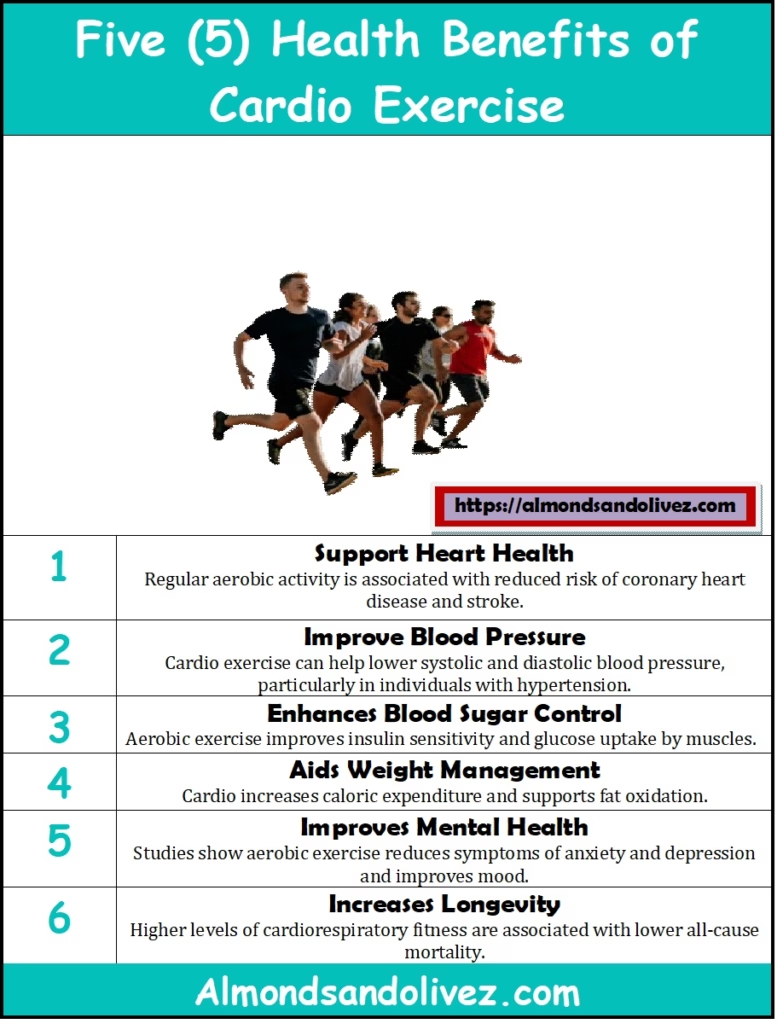
Let’s Sum Up!
Cardio exercise is one of the most accessible, cost-effective, and scientifically supported ways to improve overall health.
It strengthens the heart, improves metabolic health, supports mental well-being, and may extend lifespan.
Whether through brisk walking, dancing in your living room, or structured home circuits, incorporating regular aerobic activity into your routine can yield profound long-term benefits.
So, now that we have thoroughly explored cardio exercise, its benefits, risks and types, how will you add it to your exercise routine, if not yet? If you already have cardio exercises in your weekly routine, which ones, and how often do you perform them? Share it nuh! In the comments section below.
You can read more about exercising and its benefits as well as other exercises that can help you to lose weight, tone and strengthen the abs as well as start your fitness programme. Visit the articles below:
- 30 Days Abs Challenge
- Creating that ‘hiit’ fitness program
- Don’t tuck it in! – Here are Five (5) exercises to reduce belly fat, strengthen and tone the abs at home
- Exercise, it is more than just for weight loss
- So, You ‘wanna’ walk – Here are five (5) ways to do it for weight loss
- So You Wanna Run? Here are two (2) major health benefits and five (5) ways to run for weight loss
- The ‘Mighty’ Plank – One Exercise, Many Benefits – Here are 5 reasons to add it to your exercise routine.
- Plank it! – 30 Days Plank Challenge
- How to Get Your Fitness Journey Back on Track
References and Further Readings
- Bull FC, Al-Ansari SS, Biddle S, Borodulin K, Buman MP, Cardon G, Carty C, Chaput JP, Chastin S, Chou R, Dempsey PC, DiPietro L, Ekelund U, Firth J, Friedenreich CM, Garcia L, Gichu M, Jago R, Katzmarzyk PT, Lambert E, Leitzmann M, Milton K, Ortega FB, Ranasinghe C, Stamatakis E, Tiedemann A, Troiano RP, van der Ploeg HP, Wari V, Willumsen JF. World Health Organization 2020 guidelines on physical activity and sedentary behaviour. Br J Sports Med. 2020 Dec;54(24):1451-1462. doi: 10.1136/bjsports-2020-102955. PMID: 33239350; PMCID: PMC7719906.
- Carpio-Rivera E, Moncada-Jiménez J, Salazar-Rojas W, Solera-Herrera A. Acute Effects of Exercise on Blood Pressure: A Meta-Analytic Investigation. Arq Bras Cardiol. 2016 May;106(5):422-33. doi: 10.5935/abc.20160064. Epub 2016 May 6. PMID: 27168471; PMCID: PMC4914008.
- Chobanian AV, Bakris GL, Black HR, Cushman WC, Green LA, Izzo JL, Jr, National Heart, Lung, and Blood Institute. Joint National Committee on Prevention, Detection, Evaluation, and Treatment of High Blood Pressure. National High Blood Pressure Education Program Coordinating Committee et al. The Seventh Report of the Joint National Committee on Prevention, Detection, Evaluation, and Treatment of High Blood Pressure: the JNC 7 report. JAMA. 2003;289(19):2560–2572. doi: 10.1001/jama.289.19.2560. Erratum in: JAMA. 2003;290(2):197. [DOI]
- Cox CE. Role of Physical Activity for Weight Loss and Weight Maintenance. Diabetes Spectr. 2017 Aug;30(3):157-160. doi: 10.2337/ds17-0013. PMID: 28848307; PMCID: PMC5556592.
- Franz, S.I., & Hamilton, G.V. (1905). The effects of exercise upon retardation in conditions of depression.
- Pontes FL, Jr, Bacurau RF, Moraes MR, Navarro F, Casarini DE, Pesquero JL, et al. Kallikrein kinin system activation in post-exercise hypotension in water running of hypertensive volunteers. Int Immunopharmacol. 2008;8(2):261–266. doi: 10.1016/j.intimp.2007.09.001. [DOI]
- Sattelmair J, Pertman J, Ding EL, Kohl HW 3rd, Haskell W, Lee IM. Dose response between physical activity and risk of coronary heart disease: a meta-analysis. Circulation. 2011 Aug 16;124(7):789-95. doi: 10.1161/CIRCULATIONAHA.110.010710. Epub 2011 Aug 1. PMID: 21810663; PMCID: PMC3158733.
- Vaux, C.L. (1926). A discussion of physical exercise and recreation. Occupational Therapy and Rehabilitation, 6 , 30–33.
- Warburton, D.E.R.; Bredin, S.S.D. Lost in Translation: What does the physical activity and health evidence actually tell us? In Lifestyle in Heart Health and Disease; Zibadi, S., Watson, R.R., Eds.; Elsevier: San Diego, CA, USA, 2018; pp. 175–186. [Google Scholar].
- Warburton, D.E.R.; Bredin, S.S.D. Health benefits of physical activity: A systematic review of current systematic reviews. Curr. Opin. Cardiol. 2017, 32, 541–556. [Google Scholar]
- Warburton, D.E, Glendhill, N, Quinney, A. (2001). A musculoskeletal fitness and health. Can J Appl Physiol, 26, 217-37.
- World Health Organization. (2020). WHO guidelines on physical activity and sedentary behaviour. Geneva: WHO.


 7 Main Types of Lettuce: Nutrition Facts, Health Benefits and Safety Tips