
Functional foods continue to shape the future of nutrition, and 2026 is no exception. As more research highlights the connection between diet, disease prevention, and overall well-being, certain foods are standing out for their added health benefits beyond basic nutrition.
In this article, we explore the top 7 functional foods of 2026 and beyond, backed by science and emerging wellness trends, and how they may support gut health, immunity, energy levels, and long-term health. Let’s Discuss!
What are Functional Foods?
Functional foods refer to whole or fortified foods that provide additional health benefits beyond energy and essential nutrients. These can include probiotics, antioxidants, omega-3 fatty acids, plant compounds, or adaptogens that influence how our body functions on a cellular level.
Research suggests that more people globally are now seeking foods that actively support their health goals — from better sleep and stress management to immune resilience and healthy aging. Functional foods bridge the gap between traditional nutrition and preventative medicine — a trend sometimes called “food as medicine.”
In this article, we explore seven (7) top functional foods that science predicts will be sought-after foods not only in 2026, but even beyond. The foods that will be discussed in this article are: adaptogenic mushrooms, green banana flour, sea moss and algae superfoods, prebiotics and postbiotics, functional beverages, cacao and polyphenols-rich foods and omega-3 enriched plant foods.
You can watch the video about Functional Foods of 2026 and Beyond below:
7 Top Functional Foods of 2026 & Beyond:
- Adaptogenic Mushrooms
- Green Banana Flour
- Sea Moss and Algae Superfoods
- Prebiotics and Postbiotics
- Functional Beverages
- Cacao and Polyphenol-rich foods
- Omega-3-enriched plant foods
Adaptogenic Mushrooms – Nature’s Stress Regulators
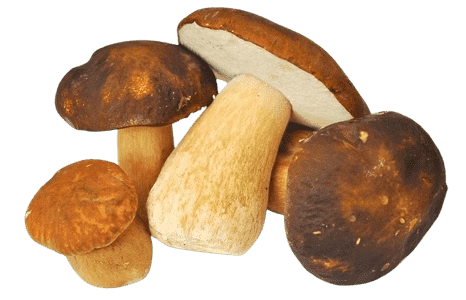
Adaptogens are plant or mushroom compounds that help the body adapt to physical and mental stress. In 2026, expect to see more of these in coffees, snacks, and supplements. Adaptogens include Lion’s Mane, Reishi mushroom and Cordyceps militaris.
According to a 2024 review in the Journal of Medicinal Food, found that Lion’s Mane (Hericium erinaceus) contains hericenones and erinacines — compounds that stimulate nerve growth factor (NGF) synthesis, improving cognitive performance and memory.
Reishi (Ganoderma lucidum) has been shown to modulate the immune system and improve sleep quality by influencing the body’s GABAergic activity (Frontiers in Pharmacology, 2024; Qin Y et al. 2024).
Cordyceps militaris supports energy metabolism and VO₂ max, making it a popular natural endurance enhancer (Hirsch KR et al. 2017).
You can try these adaptogens in a variety of ways. For example, you can use mushroom coffee blends, powdered extracts in smoothies, or capsule supplements (look for “fruiting body” extracts for potency).
Adaptogenic mushrooms aren’t magic, but their bioactive compounds make them powerful allies for managing stress, focus, and fatigue — all essential pillars of wellness.
Green Banana Flour – The Resistant Starch Revolution
Green banana flour is emerging as a gut-friendly alternative to traditional flour, rich in resistant starch — a type of prebiotic fiber that feeds beneficial gut bacteria.
According to research, resistant starch improves insulin sensitivity, lowers postprandial glucose levels, and increases the production of short-chain fatty acids (SCFAs) like butyrate — key for gut health (Zhao Chen et al. 2024; Nutrients 2025).
Other studies have shown that the daily consumption of resistant starch from green bananas may significantly improve satiety and reduce inflammation markers (Munir H et al. 2024; Journal of Functional Foods, 2024)
You can try green banana flour by adding a tablespoon or two (2) to your smoothies, oatmeal, or gluten-free baking. Start slowly — resistant starch can cause bloating if introduced too quickly.
Takeaway:
Green banana flour supports digestion, blood sugar balance, and long-term gut resilience — making it one of the most practical functional flours to watch in 2026 and beyond.
Sea Moss and Algae Superfoods — Ocean Nutrition for Modern Wellness
Sea moss (Irish moss), spirulina, and chlorella are marine-based foods with a nutrient density that’s hard to beat.
According to research, sea moss is high in iodine, magnesium, and sulfur compounds that may support thyroid and skin health. On the other hand, spirulina contains phycocyanin, a pigment with antioxidant and anti-inflammatory properties. A 2025 meta-analysis in the Journal: Clinical and Experimental Pharmacology and Physiology, spirulina supplementation improved lipid profiles and reduced markers of oxidative stress (Rahnama et al. 2023).
Reports also contend that chlorella supports detoxification by binding heavy metals and promoting antioxidant activity.
You can add powdered algae to smoothies, soups, or water with lemon. For convenience, sea moss gel can be blended into juices or teas.
Takeaway:
Marine superfoods bring a powerful mineral punch and support overall cellular health — ideal for those looking to nourish from the inside out.
Prebiotics and Postbiotics — Beyond Probiotics
We have heard of probiotics, but according to scientists, 2026 is all about prebiotics (what feeds good bacteria) and postbiotics (the beneficial metabolites produced by those bacteria).
According to research, postbiotics — including short-chain fatty acids, peptides, and cell wall fragments — can enhance immune function and reduce gut inflammation even when live probiotics aren’t viable. (Ragavan ML et al. 2023).
Prebiotics like inulin and fructooligosaccharides (FOS) were linked with improved gut microbiota diversity (Li J et al. 2025).
You can include these in your diet by combining prebiotic-rich foods like Jerusalem artichokes, garlic, onions, or oats with fermented foods such as kimchi, miso, or kefir.
Takeaway:
Balancing your microbiome isn’t about one probiotic capsule — it’s about nourishing the bacterial ecosystem that supports digestion, immunity, and even mental health.
Functional Beverages — Hydration Meets Purpose
From magnesium-infused relaxation drinks to nootropic teas, the beverage aisle is turning into a wellness lab.
According to Mintel’s 2025 Global Beverage Report, 63% of consumers now seek drinks that offer “added functionality” — from mood enhancement to sleep support.
Magnesium-based beverages, in particular, are supported by research showing that magnesium glycinate aids relaxation and muscle recovery (Schuster J et al.2025).
Nootropic teas infused with ginseng are being studied for cognitive enhancement (Lee et al. 2024). Also, L-theanine, a form of magnesium, is also of interest when it comes to cognitive improvement and even Alzheimer’s (Nutrients, 2023).
You can include these beverages in your diet by sipping adaptogenic teas in the morning, or a magnesium-calming beverage at night instead of wine or soda.
Takeaway:
Functional beverages represent a convenient way to integrate nutrition with daily self-care — and they’re redefining what hydration means.
Cacao and Polyphenol-Rich Foods — Chocolate with Purpose
Cacao isn’t just a treat — it’s one of the richest natural sources of polyphenols, compounds known for their antioxidant and vascular benefits.
Studies have shown that polyphenol-rich cacao intake improved endothelial function (blood vessel flexibility) and reduced oxidative stress, lowering cardiovascular risk (Muth et al. 2025).
Cacao flavanols also promote nitric oxide synthesis, which improves blood flow and brain oxygenation (Mastroiacovo et al. 2014; American Journal of Clinical Nutrition, 2024).
Choose raw cacao powder or dark chocolate with 80%+ cocoa solids. Avoid “alkalized” cocoa, which strips away antioxidants.
Takeaway:
Enjoying dark chocolate or cacao-rich smoothies isn’t indulgence — it’s evidence-based pleasure.
Omega-3 Enriched Plant Foods — Sustainable Brain Food
As plant-based diets rise, 2026 brings more focus to plant-derived omega-3 fatty acids — especially algae-based sources.
- Algae oil provides DHA and EPA, the same active forms found in fish oil. A 2024 trial published in theJournal of Nutrition (though the official publication date is in 2025 due to early online release) showed that algae-derived DHA is non-inferior to fish oil in raising blood omega-3 levels, confirming its efficacy and sustainability (Bailey et al. 2025).
- Chia and flaxseeds provide ALA (alpha-linolenic acid), which the body partially converts to DHA/EPA — though conversion rates are low, they’re still beneficial for heart health.
You can incorporate these omega-3-rich foods into your diet, making chia pudding with your chia seeds or even sprinkling them on salads, adding to smoothies, etc. You can also sprinkle flaxseed on yoghurt or try algae oil capsules if you are vegan or prefer to take it in supplement form, for additional benefits.
Takeaway:
Omega-3s remain foundational for heart, brain, and anti-inflammatory health — and algae oil is redefining how we get them sustainably.
Illustrative Summary
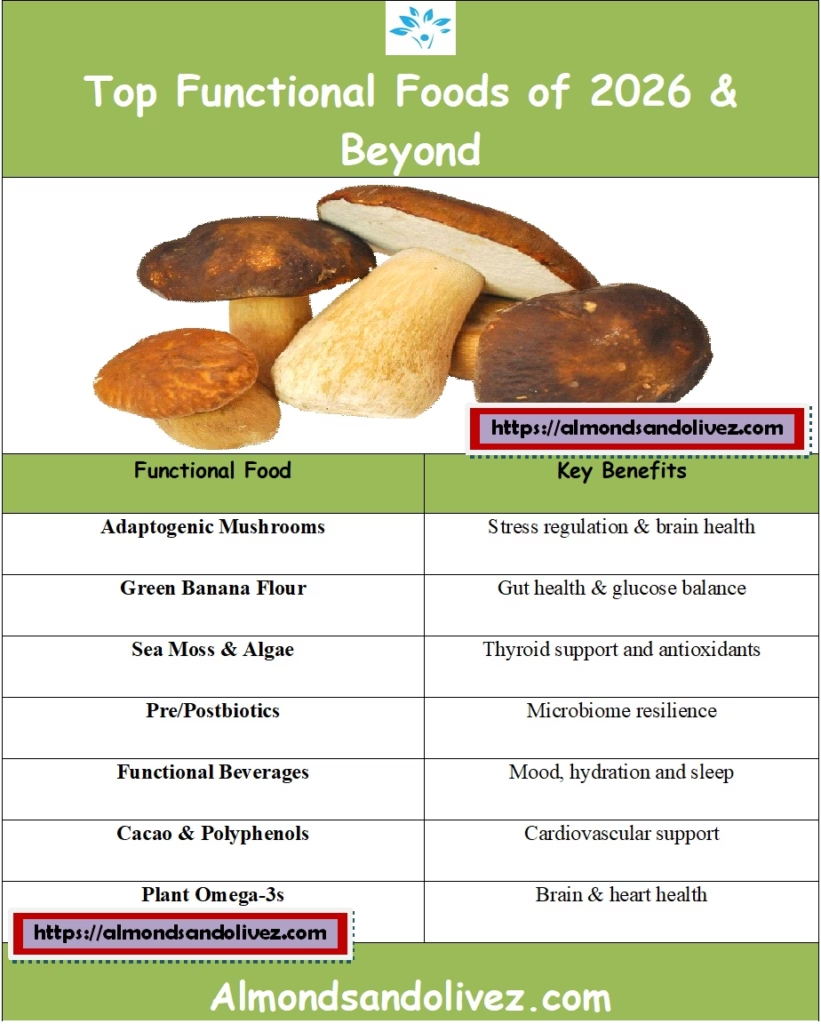
Here is an illustrative summary of the 7 TOP FUNCTIONAL FOODS OF 2026 & BEYOND.
Let’s Sum Up!
As new studies unfold in 2026, we’re learning that the future of wellness isn’t in pills or powders — it’s on our plates.
So, the next time you stir your morning coffee or prep your smoothie, ask yourself: What can this food do for my body today?
Now that we have explored some of the top foods that are forecasted to make the list of functional foods for 2026 and beyond. Do you currently consume any of these foods? Have you ever heard of them before? Lastly, will any of these foods become part of your health and wellness pantry? Share it nuh! In the comments below.
Here are a few useful articles and free downloads that can help you on your journey to a healthier lifestyle, not only for 2026, but beyond! Share it nuh!
- Why Minerals?
- Podcast – Top Functional Foods of 2026 & Beyond
- Video– Key Nutrients for a Healthy Diet
- Video: Top 5 Functional Foods of 2026 and Beyond
- Burdock Root –Another Priceless Gift of Nature
- Free Download – Healthy Grocery Shopping List Guide
References and Further Readings
- Bailey E, Wojcik J, Rahn M, Roos F, Spooren A, Koshibu K. Comparative Bioavailability of DHA and EPA from Microalgal and Fish Oil in Adults. Int J Mol Sci. 2025 Sep 24;26(19):9343. doi: 10.3390/ijms26199343. PMID: 41096614; PMCID: PMC12524788.
- Contato AG, Conte-Junior CA. Lion’s Mane Mushroom (Hericium erinaceus): A Neuroprotective Fungus with Antioxidant, Anti-Inflammatory, and Antimicrobial Potential-A Narrative Review. Nutrients. 2025 Apr 9;17(8):1307. doi: 10.3390/nu17081307. PMID: 40284172; PMCID: PMC12030463. – Journal of medicine 2024
- Hirsch KR, Smith-Ryan AE, Roelofs EJ, Trexler ET, Mock MG. Cordyceps militaris Improves Tolerance to High-Intensity Exercise After Acute and Chronic Supplementation. J Diet Suppl. 2017 Jan 2;14(1):42-53. doi: 10.1080/19390211.2016.1203386. Epub 2016 Jul 13. PMID: 27408987; PMCID: PMC5236007.
- Lee R, Kim JH, Kim WW, Hwang SH, Choi SH, Kim JH, Cho IH, Kim M, Nah SY. Emerging evidence that ginseng components improve cognition in subjective memory impairment, mild cognitive impairment, and early Alzheimer’s disease dementia. J Ginseng Res. 2024 May;48(3):245-252. doi: 10.1016/j.jgr.2024.02.002. Epub 2024 Feb 17. PMID: 38707644; PMCID: PMC11068985.
- Li J, Liu F, Luo Y, Wijeyesekera A, Wang S, Chen X, Lv Y, Jin J, Sheng H, Wang G, Wei Y, Li Z, Chen M, Zhou H. Differential effects of inulin and fructooligosaccharides on gut microbiota composition and glycemic metabolism in overweight/obese and healthy individuals: a randomized, double-blind clinical trial. BMC Med. 2025 Jul 1;23(1):372. doi: 10.1186/s12916-025-04189-6. PMID: 40598275; PMCID: PMC12219383.
- Mastroiacovo D, Kwik-Uribe C, Grassi D, Necozione S, Raffaele A, Pistacchio L, Righetti R, Bocale R, Lechiara MC, Marini C, Ferri C, Desideri G. Cocoa flavanol consumption improves cognitive function, blood pressure control, and metabolic profile in elderly subjects: the Cocoa, Cognition, and Aging (CoCoA) Study–a randomized controlled trial. Am J Clin Nutr. 2015 Mar;101(3):538-48. doi: 10.3945/ajcn.114.092189. Epub 2014 Dec 17. PMID: 25733639; PMCID: PMC4340060.
- Mohiti S, Zarezadeh M, Naeini F, Tutunchi H, Ostadrahimi A, Ghoreishi Z, Ebrahimi Mamaghani M. Spirulina supplementation and oxidative stress and pro-inflammatory biomarkers: A systematic review and meta-analysis of controlled clinical trials. c 2021 Aug;48(8):1059-1069. doi: 10.1111/1440-1681.13510. Epub 2021 May 24. PMID: 33908048.
- Munir H, Alam H, Nadeem MT, Almalki RS, Arshad MS, Suleria HAR. Green banana resistant starch: A promising potential as functional ingredient against certain maladies. Food Sci Nutr. 2024 May 6;12(6):3787-3805. doi: 10.1002/fsn3.4063. PMID: 38873476; PMCID: PMC11167165.
- Muth, Heike & Bereswill, Stefan & Heimesaat, Markus. (2025). Come to the dark side – A review on the health-beneficial and disease-alleviating effects of cocoa-rich dark chocolate. European Journal of Microbiology and Immunology. 15. 74-82. 10.1556/1886.2025.00007.
- Ragavan ML, Hemalatha S. The functional roles of short chain fatty acids as postbiotics in human gut: future perspectives. Food Sci Biotechnol. 2023 Aug 28;33(2):275-285. doi: 10.1007/s10068-023-01414-x. PMID: 38222911; PMCID: PMC10786766.
- Rahnama, Iman & Arabi, Mostafa & Chambari, Mahla & Bahrami, Leila & Hadi, Vahid & Mirghazanfari, Sayid & Rizzo, Manfredi & Hadi, Saeid & Sahebkar, Amirhossein. (2023). The effect of Spirulina supplementation on lipid profile: GRADE-assessed systematic review and dose-response meta-analysis of data from randomized controlled trials. Pharmacological research. 193. 106802. 10.1016/j.phrs.2023.106802.
- Schuster J, Cycelskij I, Lopresti A, Hahn A. Magnesium Bisglycinate Supplementation in Healthy Adults Reporting Poor Sleep: A Randomized, Placebo-Controlled Trial. Nat Sci Sleep. 2025 Aug 30;17:2027-2040. doi: 10.2147/NSS.S524348. PMID: 40918053; PMCID: PMC12412596.
- Qin Y, Zhao Y, Hu X, Chen X, Jiang Y-P, Jin X-J, Li G, Li Z-H, Yang J-H, Zhang G-L, Cui S-Y and Zhang Y-H (2024) Ganoderma lucidum spore extract improves sleep disturbances in a rat model of sporadic Alzheimer’s disease. Front. Pharmacol. 15:1390294. doi: 10.3389/fphar.2024.1390294.
- Zhao Chen 1, Ning Liang 1, Haili Zhang, Huizhen Li, Jing Guo, Yujing Zhang, Yaxin Chen, Yanping Wang, Nannan Shi (2024). Resistant starch and the gut microbiome: Exploring beneficial interactions and dietary impacts. Food Chemistry: X, Volume 21, 30 March 2024, 101118. https://doi.org/10.1016/j.fochx.2024.101118

 Guinep (Ackee Plum): Nutrition, Health Benefits, Uses & Risks